I finally found some greenspiration…

The more I look after plants, the quicker they die. However, I have recently taken an interest in gardening, and there is nothing as exhilarating as seeing 90% of your plants surviving your green fingers!

Why do I enjoy gardening? I was born into it! My mother and grandmother are avid gardeners. I grew up with colourful flowers surrounding our house, and after a few hours of being in the hot sun we enjoyed cold drinks on the soft green grass under my grandmother’s stinkwood tree. I am the most uncoordinated person you will ever meet in your life, but gardening is great for my hand-eye coordination as this needs to be in sync for the brain to receive the correct messages. Gardening is an excellent form of exercise and it’s also a way to commune with nature – birds, bees, butterflies and especially my two dogs, delight me. But as a stressed academic, gardening most importantly is an escape from reality, something that I need more of in my life. 

As a medical virologist, I am quite an expert in viruses that infect humans and animals. However, I am no plant biologist, much less a plant virologist, and the most knowledge I have of plants I gained during my first year of varsity in biology. I therefore cannot claim any specialist expertise, but bringing together my hobby and my studies I will give you a broad overview.

So, what is plant virology? The different plant virology groups focus on determining the epidemiology and population dynamics of known viruses as well as the discovery of novel plant viruses and implementation of appropriate diagnostic assays for their detection…But why is it important for scientists to be aware of plant viruses?

Viral diseases provide a major challenge to 21st century agriculture worldwide. Climate change and human population pressures are driving rapid alterations in agricultural practices and cropping systems that favor destructive viral disease outbreaks. Such outbreaks are strikingly apparent in subsistence agriculture in food-insecure regions. Agricultural globalization and international trade are spreading viruses and their vectors to new geographical regions with unexpected consequences for food production and natural ecosystems. Due to the varying epidemiological characteristics of divergent viral patho-systems, there is no ‘one-size-fits-all’ approach toward mitigating negative viral disease impacts on diverse agroecological production systems.

Viruses constitute a major cause of plant disease and have an estimated economic impact of >$30 billion annually. They constitute almost 50% of pathogens responsible for emerging and re-emerging plant diseases worldwide, and they damage natural vegetation as well as cultivated plants. Members of the begomoviruses, tospoviruses, and potyviruses all belong to three large plant virus groups that endanger food security by causing devastating diseases in tropical and subtropical food crops. In the South African context, maize meal is the staple food of many, especially in the poorer communities, and protecting these crops are of great importance.

So, how can we protect our plants – whether it be house plants or agricultural crops? Eradication or control of virus diseases is difficult given the complex and dynamic nature of virus epidemics and the great evolvability of viruses. For efficient and durable control, it is necessary to consider the genetic diversity and evolution of virus populations and have specific, fast, and reliable diagnostic tools. Disease management is based on two approaches: immunization to get resistant plants to viral infections, and prophylactic measures to restrain virus dispersion.

The research I’ve done for this blog post opened my eyes. Just like humans and animals, plants can also suffer from disease. It got me thinking…maybe it is not my over abundant love and care killing my precious plants, but some Evil Knievel virus attacking its cells. A plant requires patient labour and attention. Plants do not grow merely to satisfy ambitions or to fulfil good intentions. They thrive because someone expended effort on them.
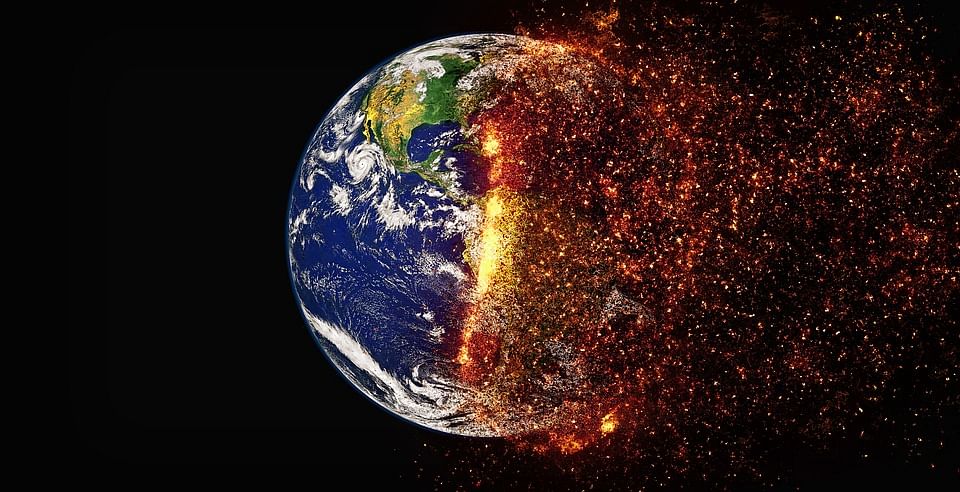
Is it just me, or is it hot in here?

In the coming decades, ecological degradation, rising temperatures, and extreme weather events could intensify the threats to human health posed by viruses. The world’s healthcare systems are not ready to face what’s behind the curtain.

As the temperatures are rising, long-term changes in climate and wildlife habitat could have a significant effect on human health and escalate the risk of infectious diseases like the COVID-19 outbreak. Ah yes, COVID-19 is that guest that overstays their welcome after the party has ended 4 hours ago. After the world has largely failed the stress test of COVID-19, decades of progress to control century-old diseases such as dengue fever, malaria and cholera are under immense threat unless the world leaders commit to more ambitious climate solutions.

As a virologist, I think it is very important to identify the factors that play a big role in spreading infectious diseases…and with planet earth starting to boil rapidly I have concluded that there are numerous factors that I could mention to you that increases viral transmission…but we all have lives to live, so let me keep it short and sweet!

Have you noticed how humans have adapted to rising temperatures? Swimming pools! Air conditioners! Pouring cold water all over yourself! (most affordable solution for a student like myself). Just like humans, viruses also adapt to rising temperatures to ensure population survival. Diseases traditionally associated with tropical and subtropical regions are reaching new areas of the world. Rising temperatures and precipitation are making temperate, northern or mountainous countries more susceptible to outbreaks of “southern” or “low land” diseases like malaria. Another example is how for all of reported history Nepal was always been too cold for the dengue fever virus yet suffered its first outbreak in 2006 with 32 cases. There are many more examples I can mention, but there are also more factors that I would like to talk about!

Now the next question to ponder: how are the habitats of wildlife a factor in an increase in infectious diseases? Well, the quick answer is that many of the viruses are zoonotic, meaning that they are transmitted from a vector, such as an insect, to animals and humans. A loss in wildlife is linked both to climate change and to disease outbreaks. Experts believe these diseases may be associated with increased human-to-animal contact as people encroach on animal habitats. Deforestation and mass forest fires are also responsible for habitat loss, and they both contribute to climate change and are exacerbated by it, creating a feedback loop.

Johannesburg is not an aesthetic tourist attraction at all. Smog and air pollution can be seen from kilometers away. Fine particulate pollution such as black carbon, sulphates and nitrates penetrate deep into the bloodstream and lungs, creating serious health impacts leading to weakened immune systems of animals and humans. Scientists have suggested that air pollution particles may also act as vehicles for viral transmission. An increase in fine particulate pollution of just 1 mg/m3 corresponded to a 15% increase in COVID-19 deaths. Sources of air pollution in cities such as traffic, waste, energy and industry all play a role in the increase of greenhouse gas emissions. So, how can we make our immune systems stronger to fight off disease? Easy – improve air quality and reduce emissions, especially in cities. Easier said than done though.   

Multiple movies these days focus on zombie viruses and ancient viruses resurfacing and killing 90% of Earth’s population. Okay, maybe these ideas are a bit far-fetched. However, scientists have uncovered a variety of bacteria, viruses and fungi due to ice and permafrost melting in Antarctica. I can explain this by giving an example of the working environment I experience at the Centre for Viral Zoonoses. Viruses from many species and pathogenicity are stored in -8°C freezers, and once thawed the viruses are infectious. As ice melts due to global warming, there are concerns that pathogens could be released and cause havoc which our immune systems won’t be able to fight off.

Lastly, viruses absolutely love to mutate.  A changing climate could lead to pathogens mutating and evolving to adapt to warmer temperatures. Researchers from John Hopkins University in the USA raised concerns about climate change that will cause new-heat tolerant diseases to evolve and jeopardize one of the most important fighting forces of the immune system in mammals – fever, which is the ability to maintain high temperatures to fight infections.

What is the takeaway message of my blog post that my readers, and all of humankind, need to remember? Fighting global health risks and diseases, including outbreaks with pandemic potential, is also, fundamentally, about fighting climate change. We need to treat the health of humans, animals, the economy and the planet as one.

Please follow the following links for more information:

https://www.ncbi.nlm.nih.gov/pmc/articles/PMC8047528/

https://www.ncbi.nlm.nih.gov/pmc/articles/PMC2974686/?report=reader