The Visceral Humility of Showing Up

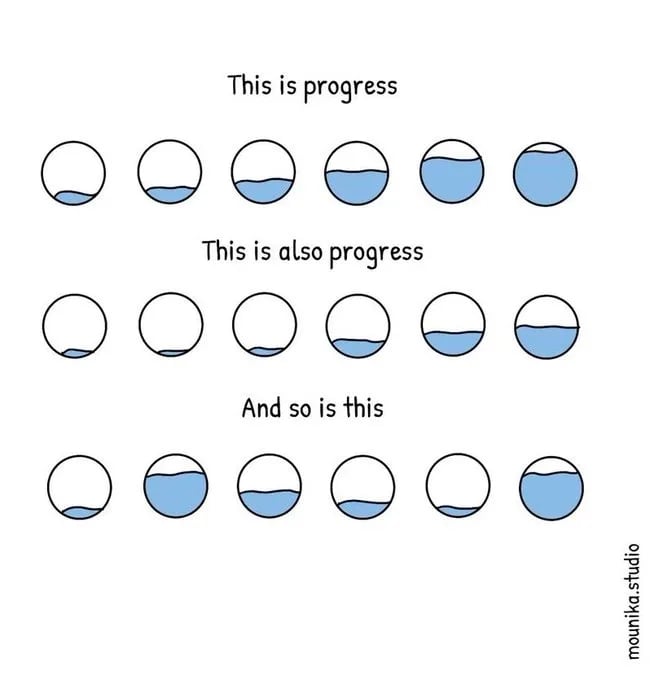
I can’t lie – showing up is hard. Most quotes to do with success have the same thread running throughout – to achieve your goals, being consistent is the best thing you can do. This applies across the board, regardless of what field you’re in. As a postgraduate researcher, this is the lesson that heavily underpins the degrees we pursue. Getting your Masters or PhD has less to do with whether you are the smartest in the room and far more to do with whether you embody the characteristics of perseverance, diligence and consistency in finishing what needs to be done (among other attributes). It seems pretty straightforward, right? Except anyone who is a researcher will tell you that it is never a linear journey, but the little progress that you make every day could look like this:
In my vlog, I only show the aesthetic parts of what makes up a day in my life.

Although I take everyone through my typical day as a postgrad researcher, there are still some ups and downs. Sometimes, I wake up at 8 am, and other times I wake up at 11 am (depending on my sleeping schedule). Some days I do my entire morning routine, and other days just brushing my teeth and moisturizing is all I can muster.

The full breakfast or fruit and coffee on the go.

Productive writing session or procrastination station.

Feelings of joy or feelings of being overwhelmed and frustrated.

Viewing the ‘bad’ days as an indicator of where we will end up only sets us up for failure, as there is nothing inherently wrong with them. It is part of our inch-by-inch work to strive towards the future. But on a larger scale, there are still some challenges. A quantitative research article by Boone, Vander Elst, Vandenbroeck and Godderis (2022) cites a high workload, work-life interference, continuous publication pressure and job insecurity as the main reasons young researchers reach burnout quickly. Although the study was conducted in Finland, within our context in South Africa, I can say through anecdotal experience that young researchers are struggling to find balance with the demands and pressure of being in academia, on top of other socio-economic related issues that pertain to being a young person in Africa. What will it take for things to change?

On the one hand, pursuing postgraduate studies is a highly privileged position. Yet, on the other hand, there are unique challenges prevalent in academia that rely on overworking young researchers. But unfortunately, this article alone cannot posit the solutions to these more significant structural problems. A beautiful tweet from 2016 by singer Mitski captures my everyday approach to research life:
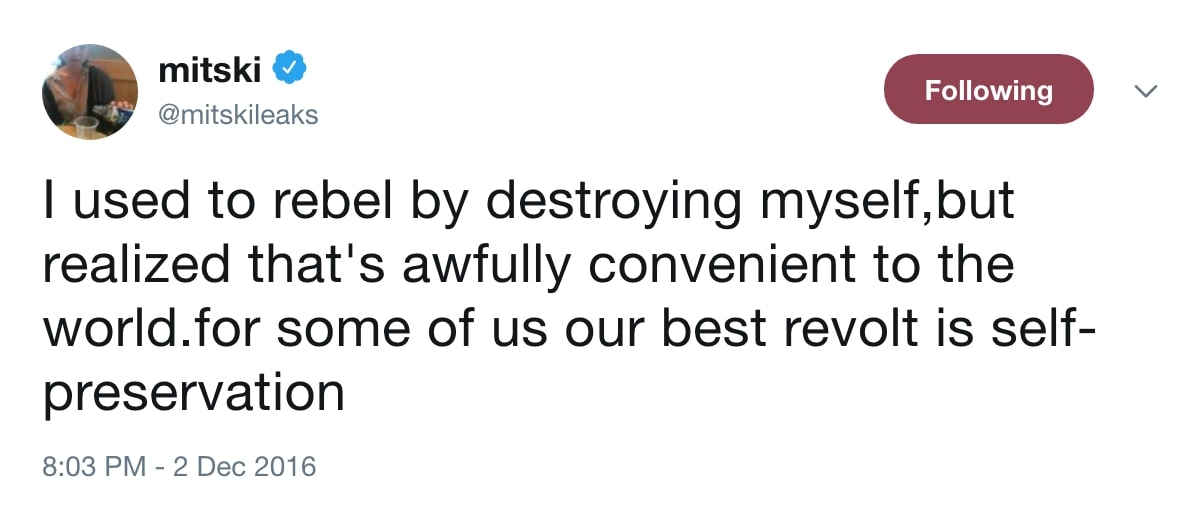
Being radical in choosing to rest amongst the productivity-industrial complex is essential and part of why it is necessary to be vigilant in protecting one’s peace of mind. This is especially true when trying to carve out a somewhat impossible nexus between progressive politics and wanting a successful career.  The prolific black feminist writer audre lorde said in her essay Uses of Anger in Sister Outsider:

“…change is not just about a simple switch of positions or temporary lessening of tensions, nor the ability to smile or feel good… (it is) a basic and radical alteration in those assumptions underlining our lives.”

The visceral humility required to show up authentically in our everyday lives requires us to remove the ego in our everyday decisions. As I enter the second year of my PhD, I choose to remember the value of choosing radical peace amongst the chaos of academia.

While in the pursuit of excellence, we deserve joy.


The Birth of a Blogger

My name is Ijeoma (Ij for short), and I am a PhD Candidate in Political Science at Stellenbosch University under the South African Research Chair (SARCHi) in Gender Politics through the NRF scholarship. To have reached this point in my research journey required a lot of chopping and changing, but the golden thread remained the same – that I needed to write about what tugged at my inner core to answer questions that guided my being. As a young undergrad, I was drawn to International Relations because I was inquisitive about the world around me and the systems that governed the people who decided on them. My favourite subjects were history, social anthropology and metascience, as the questions of why within narratives and histories have always intrigued me. Throughout my journey in academia, I have been involved in extracurricular activities that mirrored it – I was President of the Stellenbosch Political Science Students Association (SPOSSA) in my final year while also being a media spokesperson for the Open Stellenbosch movement in 2015. Those activist spaces and experiences completely deconstructed what I saw as academia and the knowledge production created within institutions. It gave me the confidence to write on issues around me, and my education in activist spaces further shaped my writing as an Honours student. 

My Honours dissertation looked at Rape Culture through the lens of South African feminism. However, after receiving the Mandela-Rhodes Scholarship in 2017 and seeking broader experiences, I applied to the University of Cape Town (UCT) for a coursework MA in International Relations. During that programme, my interest in African politics deepened as I sought to research the experiences of West African migrants living in South Africa. Researching primarily on transnationalism theory, I was also exposed to other thinking within African feminisms, gender studies, and broader political science methodologies. Doing so gave me an educational experience that grounded me within International Relations, but with the capacity to think and write in an interdisciplinary manner. However, it was in 2021 that my freelance writing and blogging experience solidified. I started writing for a Stellenbosch zine called Say When, where I published my first freelance article on The Politics of Thotdom and Heauxism. This piece, to me, signified stepping outside the rigour of academic writing as I started familiarising myself with writing beyond the structure of introduction, body, conclusion and reference list. From there, I became more confident with trusting my voice and have been able to weave analysis with anecdotal writing, using the best of both worlds to share my viewpoints, thoughts and opinions on a range of topics with different styles of writing (series reviews, personal essays, prose, and more). For example, my first single-author journal article, published this year in AGENDA, was a poem I wrote on my experiences as a black woman in Stellenbosch. The idea that my creative output was acknowledged as a body of intellectual work encapsulates everything I believe:

The personal is political, and the political is personal. 

Bringing the ivory tower of institutions to a level that is accessible and understandable to others is something I am passionate about. My current PhD research is looking at unpacking slay queenism as a concept and using it as a lens to research black femme subjectivities in the South African cosmopolitan context. The overarching research areas involve understanding gender equality in South Africa and postfeminist iterations within a post-apartheid framework. 

My long-term plan is to occupy an intersecting space as a researcher, consultant, freelance writer and creative. Oscillating between these versions of myself as a writer, thinker, and creator is what sparks joy for me as a creative intellectual. Each path feeds into the other and informs how I like to stay in conversation with myself, my community, and the world around me. Being a blogger for SAYAS is a unique opportunity to highlight areas of academia I am passionate about (black feminist theory, gender studies) and would bring these topics to wider audiences whilst also destigmatising and educating broader populations about the ins and outs of being a foreign black woman researcher in South Africa.

Also, if you’re interested in following my academic journey or what I’m up to in my PhD journey, let’s stay in the conversation! I’d love to hear the topics you’re curious about and what you’d like to know about postgraduate studies.

🐦 Twitter

💼 LinkedIn

📷 Instagram

🌐 Website

🔏 Latest freelance articles