Growing up in a family with three older brothers, a whole bunch of male cousins and no sisters; I have always had problems with communicating with females. It came as no shock to me when I found myself in a male-dominated field such as Physics. Over the years I have accumulated close female friends that can only be counted with one hand. This blog post is not about all my failed friendships with females but rather about my experience with a special group of ladies I survived a year with (which is a big deal for me).
In April I came across a link on Twitter of an article titled “Want black women students to stay in STEM? Help them find role models who look like them” published in Science Daily. This article made me reflect on all my attempts to always find a group of people I can relate to. I mean I get along very well with males but at the end of the day, I would always question why I am never part of that group of girls having fun at the library lawns or at the club wearing matching outfits. The few female friends I have are all not part of the STEM field and while they are there for me during my ups and downs in this postgraduate journey, I feel like something is still missing. We have very few women in Physics in South Africa, let alone the world so trying to find a role model who looks like me is a big reach. So the next best thing is to find other postgraduate students who are in the STEM field like me.
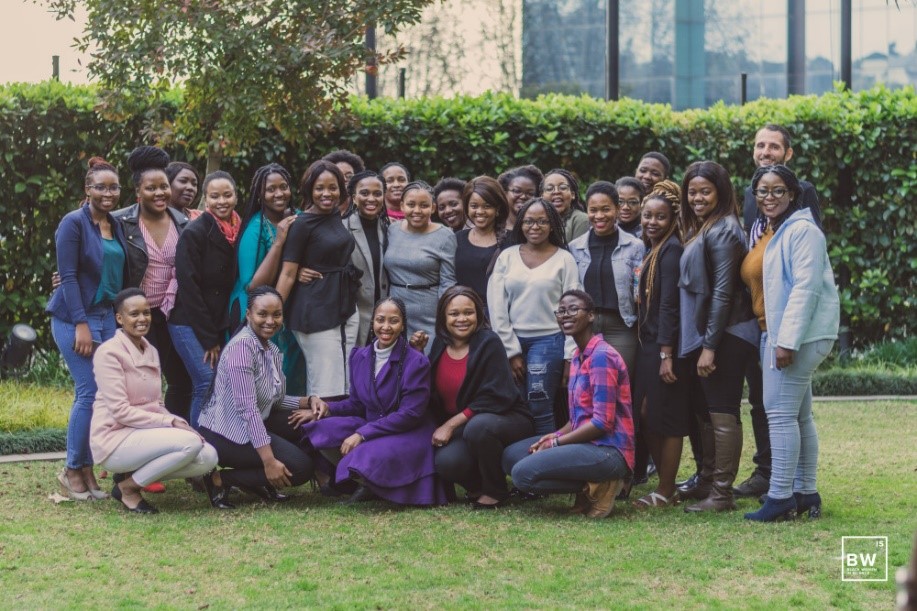
Long story short, last year in February I came across a Twitter post from Black Women in Science (BWIS) appealing to black females in the STEM field to apply to become members. Like all other things in my life, I took the chance and applied to be a member. To my surprise, I got accepted as one of the few Johannesburg fellows that were accepted to be part of the programme. So let me tell you about who and what BWIS is, well BWIS is a registered NPC which aims to deliver capacity development interventions that target young black women scientists and researchers. The purpose of BWIS is to develop professional research and science conduct, leadership and mentorship skills for women within all scientific disciplines, in tertiary intuitions and professional environments nationally and internationally. They promote a postgraduate culture amongst African students and improve their academic experience by providing support, training, a professional network and exposure to opportunities.
As mentioned above, they focus on all scientific disciplines and the first time I finally got to meet all the other BWIS fellows, I wondered to myself how many of them could possibly help me if I am the only person doing Physics. Little did I know what an amazing experience this would turn in to. The programme consisted of three workshops that focused on Scientific Writing Skills, Business Skills and Development and the third workshop gave us time to work and present our Sustainability Projects where we could either work in groups on individuals. I was fortunate enough to find myself in a group with seven incredible ladies where we worked on a project focusing on recycling.
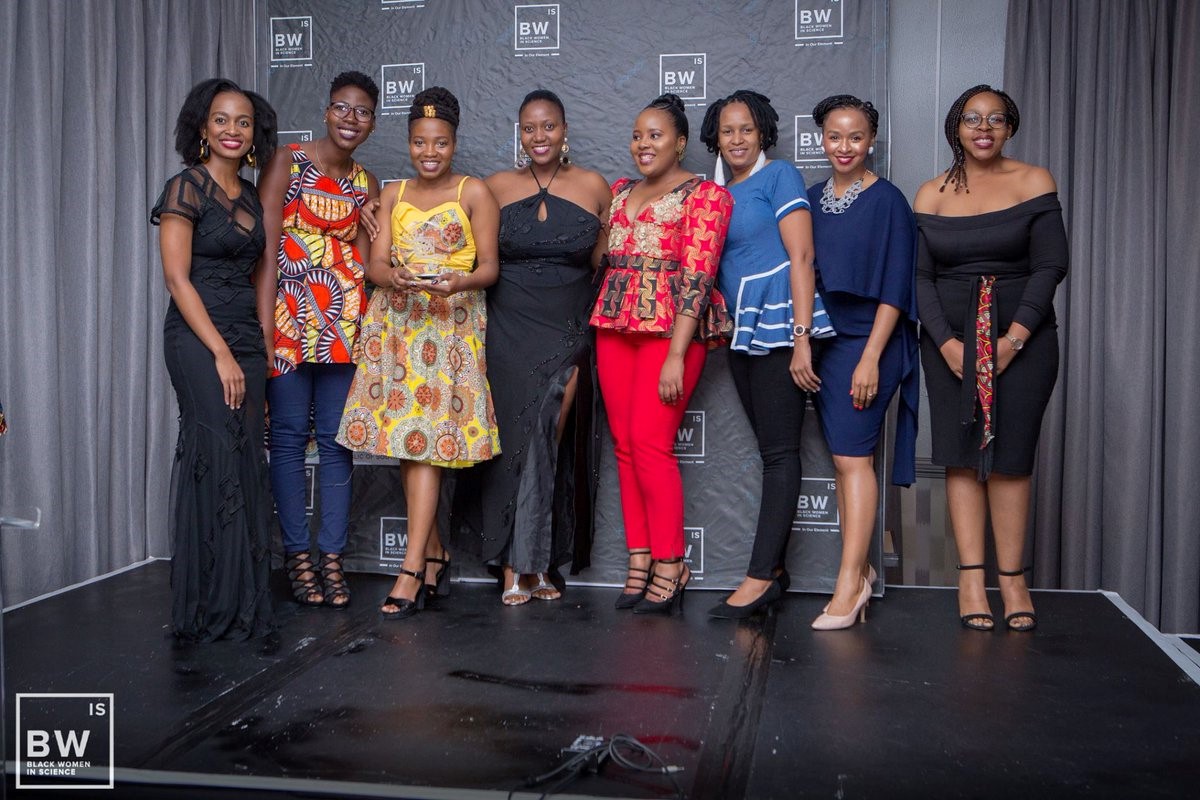
The cherry on top of this whole experience would have to be the Gala dinner we had in April this year. All the ladies got to dress up and everyone look absolutely stunning. I had never been in a room full of beautiful ladies in my entire life. Prizes were given, food was eaten and conversations were shared. Our group even won the “Best Pitch Award”, which was completely unexpected if you ask me. The year I spent as part of the BWIS fellow has been insightful and memorable. I got the opportunity to meet amazing people in STEM and we have all gotten to share our journeys as postgraduates and working professionals. I am now a BWIS alumnus and part of their mentorship programme. I am very grateful to the BWIS team for taking the risk and choosing me to be one of their fellows because I have found my sisters in science.
The purpose of this post was to basically share the importance of finding people who you can relate with. Not necessarily on a social platform but on a more “professional” platform. Whether it be “Women in Science”, “Women in Engineering” or even organizations/forums that are within your field. As long as you find a place where you belong and can be uplifted in your career. I read somewhere about the “Power of the Pack: Women who support women are more successful.” After you have found your happy place, go out there and be someone else’s happy place by mentoring our young girls to join the STEM field because everyone keeps asking: Why aren’t there more women in science?

 SAYAS BLOG