The Unsung Heroes of Palaeosciences

In 2016, I found myself in the beautiful country of Kenya alongside a team of researchers, curators and technicians from South Africa. We were in Kenya to attend a workshop titled: Developing a collaborative pan- African approach between partner institutions in support of palaeoscientific research training and public outreach. This was the very first time I was exposed to the ‘behind the scenes’ work of palaeosciences and just how much it impacted the research I so loved.
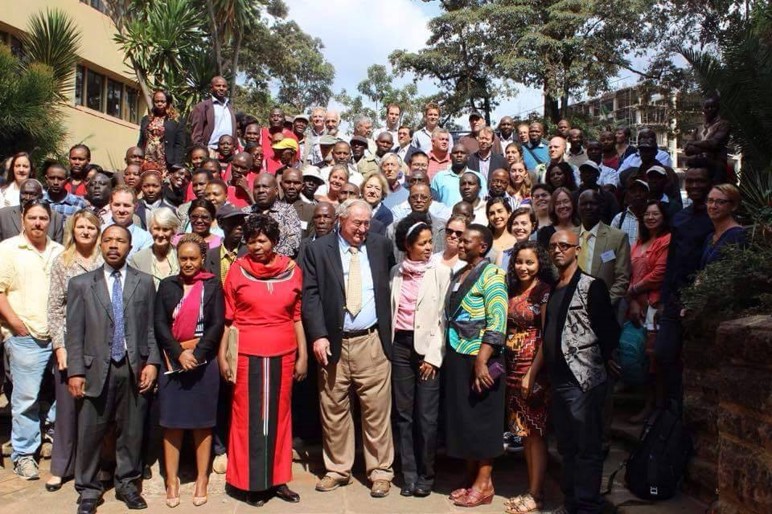
Unsung heroes of palaeosciences Nairobi

During our time in Kenya, we attended the Unsung Heroes of Palaeontology awards ceremony, hosted at the National Museums of Kenya. I was so overwhelmed with pride when I found out that two members of our travel party were being honoured at this event, Mr Lazarus Kgasi (Senior Curatorial Assistant at Ditsong Museums) and Ms Zandile Ndaba (whom I affectionately call ‘Mama’, Technician/caster/ excavator and explorer at University of the Witwatersrand). These two incredible individuals were being celebrated for their contributions to our science, for their role in uncovering pieces of our history that help us understand who we are today, where we came from and how we fit into the puzzle of life on earth. Many other prominent fossil finders, technicians and curators were celebrated from East Africa, an evening dedicated to their contributions, but I could not help but wonder when I left, what happens now?

Often, when we discuss ‘equality’, ‘transformation’ and ‘diversity’ in academic spaces, we are usually only referring to academics and not other members of our team and community which includes technicians. When we fight for fair pay, fair treatment and recognition, I hope that we always remember that not all our colleagues are scientists in the traditional sense, but that their contributions to the science are by no means any less. Technicians perform a wide variety of roles in palaeosciences, I list a few below:

  • They are often fossil finders at the forefront of excavations (they are so talented that they can spot a fossil before any researchers do usually).
  • They are the first to see a fossil after hours and sometimes years of preparation using fine tools such as air scribes (in my eyes, they are the ones who breathe life into rock so that the scientist can tell the story). Check out this cool fossil preparation time-lapse video!
  • They assist in the education of future generations of researchers through their incredible artistry when casting fossils (we have some of the most talented casting technicians in the world and their casts are used globally in schools and museums to teach the history and importance of fossil finds in Africa)
  • They are teachers. During my time in Kenya I was exposed to the chemistry behind cast making, the big data management behind curating and the project management behind excavations. These individuals are not only technical staff, but they are also highly trained, highly specialised individuals with a vast amount of knowledge that I personally think most researchers take for granted.

zandile ndabaIn the past, technicians were often exploited, coming from a disadvantaged socio-economic background, with not many options for further education. This led to their contributions being largely ignored, while researchers accepted the glory that came along with significant finds. This is an especially sensitive reality in South Africa, where the technical workforce consisted of mostly Black Africans (and still does today). Is one prize giving in their lifetime enough? Is one moment to recognise all they have done really going to make a difference?

While I completely agree that it is important to celebrate these moments, I do believe that a greater impact, a greater change and a more meaningful exchange would be to invest in the present and future of technical work in the palaeosciences and the role of these individuals in our ongoing research. This includes skills development and certification and proper compensation. Funding is often tight in the field of palaeosciences but that can no longer be used as an excuse to exploit the hard work of individuals who deserve more, more support from us as academics, students and colleagues.

This change is on the way as more people acknowledge the contributions of technicians in their research papers, sometimes (but not often enough) they are included as co-authors. However, this is not the norm and it should be, their contributions often lay the foundation for research work. As a young woman of colour in science, I firmly believe that I cannot thrive in a research space until we all do. Aviwe Matiwane Kim Tommy

Last year, in celebration of Heritage Day, I was fortunate to give a talk at the First South African Fossil Hunters public symposium alongside my dear friend (and super incredible palaeobotanist and science communicator) Ms Aviwe Matiwane, a PhD Candidate at Rhodes University and Albany Museum. Aviwe and I had been in discussions for a while on what we would present, we had both agreed that we wanted to take this opportunity to highlight members of our community that are often forgotten. Before ending off this blog post I would like to thank the technicians and curators who have made an impact on my life. Our science is so much better for having you in it. Thank you for inspiring me, encouraging me, supporting me and motivating me. You are deeply appreciated and valued, and I promise that when we fight for a better future, we include you in it.  
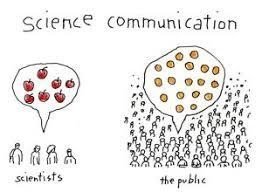
Getting your scicomm on

Science communication or “scicomm” as it is termed, is becoming an increasingly important tool in the skills repertoire of scientists. This is in part due to the need to combat “fake news”, pseudoscience and misinformation but also in part because it is important that research work is shared beyond academic circles and researchers are becoming aware of its importance and the potential benefits of committing to communication in some form. Academia is often referred to as an “ivory tower”, a community that is exclusive and separated from members of the public, however, there are many researchers working toward dismantling this stigma so that all people can enjoy and understand the wonders of the world we live in.

b57455ec0cca9bd19f2375e12871b959

How does science communication benefit me as a researcher?

Many scientists are often hesitant to participate in science communication because of the fear that it does not actually benefit them and instead takes up time they already do not have. Science communication has been found to be beneficial to researchers in a number of ways, this article published last year in Steemit highlights a few of these reasons. Assistant professor of fisheries ecology at Clemson University, Brandon Peoples, the lead author of a journal article published in PlosOne found that the number of tweets about a primary ecology research article was significantly correlated to the number of citations that the paper received. Although this is a fairly new area of research and there is confounding evidence, tweets may not be directly linked to the number of citations but they are important in getting the research work out into the online community, which could then result in more people reading and citing the publications.

Another benefit is that it allows you to connect with people who may have similar ideas or suggestions that could potentially result in collaboration and future research. I have found a community of diverse researchers on my own Twitter account who I constantly learn from, although we live on different continents, it has allowed us to connect, collaborate and support one another.

Ultimately, the motivation should be in sharing years of hard work with the people it will potentially benefit, whether that benefit is direct or in the expansion of our knowledge, it is important that science is shared as it is never the property of one person.

Some researchers are uncomfortable in the public eye or with communication and for that reason, it is important to remember that there are dedicated science journalists who are trained to convey a message in an interesting and understandable way. So let us never forget that our close ties to the humanities serve to benefit all of us and all of the people we hope to reach.

Why is science communication important?

As I mentioned earlier, science communication is an important tool in combating the spread of “fake news” and pseudoscience. The advancements of technology have allowed us to access vast amounts of information at the touch of a button, and although this has greatly benefited us, it has also provided a platform for the dissemination of misinformation which can sometimes be harmful to people and the environment. There are many examples of pseudoscience, one of my personal hates as a biological anthropologist is the idea that ancient structures, such as the pyramids of Giza, were built by extra-terrestrials. This type of misinformation uses racist undertones to undermine the achievements of ancient people, most notably Africans. There are many other controversial topics which researchers have been actively addressing in order to ensure that the public receives the correct information, these relate to topics such as climate change, vaccinations and race theory among others.

8402_10157311577218047_9171874701828392270_n

One controversial topic that has been discussed recently is the use of ancestry testing and genetics by white supremacists in order to justify “racial purity” which was denounced in 2018 by the American Society of Human Genetics, you can read more about that in the New York Times article by Amy Harmon.

How do we communicate science?

In order to communicate science effectively, it is important to understand the audience and community you are trying to address. Many make the mistake of saying “the general public”, which itself, is composed of many smaller “publics”. It is important to tailor the communication to the intended audience and to always remember that it is a CONVERSATION and not a lecture, do not talk AT people, engage WITH them. It is also important to remember that we have many different communities and cultures and that a lack of understanding and respect could potentially create problems in communication (another reason why diversity and representation is so crucial to the betterment of science!). Another topic which is important to me is the language in which we communicate. South Africa is home to 11 official languages, of which, English is predominantly used in research, this means that science becomes largely inaccessible to the millions of people who do not speak English as their first (or even second) language. There has been phenomenal work in this area by Sibusiso Biyela of Science Link, who translates scientific research into isiZulu. Please do yourself a favour and read this amazing article written by Sibs titled “Decolonizing Science Writing in South Africa”.

Once you have figured this out the rest is easy! Most science communication is done online these days, but it is important to remember traditional media such as radio, tv and print which have a far-reaching audience as well. This can be achieved through collaboration with local community radio stations, newspapers and TV interviews.

What can I do as a young researcher?

There are many opportunities for young researchers to engage in Scicomm here in South Africa and the recently published White Paper on Science and Technology by the Department of Science and Technology ensures commitment from our local researchers. Marina Joubert has discussed this policy and its implications in The Conversation Africa. In order to introduce you to the world of science communication, here are a few ideas and competitions that can help you on your journey!


32588573_10156200044817184_5390891865874628608_n

  • Start your own scicomm journey on social media. This was my major start, I just started tweeting! It could be about ideas, or cool pictures or published research work. Engage in your online community
  • Online science communication course through Stellenbosch University– this course is run by Marina Joubert who is one of the leaders in science communication in South Africa.
  • FameLab South Africa- One of the most prominent science communication initiatives challenges researchers to present their work in under 3 minutes! There is also an amazing pre-workshop facilitated by Jive Media Africa which I encourage as a FameLab alumni! This competition is run annually and South Africa has produced international winners such as Tshiamo Legoale, a South African Geologist at Mintek, winner of FameLab International 2017. We have some of the best science communicators in the world and you could be one of them!
  • NRF SAASTA Young Science Communicators Competition– This annual competition allows aspiring science communicators to explore various mediums for their scicomm, this includes video, audio, written text and even writing in indigenous languages. Keep an eye out for the deadlines!
  • The Conversation Africa– The Conversation is a great platform for sharing research work. They have a dedicated team of science journalists who are professional and well versed in scicomm. They are very helpful and always looking for interesting stories! As a PhD candidate, you can write an article for The Conversation with your supervisor as a co-author.
  • South African Young Academy of Science bloggers– well, I mean, need I explain? Join us! Share your voice and write for SAYAS. The call is announced annually and next year this could be your blog spot.

Science communication is a journey, find what works for you and never be afraid to explore beyond your comfort zone, you may just find that you like the deeper waters!

04de0b2b8206cfe482841c1fdbb22e9e