A new kind of scientist

I had some time to reflect on my career after the Science Forum South Africa meeting at the CSIR in December last year. Before I began my postgraduate journey, I thought that pursuing a PhD was all about equipping me with the skills I needed to do a job or more specifically to be a scientist. Back then I didn’t understand what a scientist really was.

While the movie Outbreak did give me an idea, some of my teachers and even my dad painted a completely different picture. To them, a scientist worked in a lab, wore a white coat and did really complicated experiments to test hypotheses. Scientists didn’t venture out, they only cared about publishing and, where they could, they stayed away from the limelight. Over the years I have met some scientists like that but there weren’t many.  Was this the career I really wanted to follow?

Yes. My love for science and the need to satisfy my curiosity overpowered any stereotypes that might have discouraged me. Fortunately, as I started on this journey, I learned very quickly that a scientist was nothing like what was described to me—unless you wanted to be that kind of scientist. Being a scientist was so much more.

Why was I thinking about this after the Science Forum? For anyone who hasn’t been to one, I encourage you to attend. It really is something special. The forum brings together scientists, journalists, policymakers, business people, etc., from around the world, to discuss the importance of science, technology and innovation for development of the African continent. It also seeks to unify the African science community so that we can work more closely together to build a better continent for everyone.

The scientists I observed at the forum weren’t wearing lab coats, they weren’t hiding in their labs, and they weren’t sitting in a corner huddled over a laptop. The scientists I met were leading panel sessions and science talks. They were asking questions of other scientists, policy makers and business people. Some scientists weren’t scientists anymore — at least in the strict sense — they were starting their own companies, managing others, running communication firms, doing PR, advising ministers and so on. These scientists were different.

While the training of scientists hasn’t changed too much over the years, there are a number of critical skills, general and field dependant, which one will acquire. Outside of science, companies have found many of these skills useful for other tasks. Ever analysed large amounts of information with some comparative work? You might want to look at becoming a market research analyst. There are many more examples where training in STEM can be used for a variety of jobs—old and new.

SAMSUNG CSC
Mulalo Doyoyo: an engineer and researcher from Limpopo who is a business owner, inventor and lecturer
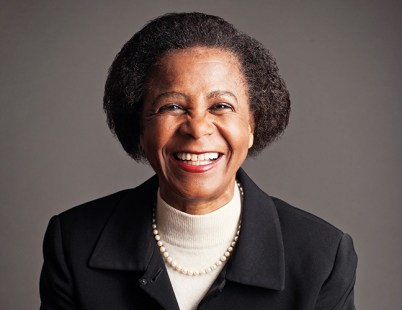
Mamphela Ramphele
Mamphela Ramphele is a South African doctor, struggle icon, academic, top business woman and author.


Elon Musk
Elon Musk is a South African-born Canadian American who studied Physics and became a business magnate, investor, and philanthropist.


As scientists we are rather lucky. There aren’t many careers which offer the same kind of flexibility and allow you to diversify. Being a scientist is not a dead end (nor is the path there straight). I have found that as a scientist— a microbiologist, in my case—I have been given more opportunities than I could have dreamed of. Yesterday, I took part in a science communication competition. Today, I have written a blog piece. Tomorrow, I will lead a discussion inspiring young scientists. The day after that, I will carry on my experiments. In a few years, I might lead a panel discussion on policy change in Africa at the Science Forum as CEO of my own private consulting firm; or perhaps I will be on a tropical island somewhere celebrating my Nobel Prize(!). As a scientist, we don’t need to keep our science in the lab, there’s a wide world out there that needs a new kind of scientist.


An Outbreak of inspiration

After one of our Professors, Sanushka Naidoo, challenged us to think about what it is that inspires us and what we aspire to be, I stumbled onto an opinion piece titled, “Why Universities need to tell better stories.” You might be wondering what aspiration and communication have to do with one another and I hope to make that clear by the end of this blog.

Like many of my fellow scientists, I was inspired to do science. The inspiration came not from a wonderful biology teacher or a visit to a local lab but rather from a movie called “Outbreak,” starring Dustin Hoffman and Morgan Freeman. I was ten at the time (I know, where were my parents?) and after watching “Outbreak” five or six times, I decided I wanted to be just like the scientists I had seen on TV, working for the Centers for Disease Control and Prevention (CDC). I was going to rid the world of HIV and Ebola.

Outbreak
Credit: https://www.empireonline.com/movies/outbreak/review/ 

This kept me going for years! After I completed my undergraduate degree in microbiology, I applied for an Honours hoping to get a project with a Professor of virology, someone who studies viruses. Unfortunately, at that time they were only accepting female students. I then had to change my focus and ended up, thankfully, working on plant pathogens instead. You see, shortly after I started my Honours, I learned that I couldn’t handle blood all that well, and seeing that Ebola is a haemorrhagic disease that makes one bleed (a lot), I was lucky to have made the switch. Nine years later, I am a PhD candidate still working with plant pathogens and I haven’t looked back since.

While “Outbreak” isn’t strictly science communication, it did do a lot to inform me about what some viruses can do, how they spread and the risks they pose; even if it was a little “Hollywood.” Yes, it was a work of fiction shot in a studio in the United States but some of the images portrayed in the film reminded me of some of the photographs that captured the tragedy of the 1995 Ebola outbreak in Zaire. The release of “Outbreak” at the time of the Zaire outbreak popularized our concerns about a deadly virus spreading and so also created awareness about these deadly Ebola-like viruses. Remember this happened at a time when social media did not exist. If you didn’t learn about the outbreak from the TV, radio or newspaper, then the cinema was going to show it to you.

My work may seem less exciting to some, especially when you’re standing in a conversation with someone who works on cancer therapies or has found new ways to harness energy from the sun, but I have some wonderful stories waiting to be told. So do many others. Much of the world’s research happens at institutions of higher learning, by the researchers and students who work there. They research everything from HIV and evolution to cyber security and politics.

At the University of Pretoria, they have recently started something called “Research Matters.” This is one way of showcasing some of the most relevant research happening in South Africa, on its campuses. With the help of social media, the university is trying to generate a larger audience to share these stories with. While this is a start for research communication at our university, I often wondered if it shouldn’t be us, the scientists, getting ourselves and our work out there to the people who fund it and benefit from it.

There are journalists, or science journalists, for that. Yes, there are, and they have a role to play in communicating science but I think there are other ways for us to share our science too. Beyond communicating with the scientific community through scientific papers, posters and talks I have learned to get in touch with a broader audience about my work and other topics using my drawings, cartoons, creative pieces and even blogs. If I had the budget and the time, I think I would even make a film about it.

I have been told that I do not fit the typical scientist mold but I doubt anyone would be happy fitting a mold. We are all unique. Just because we are scientists doesn’t mean that we are only good at science. Some of my colleagues also sing, dance, rap, act, write, summarize talks in three minutes or less and, believe it or not, do it well; sometimes better than the science bit. Using these and other talents in innovative ways can create unique avenues for us to share our research and communicate these stories.

During my PhD, I really started to see what being a scientist was like. After struggling to communicate with friends and family about my work, I realized that I was like Motaba, the virus in “Outbreak.” The scientists “got me” but no one in the general public wanted me. If I didn’t evolve my way of thinking, my work would “infect” just a few and that’s when it clicked, I need an outbreak. If we are to share the wonderfully infectious world of science, we are going to need to be more infective!