Building a cohesive world

“Dream,” by Mathapelo.

I recently had the opportunity to attend the 9th HOPE Meeting in Japan, with 110 delegates. This was quite an educational and exciting opportunity. Apart from learning about the culture and people of Tokyo, which included writing in Japanese, we had the chance to interact with Nobel Laureates. Through their unwavering consistency, these researchers achieved major scientific discoveries.

A Nobel Prize medal that belongs to Professor von Klitzing.

They, of course, gave us lectures on their Nobel winning work, but we were also given the opportunity, in small group sessions, to have discussions with the Laureates. These included their mindset, postgraduate journey, challenges and triumphs. They highlighted their need for consistently seeking knowledge, asking and answering questions differently, as well as resolving problems. They key driver to their success was the environment they were in at every stage of their lives.

The need to create relationships with people not only assisted them in growing as individuals, but also fostered their involvement in intercontinental research.

Team K

And we had the experience of true team-work and thinking with those who can challenge you. We we placed in teams, comprising exceptional doctoral and post-doctoral students from the Asian-African-Pacific regions. WOW!!! My passion was truly galvanized by this group of individuals. All teams arrived at similar conclusions: if we don’t work together, our progress as a world will be tainted. And, if we resolve mundane or even global problems, do the people who can use these solutions have access to them? We need to create platforms that ensure that science is not restricted to formal publications, but is distributed to societies through platforms they regularly have access to.
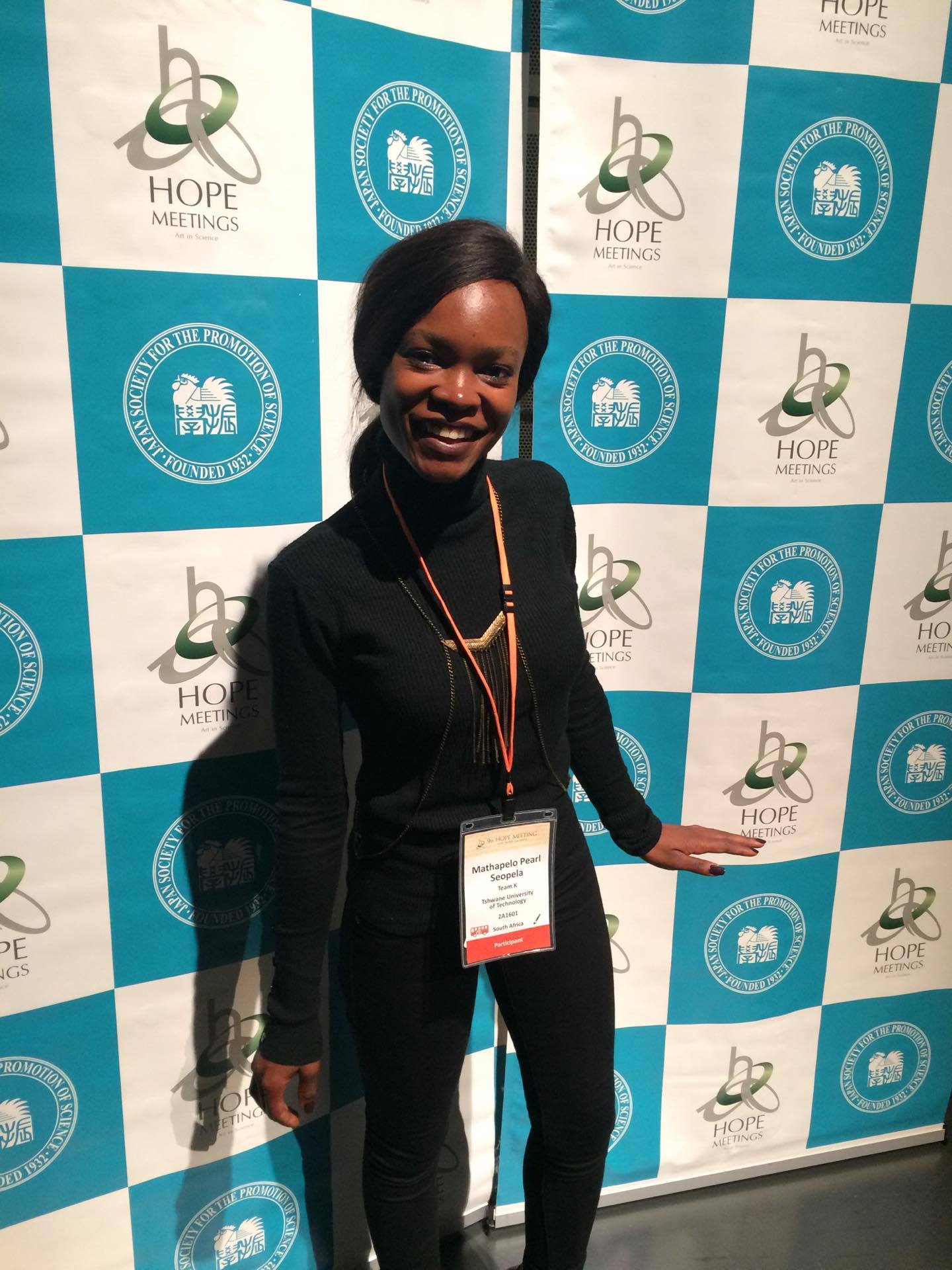
Photoshoot

Each delegate also had the opportunity to present their work. This was done in the form of a 60 second presentation and poster! If you haven’t done this before, you have no idea how hard it is to condense your life’s work into a single minute…The works covered ranged from chemistry to out of this world science (astronomy). I left the meeting feeling that the future is indeed bright in the hand of the young people I met there.

As we thrive to become individuals in a world full of pressures, in addition to inner drive, it is through the relationships we build that we are propelled into becoming better beings. Most of the idioms that carry us through the perils of life, mostly talk about giving rather than receiving. A Chinese adage I often reflect on speaks to “the life of a candle never getting shortened by giving light to another”. We cannot evolve as individuals and society without the aid of people that we come along in our path. On the whole, South Africa – at its best – is a true reflection of this example. Ubuntu: working together, encouraging each other and effectively bringing change to our world.
The future of intelligence

Humans are born inventors – we keep on devising new technologies to (supposedly) make our lives easier and have a deeper understanding of how things work. There exists a collaborative relation between the human input and artificial intelligence, transforming our thoughts into tangible results. Computers are the closest form of technology that strives to ultimately match the human mind, albeit with much effort. Of course, this revolutionary equipment, introduced in the 80s and 90s, has changed our lives forever. Moreover, we now carry little computers in our pockets — the worst invention, according to parents — but it has improved our lives none the less. I would think that without applying technology effectively, researchers would be finding it quite difficult to make the leaps they have. In fact one would say that technology is both the fruit and the root of research. Our aim as researchers, broadly, is to investigate and discover, answering unanswered questions, if you will. The tools we use that aid us toward this are constantly evolving, trying to reach an age of high efficiency and turn-around time. 

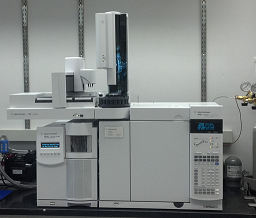
mathapelo-agilent-gc-ms
Oh, if only you could speak…

In a chemistry context, chromatography, a traditional method used to determine different kinds of chemical compounds in a sample, has evolved quite significantly over time. Before engineers built an instrument that could do this, many researchers used thin layer chromatography, which uses a sheet of glass, plastic or aluminium foil, coated with a thin layer of an active substance. Think of what happens when a piece of tissue and dip it in water; the water moves up the sheet- that is a form of chromatography!! In the former the ink would move with the “water”, leaving a trail behind it from the starting point, while in practice, the sample would separate into its individual compounds. Well, what my point is: as long as my explanation was, so were the processes one would have had to get through long before getting the results. But now, technological advances have improved the selectivity, efficiency and difficulty in carrying out all operations. I am not saying that we should over indulge and let it run wild, but use it within limits. I have come to know, that while it may be nice to have a machine that analyses your samples while you are at home, unsupervised technology has its disadvantages. I’ve sometimes returned to my beautiful machine and found a bent needles, upside-down sample containers and no results!!! In these cases, I would have preferred a talking instrument that could tell me what went wrong… Alas, we are in the age of discovery, I may be lucky with that one!!

Technological advancement is unavoidable and the debate of whether people will be replaced by machines is controversial. But one thing is clear, technology is there to make our lives and research easier, faster, more efficient. Whether we reach an age where instruments think for themselves, is for us to see in the future! Without people, the thought processes and emotions behind these creations would not be possible!