In 2021 I would like to travel… around South Africa.

In any other year, the title of this blog would be ‘in 2017/2018/2019 I would like to travel the world’. Travelling makes me happy, from the moment I start planning my trip to the day I return home and many years later. Travelling has always given me a sense of freedom and independence, and has provided long lasting memories and friendships. Some of the absolute best memories of my life are from my experiences travelling overseas. I often share these memories and stories to friends and family whenever I reminisce about my experiences. I have been fortunate to visit Portugal, Brazil, Australia, America, and Indonesia.

My personal travel plans have revolved around overseas trips. Regrettably, I have not made similar plans to travel around my home country, South Africa. South Africa is an incredibly attractive destination for overseas tourists, and I have not taken advantage of enjoying what my country has to offer.

South Africa is an amazingly diverse nation. The diversity of this beautiful country is not limited to its people, cultures, and languages. The rainbow nation is also home to a wide range of travel destinations. We have deserts, forests, snow-capped mountains, warm and cold oceans, vineyards, and sandy beaches. It saddens me that with all these attractions, I have somehow always looked to travel overseas, and I have not fully explored my country. With the global pandemic, this is the perfect opportunity for me to travel local.    

Images from South Africa’s nine provinces. Click here for more info.

As South Africa is currently on national lockdown level one, locals have been encouraged by SA tourism to travel locally whilst adhering to the National Institute for Communicable Diseases (NICD) Covid-19 guidelines. Local support of the tourism industry is especially important as many countries have placed continued and far stricter restrictions on travel to South Africa due to the new coronavirus variant which was identified in December 2020.

The tourism sector is extremely important component of the South African economy, directly contributing 2.9% to the gross domestic product in 2016. An estimated R68 billion has been lost to the tourism industry, including 300,000 job losses during the pandemic due to national lockdowns and restricted international travel to South Africa. 

The advantages of travel and tourism in this country are now extremely enticing to me. This is even more so now during the pandemic, when South Africans have limited international travel options. Upon arrival to a new country, South Africans are likely to be denied entry or have to undergo a period of quarantine, not much of a holiday.

Many local activities can be enjoyed outside and in open-air spaces under the warm South African sun. Travel destinations are not limited to specific provinces and are country wide, meaning that I can enjoy these areas without having to travel too far or book an overnight stay. So far, I have enjoyed day event activities including hiking/trail walking, mountain bike riding and an Acrobranch adventure course from areas in Gauteng. Of course, these activities were much cheaper than travelling to another country, are relatively Covid-19 friendly, and I get to share experiences with friends that usually would not be able to accompany me on an overseas trip.
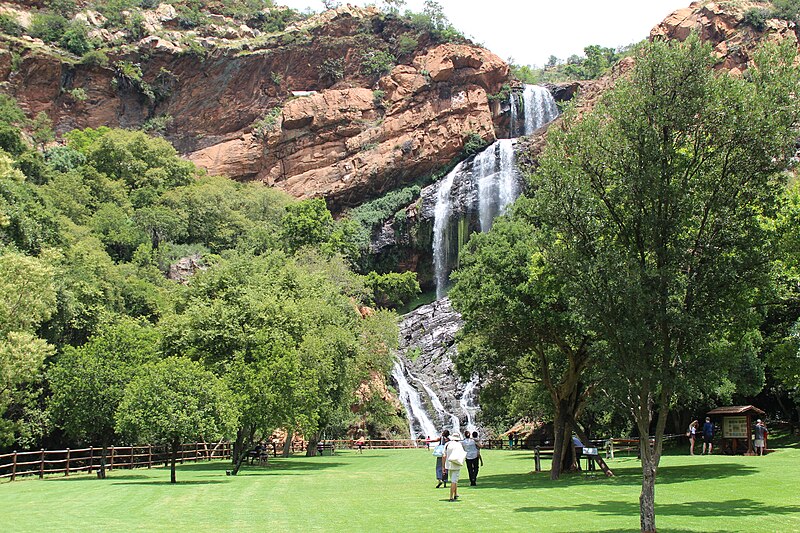
Walter Sisulu National Botanical Garden, Roodepoort

My plan is to visit each of Gauteng’s nature reserves, once per week, for the foreseeable future – I have counted at least ten great destinations that I have not been to, yet. Small plans can turn into bigger plans and I am hoping to explore other provinces this year.

In recent months, I have noticed that social media is filled with South Africans enjoying the outdoors. Posts that used to show people in crowded clubs before the pandemic are now showing people posing in front of waterfalls with their masks on. These posts have had a great knock-on effect as many people are keen to spend more time in outdoor spaces, where perhaps they would never have even thought about venturing outside before the pandemic.

Suikerbosrand Nature Reserve, Heidelberg

I have always been an outdoorsy person, I am sure that many more South Africans have caught the adventure bug and would most probably look to travel local, not only during the pandemic, but far into the future. Clearly South Africa is extremely attractive to overseas tourists, so I thought to myself, why not enjoy what your country has to offer? I am planning to put that thought into action this year.

Earth’s heart attack’ moment

The natural world is fading, the evidence is all around… But if we act now, we can yet put it right.

Sir David Attenborough

Growing up we are constantly reminded by our parents to eat our fruits and vegetables, drink water, and go to bed early. These habits are soon forgotten. Many individuals throughout the world lead extremely unhealthy lifestyles, consuming excessive amounts of sugary foods, alcoholic and fizzy drinks, and developing bad habits including a lack of exercise and smoking. Many of these people end up having serious health problems, including diseases, heart attacks, and other complications. For lucky individuals this is just a scare, and one which shocks them into changing their habits. My great grandfather did exactly that.

My great grandfather, Joao Infante, who I never got the chance to meet, was an ice-cream salesman. He was an incredibly kind and positive person, and his title of ‘salesman’ was used loosely. If a child were short of money or had no money at all, he would make sure that they still got an ice-cream. Because of this, he was loved throughout his community. Joao enjoyed 1920 Aguardente which is a strong alcoholic drink. The name Aguadente translates to “firewater” in English. At the age of 59, he was told by his doctor that he had cirrhosis of the liver. The doctor said he had only a few months to live, and so there would be no point for him to stop drinking.  

Devastated by the news, Joao went to see a specialist. My great aunt Delores Infante tells me of that interaction. She sat with Joao and the specialist told him that every drink he had was equivalent to him putting another nail in his coffin. Stunned by the statement, Joao decided that from that day he would never drink alcohol again and that he would lead a healthy lifestyle. To pass his craving he would put a few drops of 1920 on his hands and just smell it. He went on to live another 11 years. In the end, Joao did not pass away from liver problems as his liver had recovered. 

Humans are not only responsible for their own personal wellbeing and health. We are also increasingly influencing the earth’s climate and biosphere by burning fossil fuels, cutting down rainforests, draining wetlands and polluting oceans and rivers. Scientists have continually warned against these poor habits that promote climate change and biodiversity loss, which may hinder a sustainable future for life on the planet. We can relate that to a doctor telling their patient: ‘You ARE going to have a heart attack’. We would assume that, naturally, the individual would make some serious changes to their lifestyle to avoid this.

So, why is it that scientists are warning us constantly about the imminent demise of ecosystems, yet we see little collective change? Perhaps we do not believe our scientists as much as we do our doctors. Are we the patient that has been warned and continues to live with bad habits? Or do we need the global equivalent of a heart attack to change our behaviour?

The COVID-19 pandemic has been referred to the earth’s heart attack moment/scare. Ironically, a study suggests that global warming may have indirectly contributed to the coronavirus itself. More people working from home due to the pandemic may mean less air pollution, but this is projected not to make a significant long-term improvement. Climate scientists state that the global pandemic has actually placed less importance on climate change mitigation and more importance on the public health crisis and economic losses. 

The climate crisis is not just about global warming, in recent weeks large areas across Europe and North America have had record-setting snowstorms. The US state of Texas experienced record low temperatures, the states water and power supply were not ready for the freezing conditions leaving communities without power and water for days. Reports of at least 58 people had died in storm areas due to hypothermia, house fires, car accidents on snow-covered roads or poisoned by carbon monoxide emitted by vehicles or generators in closed spaces.

Texas in February 2021. Click here to see images of the record snowstorms in major cities across the world.

Such devastating disasters call for global change. It is up to each and every individual to come together to live a more sustainable and less impactful life. As Michael Jackson’s famous song says: ‘I’m starting with the man/woman in the mirror’. It is too easy to look to others, look to government or big organisations for positive change, it starts with you. You might be saying: ‘climate change will not affect me, why should I care?’ Maybe not right now, maybe not in five years, but your children will definitely experience climate change in its full force, and they will not be happy about it.