30 April 2015
 I’m in the heart of the Kalahari Desert surrounded by red dunes, shrubs, trees and grass scorched to death by the blazing heat of the desert. This is my second year of PhD research on the behavioral ecology and endocrinology of maternal care in bat-eared foxes or batties. Before moving into the world of foxes, I had mainly worked on invertebrates, completing my BSc Honours research on Marion Island spiders and a Master’s degree on invasive Argentine ants. I then took a break from schooling and plunged even deeper into the world of ants by working for an outreach project called Iimbovane (meaning ants in isiXhosa. We used ants as tools to raise awareness of South Africa’s biodiversity and species distribution across the Western Cape (see Quest, June 2010, pp. 8-11).
 I quickly hit a mental plateau due to the repetitiveness of my job and started itching for a new challenge. When this PhD opportunity came along, I grabbed it because there was a familiar link to my past – batties feed almost exclusively on invertebrates – but also an entirely new dimension. This would be the first mammal I ever research. The really unique thing about batties is that fathers shoulder most of the parental duties. While I personally think the human race could learn a thing or two from this phenomenon, the real question is: why do females abandon most of their maternal duties? To find answers to this puzzle, I record their behavior – we follow them on foot for 2hrs at a time. I also collect fecal samples to check for stress hormones – some researchers suspect that mothers are stressed because their mainly insectivorous diet may not meet their nutritional needs. Lastly, I employ sampling techniques (pitfall traps, sweep netting) to investigate how their food varies seasonally.
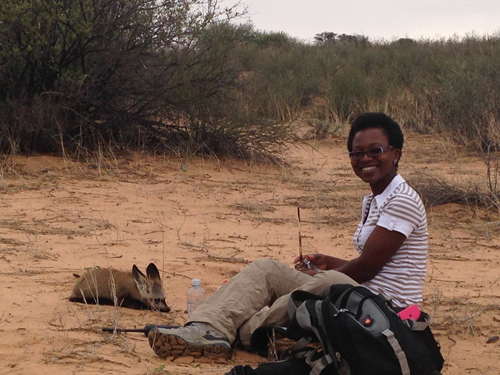 The best thing about my PhD research is the intellectual growth from learning new things about batties, bonding with other researchers, bouncing ideas off each other – all of which keep my mental juices flowing. Another definite plus is travelling; I love seeing new places and I get to travel to conferences and nature reserves. I feel fortunate to be this close to nature and to come across many rare animals that most people will only get to learn from textbooks. The downside includes long periods spent away from loved ones, especially during family time, like Easter. The remoteness of the reserve makes network reception a constant battle, further stalling any attempts to make contact with the outside world. Another challenge is spending many hours alone following a nocturnal animal in a reserve full of wildlife, venomous scorpions and snakes, all the while hearing strange noises emanating from nearby bushes. Sure enough, there are plenty of scary encounters to share with you, but I leave that for my next blog…
 I was born and raised on an Island (Sicily) in the middle of the Mediterranean Sea and I’ve always lived along the shore. I have worked for many years for

 SAYAS BLOG