A factor that had the biggest impact on making my journey as a woman in a male-dominated field easier was the luck of having good mentors and role models. I have been fortunate in finding women who I could relate to and who believed in me, which helped me get through tough times and helped my career progress so far.
There is an important difference between a mentor and a role model. A mentor is someone who knows you personally, advocates for you and supports you in a professional capacity. A mentor can be your supervisor, but may even be someone completely outside your narrow field of study. Whereas a role model is someone you may not know personally, but you can relate to in terms of their journey and their values. They often represent something you would like to replicate in your own life or career. Finding mentors and role models can be quite challenging, but the search pays off in many different ways.
Although many postgraduate programmes and universities run mentorship programmes, I have found my mentors informally like most South African students. As an undergrad, I would often ask questions in class and speak to my lecturers and tutors afterwards. This helped me form a relationship with the academics and postgrad students, which made it easier to seek out advice from them when I needed it. If I am struggling with something, I know there are several people who want me to succeed and would be willing to help me – whether it is directing me to resources on writing a good application letter, listening to me vent about a difficult course, or helping me find an internship.
A good mentor will help you progress as a scientist. By sharing their knowledge and experience, they can improve your skills and help you grow as a researcher and as a person. You should also be willing to take their criticism – which should always be constructive – and approach them with respect and eagerness!
I would like to emphasise that although there are advantages to having a mentor who shares part of your identities, such as your gender, race or religion, for example, a good mentor does not have to be someone who resembles you. As I was working on this post, I attended the UCT Vice Chancellor’s Postgraduate Brunch. During her talk, Professor Mamokgethi Phakeng also mentioned the importance of having a mentor. She shared her definition of a good mentor, as someone who is “‘highly achieved and generous with their knowledge”. To me, these are some of the most important characteristics of a good mentor as well – someone who cares about your progress and can help you grow as an academic.
In r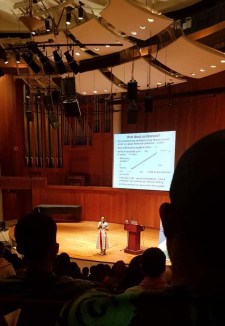 ole models, however, it is more important to have people who you can identify with. When I started studying astrophysics, I didn’t know of any other Muslim women in my field. Like many sciences, astronomers also wanted to stay as far away from anything political as they could, which felt isolating as someone who cares about social justice. It was comforting to me when I stumbled across a blog post about Naziyah Mahmood – a Muslim aerospace engineer who advocates for women in STEM, and seeing Professor Chanda Prescond-Weinstein openly discuss politics, share advice on surviving academia as a woman of colour and – most importantly – happily talk about her work on axions on twitter has been incredibly valuable to my experience as a scientist.
Up until recently, most portrayals of scientists have focused on white men in lab coats, but fortunately, there has been a shift in popular culture to diversify this image. With movies like Hidden Figures and even seeing women as scientists in the cartoons my 3-year-old niece watches, it’s reassuring to know that, in the future, girls will easily be able to see themselves as scientists.
I hope that this post will inspire you to seek out new mentors and look out for role models. Who inspires you to be a better scientist?
 SAYAS BLOG