Society VS PhD

Got your undergrad degree? “Congratulations!” Got your honours degree? “Wow, keep it up!” Got your Master’s degree? “Amazing! You’re going to THRIVE” Getting your PhD? “…Oh, still studying huh?”.

Can all my fellow PhD buddies raise their hands? This one is for you guys.

I can’t speak for all PhD students, but from what I’ve seen and heard, society doesn’t really understand what doing a PhD means. I’m not even sure they know what it stands for, PhD = Doctor of Philosophy. As a woman in STEM, I feel incredibly proud of how far I’ve come in science, and of the opportunity that I received to do my PhD. However, I don’t always feel this way when I enter a conversation about career trajectories, family goals or financial freedom.

PhD programmes differ in each country and field, some offer coursework in the early years while others (like mine) are conducted by research and I’m only marked on my final thesis so when a person asks me if I’m still “studying”, I always feel conflicted as to how to answer, because the version of “studying” that society knows, i.e. sitting in a library memorizing a pile of books for a series of tests or exams, is not the same as me “studying” pancreatic cancer through working in the lab, analysing my results, and writing up that thesis.

I often blame society. It has not painted us PhD students or even those who have obtained their PhDs in a great light. It often makes us look like boring, introverted, unskilled people. If I had to be vocal about my thoughts towards society, it might go something like this…

Dear Society,

A PhD is a JOB. The only difference is that sometimes the pay isn’t that great but show me a person who doesn’t complain about their pay-check every month. I get up every morning, and often work overtime during the weekend too, I respond to emails, write research papers, spend time in a lab coat and gloves, and go home feeling exhausted, just like you.

When asked what I was studying during my first year at university, I remember someone replying, “Science? Okay, well unless you go all the way to a PhD, you won’t end up making money”. Well, I’m here now, doing the PhD, and guess what? Those same people are now telling me to find a job because having a PhD makes me overqualified and nobody will want to hire me. Out of the very few that have made comments like this, ZERO have a PhD. And that’s just the point. How can I, a scientist, tell a painter to stop painting because they won’t find a job? I have no information about painters, the careers they can have, or the places they could go.

Please stop asking me, “When will you finish studying?” because, like you, I have no idea! I take it day-by-day, one experiment at a time. And I love it, one of the best parts of my PhD is the flexibility. But along with that, comes self-discipline.

So, you might be wondering after all has been said, why do I want to do this PhD, what’s so special about it? Well, a PhD is the most personal choice one can make. NOBODY can force you into it, or out of it (although some circumstances can get the better of us). Believe it or not, I am not doing a PhD to stay in academia or research. Instead, I have plans to graduate and move into a scientific corporate or industry setting as quickly as possible. So why am I doing a PhD if I have no intention of continuing with lab research? Again, that’s the point.

Society believes that if you’re doing a PhD that means 2 things: you’re becoming a lecturer OR you’re going to be in a lab for the rest of your life. Firstly, there’s nothing wrong with those 2 options but doing a PhD means you have the ability to LEARN, be flexible, manage multiple projects and handle large sets of data while designing and implementing changes to the project over time.

There are so many skills and techniques that you end up leaving with once you’re done with your PhD, that you can work at the highest possible position because of your capabilities and that’s something that I hope to achieve.

A PhD is not just a degree, it’s a life skill that only a handful of people are privileged to have (Okay, I’ll stop the glorifying here, we all know that there are some toxic parts of a PhD too!).

Regards,

The PhD student

P.S. Shoutout to my family who have always and continue to support me 😊

So, I hope these words coming straight from a PhD student help you to understand the value of doing a PhD and why unsolicited advice from those without PhDs should be taken with a pinch of salt. Throughout the few conversations I have had with professionals that have a PhD, they have only ever given me a “thumbs up”.

I remain positive that in a couple of years, if not soon, my PhD will push me up as high as I can possibly go, not because of the “Dr” title, but because of the skills and tenacity that my PhD has and continues to give me.
Cheers to the memories that will never fade

What defines the worst or best day? Is it based on whether or not you cried, or whether you made money or lost money? Maybe its based on how much work you have been given, or how stressed that made you feel. Well, for me its based on how I feel when I lay my head on my pillow at night. So, here’s my story on a very interesting day in academia but this isn’t an abstract, you’ll have to read the whole story to work out if it was the best day, or the worst…

In my old lab, a lot of the machinery was communal, meaning that we all had access to them, and it needed to be booked beforehand. Being valuable, you needed to be trained on these machines before using them by yourself. So let me introduce you to my favourite machine, it has multiple SEPARATE parts, extremely FRAGILE syringes, glass and THOROUGH cleaning processes, I present to you…the ITC machine! Or, in full, the isothermal titration calorimeter. This machine is important in understanding the nature of biochemical reactions.

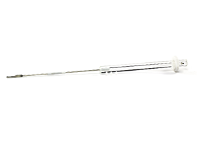
The ITC machine is old, it’s got its own issues too. For instance, its handle is attached to a part that holds its fragile syringe. Let me draw a picture for you. Its silver, and thin. Think of a lollipop stick, but much thinner. So, its handle is always getting stuck and being gentle is the only way to get around it. That means, no twisting, pushing or pulling. Seriously, this machine should come with its own warning book.

Picture: The syringe, gets inserted into handle.

After being trained on this wonderful machine, which I might add, is the ONLY machine that everyone used for this specific experiment, I started running my own reactions by myself.

Do you think you know where this is going?

On one particular morning, I decide to run an experiment and as usual, the machine and I were on the same page…UNTIL…it was time to insert the handle (which holds the “world’s thinnest syringe”). Now, I had been warned that if I feel like the handle is stuck, I should just pull it out and try and again. And what did I do? Exactly that. You thought I broke the handle, didn’t you?

So as suggested, I brought the handle back up and tried once again, but as soon as I felt an “obstruction” I brought it up again, my impatience growing as I attempted to go for my third time, but I stopped. I just stopped and froze, and my eyes widened.

When I looked at the syringe before trying again, it had bent! And it definitely was not bent when I inserted it into the handle. This is what I said, word for word in this moment, “Oh my god, oh my god, oh my god, oh my god, oh my god”. It was like when you win a public competition, or you got an award, my heart started to beat faster, my cheeks started getting warm and my mouth, dry. Except, the feeling was the complete opposite. As I continued saying, “Oh my god” in a panicky voice, I lowered the handle and removed the syringe. It was bent. So, I should probably “unbend” it right? So, I did… And to my relief, I fixed it!

Yeah right, I wish that’s what’s happened.

No, I didn’t fix it. Instead, the “world’s thinnest syringe” which was bent, was now split into two pieces because I tried to UNBEND it!

And there it was, the worst moment of my academic career. I stood there, with these two tiny pieces in my gloved hands and stared at it until my vision got blurry and the tears started coming out. After a two-minute cry, I wiped my face and took the slowest walk to my supervisor’s office. Just my luck, the head of the unit was in the office too. I slowly approached, discussed the situation and apologised profusely. I like to think that they admired my honesty because they didn’t reprimand me, in fact they said it was okay and mistakes happen.

I used my puppy eyes filled with tears to tell the rest of my lab the sin that was committed, and again, was so appreciative for their support, they hugged me and said it was okay, BUT I’m pretty sure they were all annoyed (I would be too). Although I had butchered the poor syringe, I was lucky in 3 ways:

  1. My supervisor was supportive
  2. My lab co-workers were supportive
  3. There was an older, extra syringe 😊 (but I did not know this until after I broke the syringe). Seriously, thank God, because it costs approx. R50 000!

And that, was my worst day in the lab. When my head the pillow that night, so did my tears. I have learnt from this experience, even when you feel at your lowest, you remember the lesson (that is, pretend all machinery in the lab are like flowers, BE GENTLE) and know that life has to move on, that’s the only thing that makes it better.

I can laugh about this day now, but I guess that’s the beauty of life, right? You’ve got to have bad days in order to appreciate the good ones. Of course, I had “best days” too, but we’ll leave that for another time, spoiler alert, it involves a Masters degree and a distinction.