I think science should be fun. Sure, I am still young and might not know what I’m talking about, but I’m going to spend the better part of my life in natural science research. That is time I will never get back. I therefore must ensure that it is the best time of my life. I want to spend most of it being happy, not depressed. So then, how do I ensure that I am happy?
I’ve talked about balancing work with social interaction (especially with your family). But now I’ve rediscovered something: exploring! I’ve just spent a weekend as research assistant on a behavioural-ecology undergraduate field excursion. Behavioural ecology — the study of the evolutionary basis for animal behaviour due to ecological pressures — is not really my field; I’m more into environmental health research. However, as an assistant who was supposed to lead a team and help the students interpret animal behaviour, I found myself learning more than they did. The techniques and the data analysis used in this field just amazed me. How one translates a mere behavioural observation into a scientific conclusion really changed my perspective about natural science research. And as I was listening to different students presenting their findings at the end of a very long basic research day, I remembered why I wanted to do this whole science thing in the first place. Most importantly, now that I’m back in the middle of my MSc proposal, I derived a few lessons that I believe will make my life a little bit better.

Firstly, most of the research that we do is not informed by just a single discipline. We fool ourselves if we think that’s possible. No matter your field, there is an aspect of your research that needs the expertise and justifications of another field. This is why it didn’t come as a surprise to me to find out that my research has a lot of justification from chemistry, even though I am in biological sciences. Yes, I was frustrated wading through the chemistry literature, but now I know it’s all worth it. It’s the joy of discovering something unexpected – like a treasure buried in the sand – which you wouldn’t have found if you just stuck to walking down the path.
Secondly, one cannot be stereotyped in research. There are many things that are happening in and around what one is doing. A colleague and his group were observing the behaviour of ungulates. They measured things like wind speed and the local temperature. If someone had told me this a couple of months ago I would have asked, “Why in the world would one measure that? It’s just animal behaviour?” But these affect the behaviour of the animals too; kind of how we also change our behaviour when it is cold or too windy. There really is a lot going on. I think if we can be aware of what is going on around us, our research sites, laboratories, and even in our little spaces, we can eliminate some part of the stress and have fun. Also, hearing about somebody else’s problems always makes your own seem smaller 😉

Lastly, things aren’t always as they seem. Everything is interconnected, in sometimes unexpected ways. This is true by the mere definition of behavioural ecology. But looking at other fields in science also, we really need to tap into why things are happening. It is true, we need to invent and modify to better our world but we also need to find out why things are happening and work on research that is intended at eliminating the factors that are influencing the problems we have in the world today. And we can’t do this without looking at outside factors, other fields that we’re maybe not trained in. Physiology can change because of physics and chemistry – and all of this is linked to ecology and economics!
I still have no idea what “science” should look like, but I am busy reading a friend’s research in chemistry. I enjoy forensic pathology documentaries and every chance I get, I take ten minutes to read up on psychology research. It is not because I have too much time on my hands. I think all the disciplines may be interlinked somehow, and as we embark on these postgraduate studies, we have to be open-minded and inquisitive. Like children, playing. Coming up with new research ideas and justifying what we do will be easy this way. That is the beauty of science. That is how we get to excel in science.
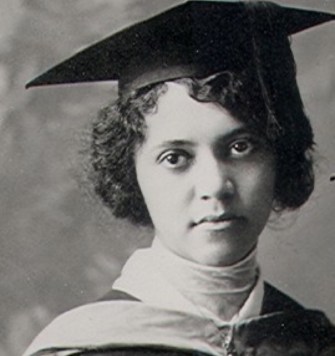 Following on from her Master’s, Ball was asked to work on improving the treatment for Hansen’s disease (leprosy). Many had tried to modify the traditional treatment, the oil from the chaulmoogra (Hydnocarpus wightianus) tree, to treat leprosy but could never get consistent results or overcome the unpleasant side effects. Eventually, Ball isolated the ethyl ester compounds from the fatty acids in the oil, which meant that it could now be used in an injection to treat the disease more consistently without the side effects. The isolation technique or “Ball method” was the preferred treatment for leprosy for nearly two decades, until 1940.

 SAYAS BLOG