Many people ask
Many people ask me why I came to South Africa to study. I usually answer with “It is the best place in the world to study forest diseases”. Though I completely believe in that answer, it wasn’t the primary reason I moved here from the opposite side of the world—the USA.
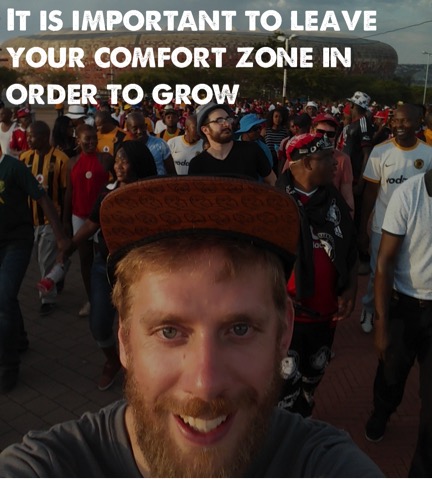 My name is Joey Hulbert and I am a PhD student at the University of Pretoria, studying in the Forestry and Agricultural Biotechnology Institute (FABI).
I moved to South Africa for 4 reasons:
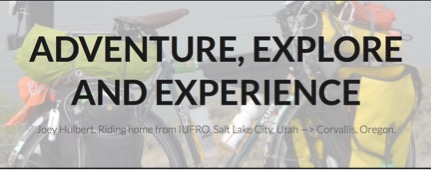
- I crave adventure. Once I started looking at PhD programs abroad, multiple opportunities had my attention, but I was attracted to South Africa because it offers plenty of adventure!
- I knew I needed to leave my comfort zone. During my MSc at Oregon State University, a friend and I started a radio program called Inspiration Dissemination. The program features graduate students to introduce their research live over the air. During one of the episodes, our friend from Columbia said it best: “It is important to leave your comfort zone in order to grow into a scientist”—I didn’t know how much it would affect me at the time.
- FABI is exceptional. The Forestry and Agricultural Biotechnology Institute is a
 n oasis of plant health researchers in Africa—well actually, in the entire world! These days, it is difficult to find training in forest pathology—the study of tree diseases; many academics around the world have retired without being replaced and the continual decline in financial research support doesn’t help.
 - There is support for my Dream Project. Finding research support is one thing, but finding research support for a project that you dream up is the real challenge. Fortunately, my advisers Mike Wingfield and Jolanda Roux were willing to support my dream, and that is the primary reason I moved to South Africa.
The PhD Project
 Citizen science is something else I was introduced to through Inspiration Dissemination. Citizen science projects engage the public in scientific research.

Cape Citizen Science is the project we have initiated t o couple educational outreach with hypothesis-driven research about plant disease in the fynbos biome. We want to study a group of microorganisms called Phytophthora—translated from Greek = “Plant Destroyer”—while educating anyone who interested about microorganisms as the cause of disease, the importance of biodiversity, the consequences of introducing invasive species, and the general process of scientific research.
Citizen science projects are fantastic tools for education. I really enjoy designing the educational component of Cape Citizen Science and I think Madiba would approve.

My involvement in Inspiration Dissemination had a profound impact on my life. Through the program, I discovered that I am more passionate about connecting the public to science than I am about advancing science. You could say that I was Inspired to inspire others. This is why I chose to initiate a citizen science project for my PhD.
Stay tuned for more blog posts about communicating science and engaging the public!

 SAYAS BLOG