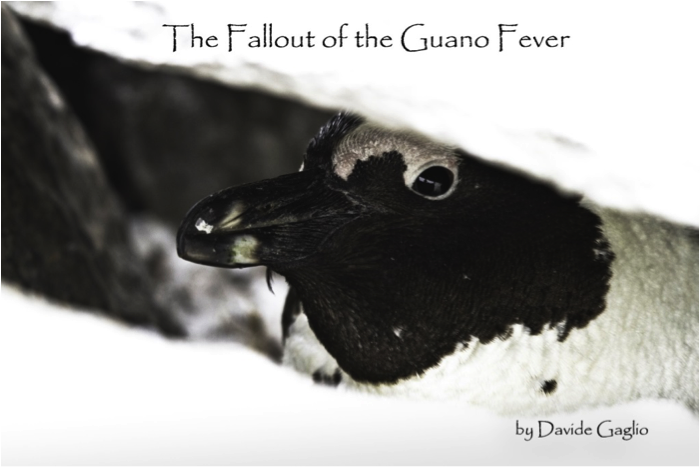
A story from the past: “The Fallout of the Guano Fever”

By Davide Gaglio

Doing a PhD is not just an academic exercise — it can make you attuned to events, ideas, and knowledge that has real-world consequences for humans and the planet we inhabit.

It is well known that oceans play a vital role in the welfare of humans and are an important economic resource, which sustains a large portion of the global food industry, renewable energy, tourism and much more. And I often wonder why we are so indifferent to the future of the ocean which we use? Not far in time and in space from our southern African coastline, personal profits created human deprivation and exploitation of an ecosystem that has not recovered to this day. Did we forget about the tragedy that happened during the White Gold Rush in South Africa? For about one hundred years (1890-1990), the rush for guano caused slavery, death and significant disturbance at breeding sites of endemic South African seabirds for the profit of only a few. I spent a lot of time on offshore islands for my PhD, and using my photographic passion, I would like to tell you this story with a short film.

This film interprets the hypothetical journey of a guano scraper reliving the first moments; the discovery of a pristine island that soon would become a prison; the first encounter with the unsuspecting wildlife, harsh weather, struggle for survival; the horror.

I am glad to introduce you: The Fallout of the Guano Fever
guano fever

It’s a story from the past that brings us to the modern era where the same marine environment is still being over-exploited.

Maybe it’s not clear for all but over-fishing, and its associated environmental impacts, is our biggest global environmental challenge alongside those posed by climate change. Scientific research (which includes my ongoing PhD) highlights that if we continue fishing as we are now, we will most likely see dwindling supplies of seafood within the next few decades. Over-fishing in southern Africa is emptying the seas faster than nature can replenish it, threatening the food security of all of us.

And things are getting worse.over fishing

The main solution is that fishing needs to be sustainable in order to restore the regions highly degraded marine environment, without negatively impacting Africans’ food security.

In South Africa, the WWF is doing a great job with their SASSI program. The goal is to improve fishing practices that are destructive to our oceans. This includes issues like illegal fishing, over-fishing, by-catch (the catch of species not intentionally targeted by fishers but harmed in the fishing process) and habitat destruction. Their system includes an advice pamphlet for the consumer to make the right choice once in the supermarket. By using a “traffic light” system, the colour-coded SASSI list categorizes selected South African and imported seafood species according to their conservation status.

This is happening now and here…it’s your choice to avoid repeating mistakes from the past today!

Balancing act

By Keafon Jumbam

We are about to delve into some pretty serious stuff regarding some rather unfortunate impacts of climbing the academic ladder as a black woman. My aim is to get us talking about how to turn things around for the better. And since it’s from a personal perspective, I will dip into my private business to illustrate what I mean.

You ready? Let’s get started:

(c) keepcalmomatic

Women are supposedly great multitaskers: chairing boardroom meetings, holding down relationships, babies and family life while simultaneously globetrotting to save the world. Oh yes, we are known to juggle many balls at once. In fact, we are expected to have it all– kids, family, and a fulfilling job. The problem is – I’m almost certain I missed out on the juggling lessons. If I were to draw a distribution curve of my professional time budget, it will be heavily skewed to one side – the studies side.

Sometimes it feels like I messed up big time by focusing on education, because when I finally lifted my head up from my books, everyone my age had found “the one” and conversations had shifted to diapers and crèches. I was always the good student, holding fastidiously to my books and obeying religiously to lecturers and parents’ instructions to, “Focus on your education, there will be plenty of time for other things later”. And so I did. Nobody ever mentioned what happens when “later” becomes “now.”

Right now my success is becoming an issue. The higher I climb the academic ladder, the costlier it becomes for me to make relationships work. I’ve become a threat (by default) to married women who would cling ever so tightly to their hubbies at social gatherings. Being African has exacerbated the situation – both society and parents have suddenly changed their tune to, “No husband yet? What is wrong with you?” Or “You aren’t getting any younger, you know.” Elders ceaselessly pester one about wanting to meet their grandkids soon, amidst snide comments of “Will you marry the PhD?” Add to this a Christian upbringing and you are sure to be casting out demons from here to Jericho and back, all in a bid to “rectify” your single status.

It doesn’t help that brothers who show up at my door are immediately intimidated by my academic background. One recently told me – within minutes of introduction – that I would have to avoid talking about my academic qualifications if I wanted our relationship to work.

“Men get intimidated; it’s just a fact,” he emphasized.

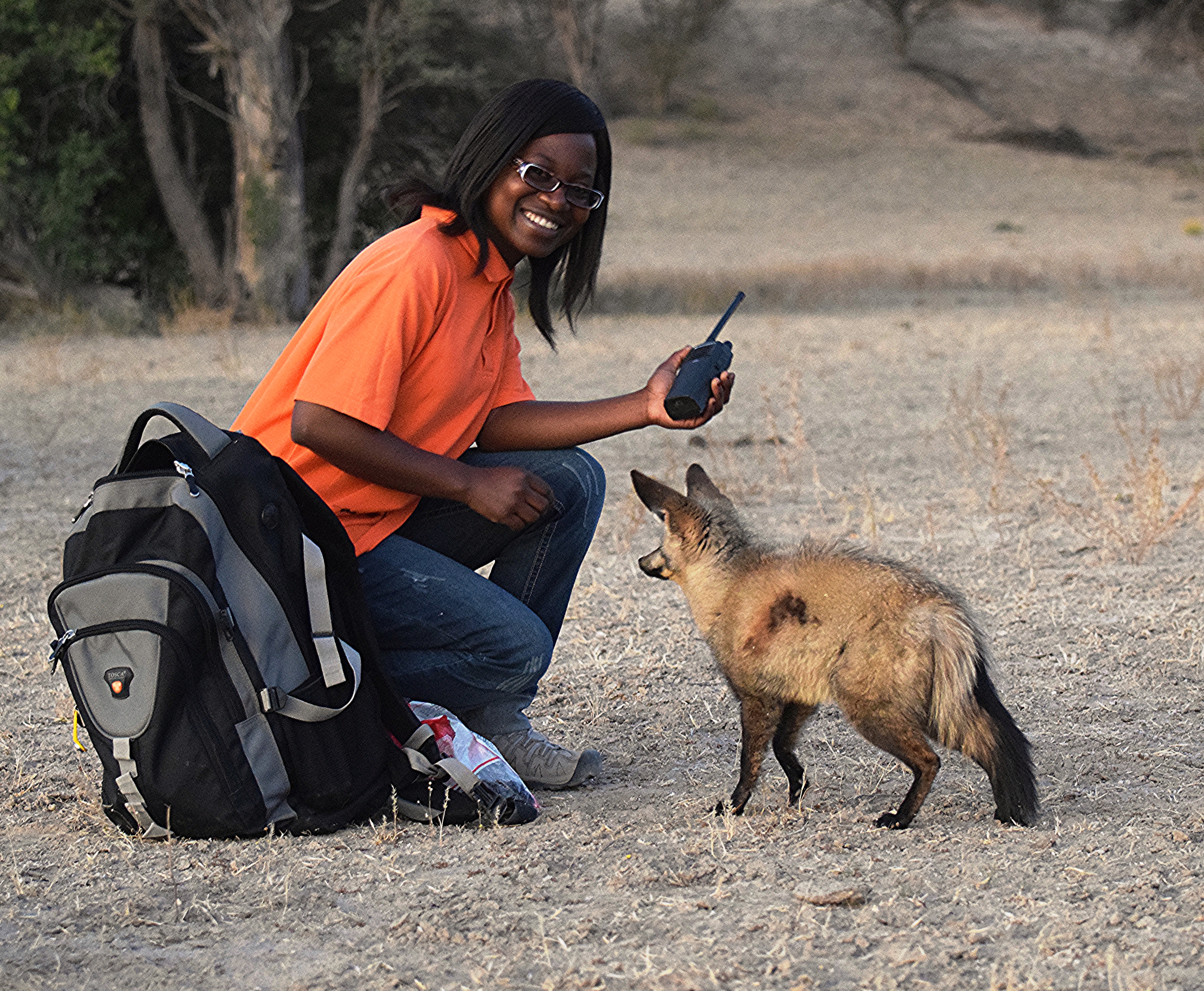
Ben is definitely not intimidated.

This was not an isolated incident; I’ve had many such comments from guys, some describing how my lobola price is sky-rocketing because of the PhD. keep calmBut it’s not just “finances”, or lack of academic qualifications in the men, oh no…One PhD fellow blatantly told me: “I could never consider dating a woman that has studied up to your level because they tend to wear the pants at home. I can’t stomach that.” Phew, did I just dig my grave by embarking on this PhD journey?

No, this blog is not a ploy to bag a guy. I really, honestly, want to know why somebody’s desire to learn should be intimidating to others?! I’m aware of how men (and particularly African men), have been socialised to be the sole bread winners, but we are in the 21st Century and educated women should not be a threat. Surely it must be nice to have a partner that can give you intelligent conversation and earning power of her own. I’m happy to be a trophy wife (emphasizing the assets ABOVE my neck, of course).

If you’re an academic achiever who happens to be female, are your experiences similar to mine? Any tips or tricks you can recommend? Am I forever doomed to just love furry four-legged males? But just in case you were wondering, I remain standing strong, with unwavering high standards. And in the words of my favorite author Chimamanda Adichie:

“A guy who would be intimidated by me is exactly the kind of guy I would not be interested in.”

The only keen male in my life?