Academic Perseverance: the time I quit my PhD

By Ruenda Loots

Although many people want to know how long it takes to finish a PhD, the more important question is “What does it take to finish a PhD?” Perhaps the most significant characteristic of successful post-graduate researchers is grit. Sticking to it when everything comes undone. And sometimes, picking up the pieces and starting again.
When the going got tough

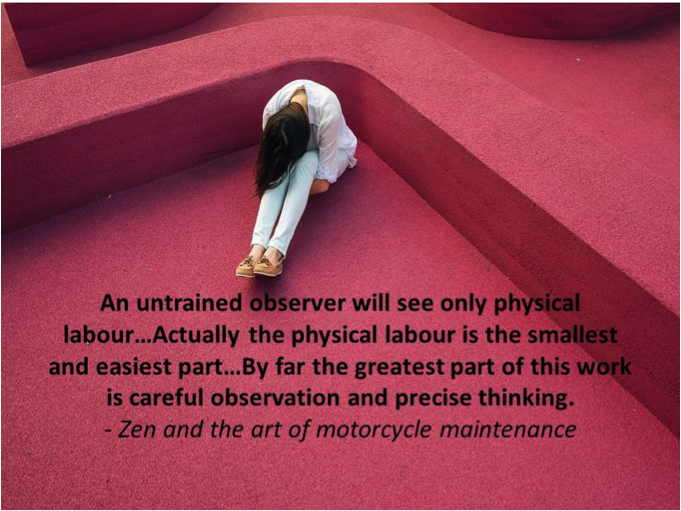
Two years into my PhD and the only word that accurately described my research to date was “abysmal”. As I’ve mentioned before, I’m not a microbiologist. I knew the project would be mostly microbiology but it sounded like an exciting challenge! The novelty wore off very quickly and what looked exciting 12 months before became an insurmountable mountain of work.

The theory eluded me. I could barely frame research questions because my fundamental knowledge was lacking. I would read the introduction of an article and feel so overwhelmed by everything I didn’t know that I obsessively downloaded every reference in the article, which in turn led me to download even more articles until I had folders in folders of unread articles that were labelled NB, Must read and Very Important.

The practical work intimidated me. Never before was I concerned about a sterile workbench. I was so paranoid I used to mark a 20cm ring around my gas flame with masking tape so that I wouldn’t accidentally move outside The Clean Zone (but since I had two left-hands it didn’t help much). I melted a couple of latex gloves onto my fingers that year.

Days became months with no progress, months became semesters and each passing calendar page made me realise: I can’t do this. I prepared to give up.

Leaving my (dis)comfort zone

Toronto skyline (Pixabay)

Then, at the end of Year Two, one of my supervisor’s collaborators invited me to visit his laboratory at Ryerson University. I would work closely with a post-doc to learn advanced microscopic techniques which were vital for my research. I was just married and had no desire to leave my new happiness behind but I had no alternatives for my ongoing academic despair so I boarded a plane to Toronto, Canada, for the two-week visit.

Reflecting on the experience three years later reveals how valuable it really was. I established great relationships (scientific and social). The post-doc (now a close friend) taught me with great patience how to use a fancy microscope and more importantly how to do the very basics I had struggled with for so long. There are things that books and articles can’t teach you – an encouraging, open-minded mentor is the only way.

Zen and the art of biofilm analysis
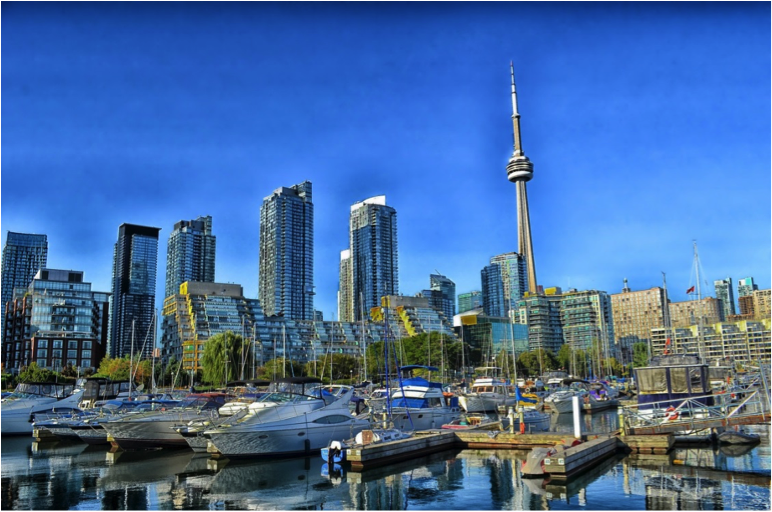
Toronto Harbour (Pixabay)

Every evening I strolled through the unfamiliar city. One night I found “The World’s Biggest Book Store” and bought a book that changed my scientific career in the most unexpected ways. Zen and the Art of Motorcycle Maintenance crossed my path at exactly the right moment. This book’s explanation of the philosophy of science, using a motorcycle as metaphor, stirred a passion in me that had been lost in the years of “I can’t do this.”

The solutions all are simple… after you have arrived at them. But they’re simple only when you know already what they are”

On my last night in Toronto I wrote a letter to myself titled: You almost quit your PhD. I wrote down all the things that scared me about the PhD. I wrote down all the things I couldn’t do. I wrote down all the fears of failure. I returned to Cape Town and handed the sealed envelope to my husband.

“Give this to me on the day I graduate, okay?”

I will read it at the end of this year.

Balancing act

By Keafon Jumbam

We are about to delve into some pretty serious stuff regarding some rather unfortunate impacts of climbing the academic ladder as a black woman. My aim is to get us talking about how to turn things around for the better. And since it’s from a personal perspective, I will dip into my private business to illustrate what I mean.

You ready? Let’s get started:

(c) keepcalmomatic

Women are supposedly great multitaskers: chairing boardroom meetings, holding down relationships, babies and family life while simultaneously globetrotting to save the world. Oh yes, we are known to juggle many balls at once. In fact, we are expected to have it all– kids, family, and a fulfilling job. The problem is – I’m almost certain I missed out on the juggling lessons. If I were to draw a distribution curve of my professional time budget, it will be heavily skewed to one side – the studies side.

Sometimes it feels like I messed up big time by focusing on education, because when I finally lifted my head up from my books, everyone my age had found “the one” and conversations had shifted to diapers and crèches. I was always the good student, holding fastidiously to my books and obeying religiously to lecturers and parents’ instructions to, “Focus on your education, there will be plenty of time for other things later”. And so I did. Nobody ever mentioned what happens when “later” becomes “now.”

Right now my success is becoming an issue. The higher I climb the academic ladder, the costlier it becomes for me to make relationships work. I’ve become a threat (by default) to married women who would cling ever so tightly to their hubbies at social gatherings. Being African has exacerbated the situation – both society and parents have suddenly changed their tune to, “No husband yet? What is wrong with you?” Or “You aren’t getting any younger, you know.” Elders ceaselessly pester one about wanting to meet their grandkids soon, amidst snide comments of “Will you marry the PhD?” Add to this a Christian upbringing and you are sure to be casting out demons from here to Jericho and back, all in a bid to “rectify” your single status.

It doesn’t help that brothers who show up at my door are immediately intimidated by my academic background. One recently told me – within minutes of introduction – that I would have to avoid talking about my academic qualifications if I wanted our relationship to work.

“Men get intimidated; it’s just a fact,” he emphasized.

Ben is definitely not intimidated.

This was not an isolated incident; I’ve had many such comments from guys, some describing how my lobola price is sky-rocketing because of the PhD. keep calmBut it’s not just “finances”, or lack of academic qualifications in the men, oh no…One PhD fellow blatantly told me: “I could never consider dating a woman that has studied up to your level because they tend to wear the pants at home. I can’t stomach that.” Phew, did I just dig my grave by embarking on this PhD journey?

No, this blog is not a ploy to bag a guy. I really, honestly, want to know why somebody’s desire to learn should be intimidating to others?! I’m aware of how men (and particularly African men), have been socialised to be the sole bread winners, but we are in the 21st Century and educated women should not be a threat. Surely it must be nice to have a partner that can give you intelligent conversation and earning power of her own. I’m happy to be a trophy wife (emphasizing the assets ABOVE my neck, of course).

If you’re an academic achiever who happens to be female, are your experiences similar to mine? Any tips or tricks you can recommend? Am I forever doomed to just love furry four-legged males? But just in case you were wondering, I remain standing strong, with unwavering high standards. And in the words of my favorite author Chimamanda Adichie:

“A guy who would be intimidated by me is exactly the kind of guy I would not be interested in.”

The only keen male in my life?