Which doctor to be? What I could’ve been, and what I am now

By Yonela Z. Njisane

The question is “Should I have become a doctor or a Dr?” Growing up, I always knew I would be a doctor someday. Yup! I strongly believed I would be a great Veterinary doctor/surgeon. The thing is, where I come from, you see a lot of sick animals with no facilities to help and that pains my heart. I lost a couple of dogs growing up and I know how disheartening that is. I just wanted to make them all feel better and healthier.

I had it all planned out until I realised how long it takes to obtain that qualification; around 7 years if I am correct. To my surprise, I have now spent more years in school pursuing an academic doctorate instead- this is now my ninth year in tertiary. Even though the time factor initially worried me a lot, it’s probably just a lack of knowledge about how to get into the veterinary degree that stopped me from pursuing it. At first, I had plans to go back to vet science after my BSc Agric. (2011); then it shifted to returning after my MSc Agric. (2013). In my mind, I guess I never gave up on it, even though I didn’t go through with it.

The Boys basking in the morning sun

However, just recently I found confirmation that I am better off with the path I chose. A vet told me he had no other options but to put my puppy (Storm) to sleep. That, for me, would have been the greatest challenge in the job. I can never stand seeing an animal suffer in anyway, let alone dead, especially by my hand. I sometimes wonder how I am going to cope come the end of my PhD trial — which means slaughter, by the way — considering how I adore the Boys. At least I am not the one who is going to pull the trigger, that’s how I console myself. That part is not my job.

As fun as working with animals can be, challenges will always be there regardless of the path you are in, I guess. One of the Boys almost died the other day. Almost! Thank God we got to the scene in time, even though we were all sure that it was too late to redeem him. I was so close to breaking into tears until I heard him gasping for his breath, fighting for his life.

The Boys
The Boys “race squashing” in the stockade… every month… why can’t they be calm?

If only they knew that instead of all the stomping and squashing in the race every monthly managerial routine, they could just relax, allowing a smooth and a quick process. But hey, they’re just cattle. For me, it would have been a more emotional time than just a loss for the trial. But I learned that you just have to always look out where animals are involved, you have to always be there.

For instance, while some of you were on holiday during the Easter weekend, we were chilling at the farm, in the pastures, with a couple of moos, neighs and baas. It was the paddock behaviour observation week. Holiday or not, it had to be done. The weather was just plain cruel, it was freezing so much that the best way to keep warm was to do some aerobics (turned out someone was taking a video the whole time. Damn these phones).

Another survival trick in the field. A
Another survival trick in the field. A “Hakuna Matata” hat that my friend Coco brought me from Kenya. Turns out these non-floppy hats are useful in all weather conditions!

I must also say that, cattle behaviour does not change just because its holidays either. You can expect changes from external stimuli like an overly excited barking dog passing by looking for a challenge (thank God it hasn’t happen during observation times). Did you know that while our cattle in the villages respect dogs, even excusing themselves when barked at, my Boys just charge right back? In an innocent and inquisitive way, running towards the barking dog — so cute to watch! I’m so mad at myself for not capturing the scene in a video.

I was even more impressed by the braveness in my Boys when a “crazy” ox with huge horns was somehow “claiming his territory” on first discovery of the males that had been newly moved to their (ox) camp site. The ox had an attitude for days, making noises and even kicking the ground, blowing dust. That was just it though, some act. My Boys saw right through him, ignoring the whole show and carrying on with their business.

The only thing that got them on their toes (just a little bit) was the super-sized horses from the university traction centre.

The moos meet the neighs. Yes, that's the scientific term.
The moos meet the neighs. Yes, that’s the scientific term.

Had I known the huuuuuge horses were just big babies who demanded constant grooming, I might have kept my distance too. But hey, I am not complaining at all, everyone needs scratching every now and then.

So in all, I choose to look beyond what the end will or might be and just make the most of every single moment I get with my Boys (and any other animal I come across), ensuring that they are happy and healthy. I will cross the other bridges when I get to them.

Me and the giant baby,  Neigh.
Me and the giant baby, Neigh.

Fishy science for a great cause

By Davide Gaglio

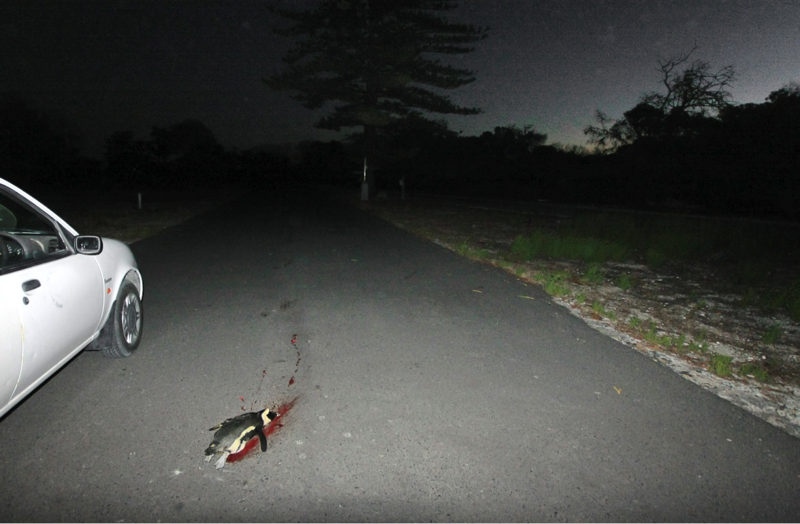
So, I am on Robben Island, it’s dark, I am alone, and in front of me… a dead African Penguin!

Penguin roadkill on Robben Island
My gruesome finding of penguin roadkill along one of Robben Island’s quiet roads

Let’s remain calm, I say to myself, thinking to get the best from this tragic experience. Well, you’d be surprised to see what happens to the penguin next! 🙂

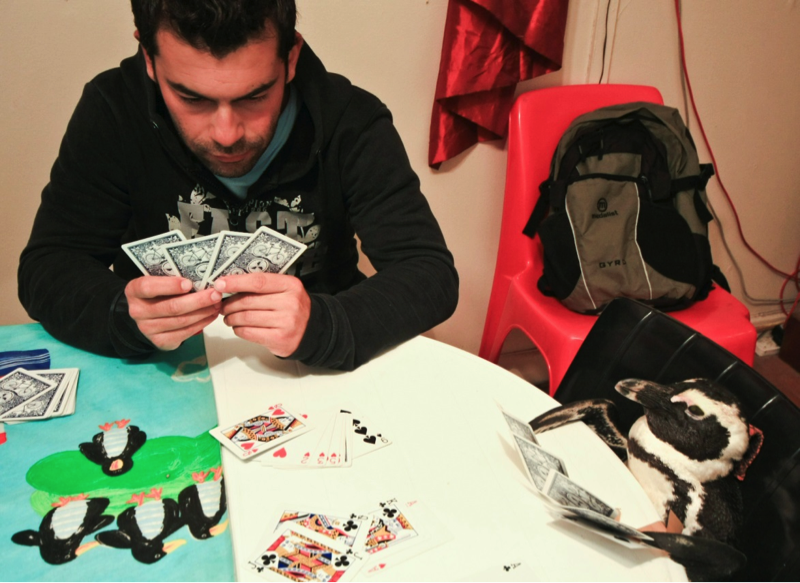
Playing poker with my newly stuffed penguin...

I believe a sense of humour is important even for serious matters and is extremely crucial for scientists! Anyway, the day after I stumbled across the penguin carcass I was still traumatised but feeling ready to start my research. Things like that must not happen again, I kept saying to myself… From that day I promised I would get on top of my research and do all my best to share knowledge and education to those people who do not know/care about the importance of the ocean and its inhabitants. Being on Robben Island, I thought about a quote that Nelson Mandela shared about education in South Africa, “Education is the most powerful weapon which you can use to change the world”… and I knew that there was no better place for me to fulfil my promise.

That day I started at 6 am… yes my dream had come true. I was taking photos for my research and at the same time, I knew that those images would help me to communicate love for the ocean and its need to be protected. I would never imagine that very soon two of my photos would be selected as one of the top 50 of the International Photographic competition run by South Africa Birdlife “Ocean of life” 2013 and another one in 2014!

http://oceansoflife.co.za/gallery

http://oceansoflife.co.za/gallery/2014

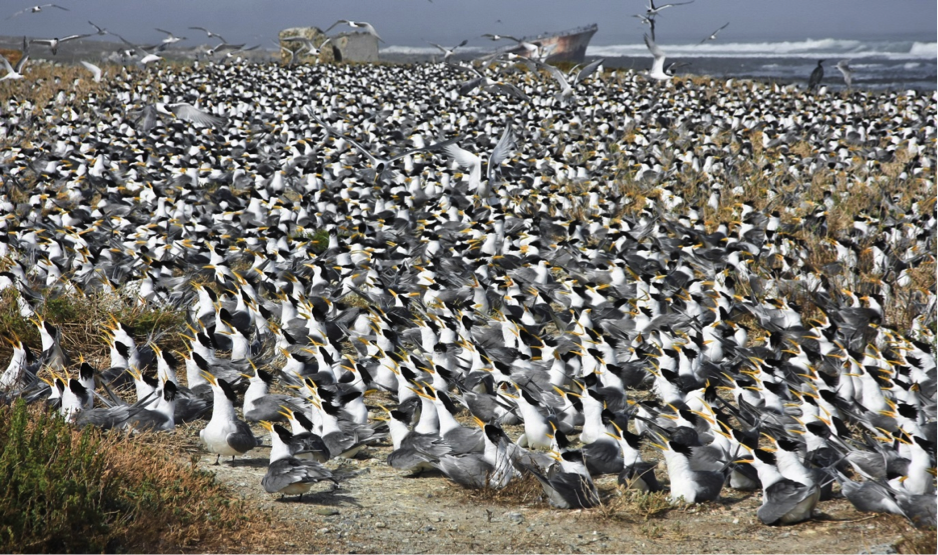
I have been amazed to discover how helpful my photographic skills have become in my scientific research! Did you know that in the last few years, between 6,000 and 10,000 Swift Tern pairs have bred on Robben Island every year? And understanding what’s going on is not always easy! I have been making full use of modern technology to help me out, especially DLSR cameras, camera-traps and

Try to remain sane in this chaotic crowd!

video cameras. Trust me, they are very useful tools in such noisy, smelly, crowded and chaotic colony such as this one.

So, let’s see if you could contribute to some fishy science… Let’s have a poll on this blog to see if you know your sharks from your sardines.

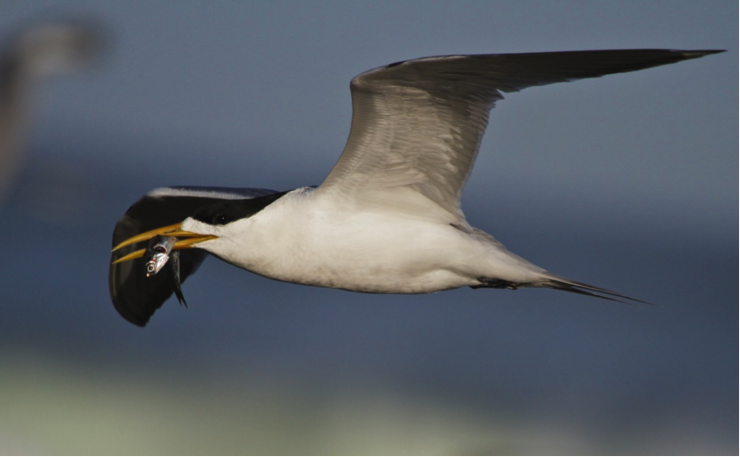
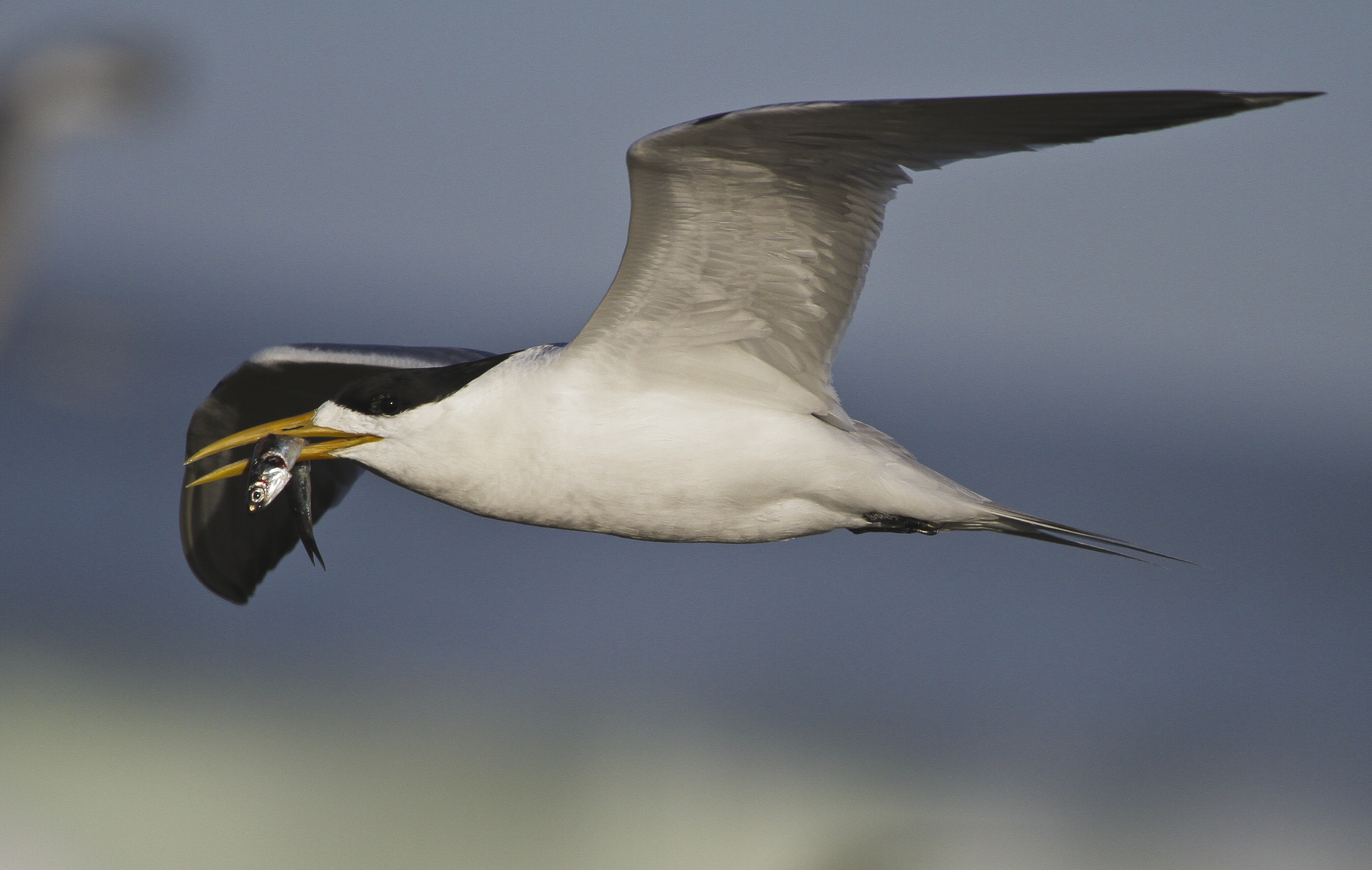
Early in the morning as the sun is coming up, my terns are already busy bringing food to their chicks. And I am busy there taking photos of them…the first photo is the most common species….do you know what species is this?

Fishy prey #1
Fishy prey #1

Right 🙂 , this is an anchovy….easy! What about this one?

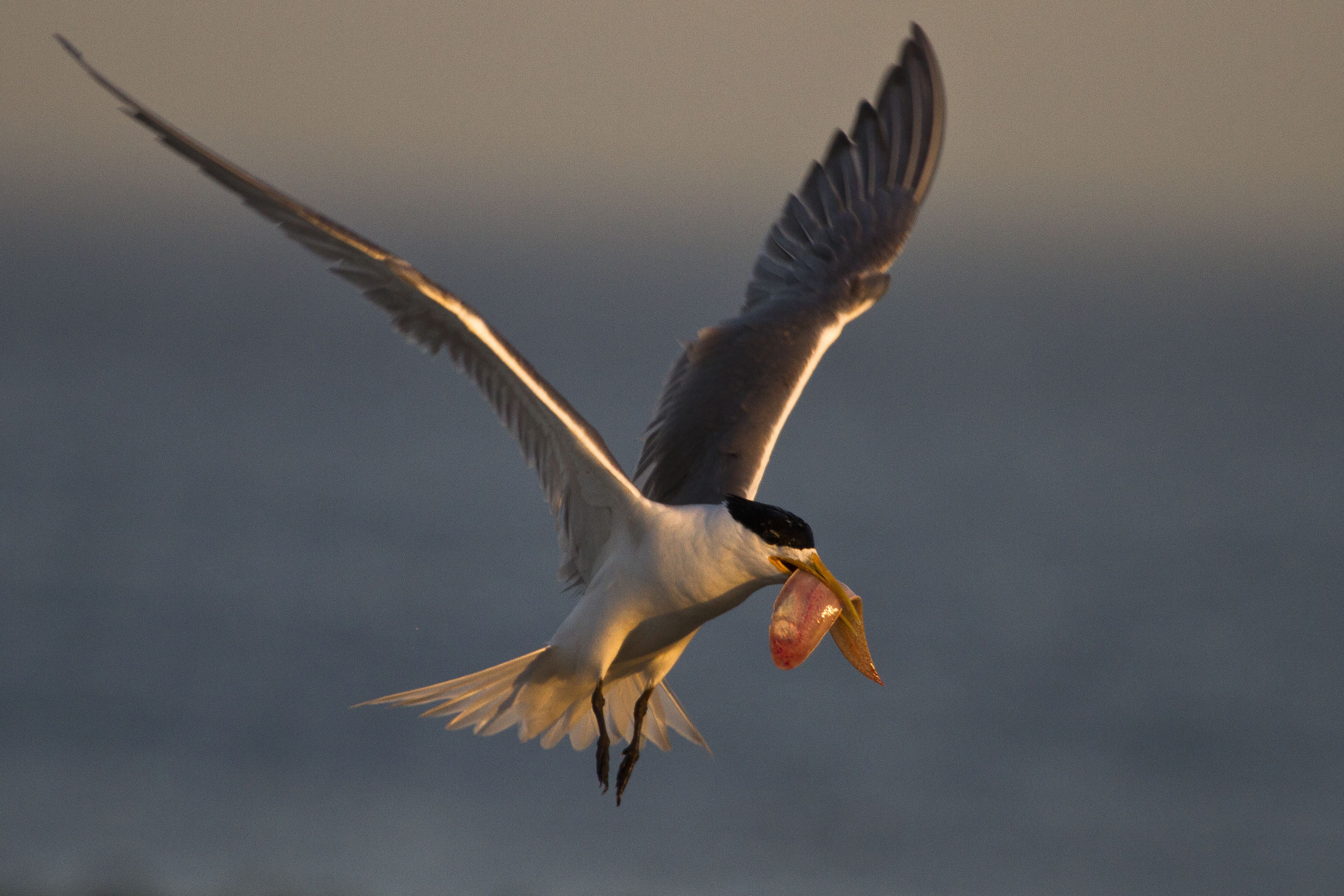
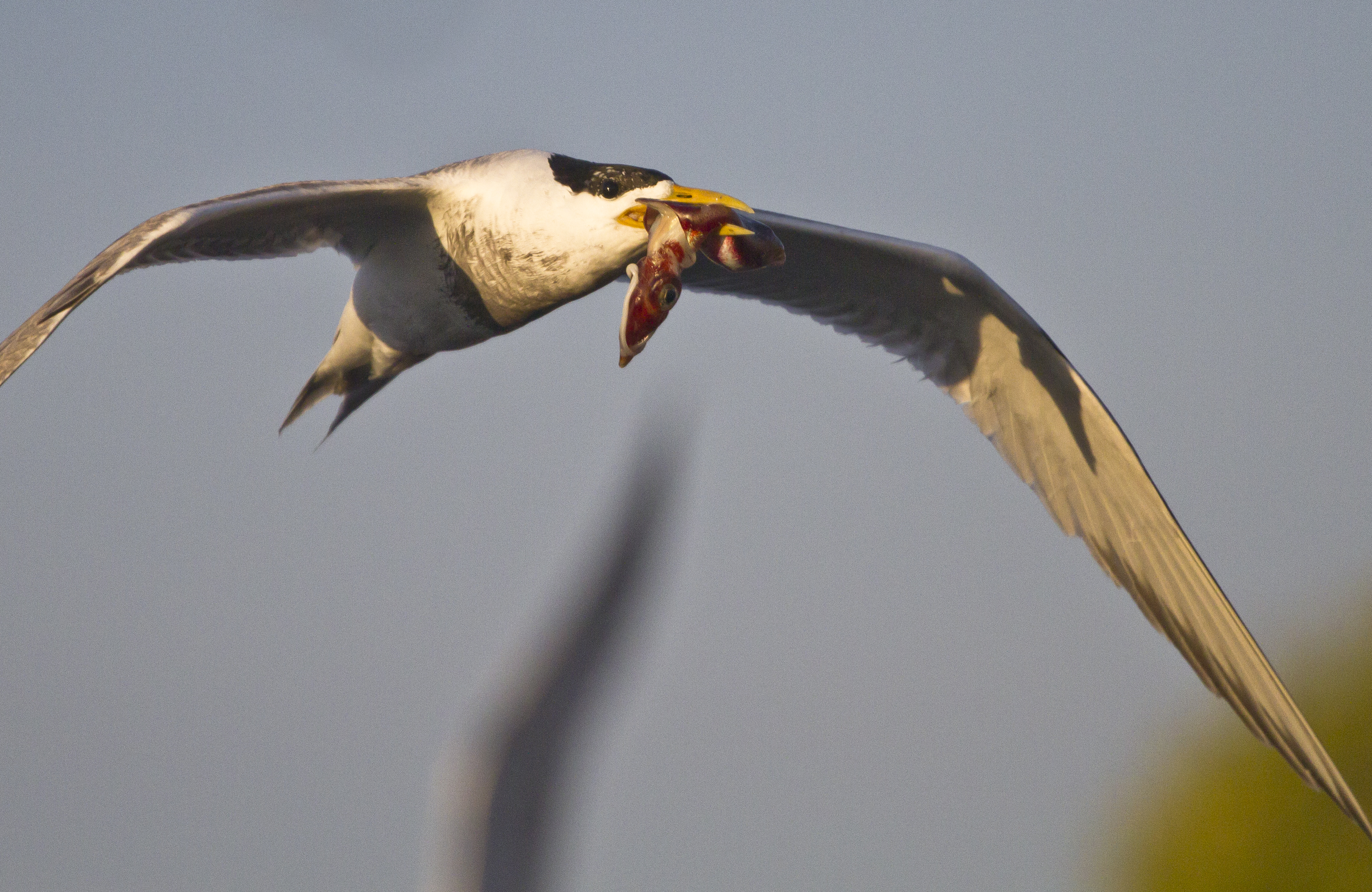
Fishy prey #2
Fishy prey #2 (Click on pic to enlarge)

…Ok I am not telling you 😉 Let’s see if you have the right answer in the comments and polls.

And some more for you…..

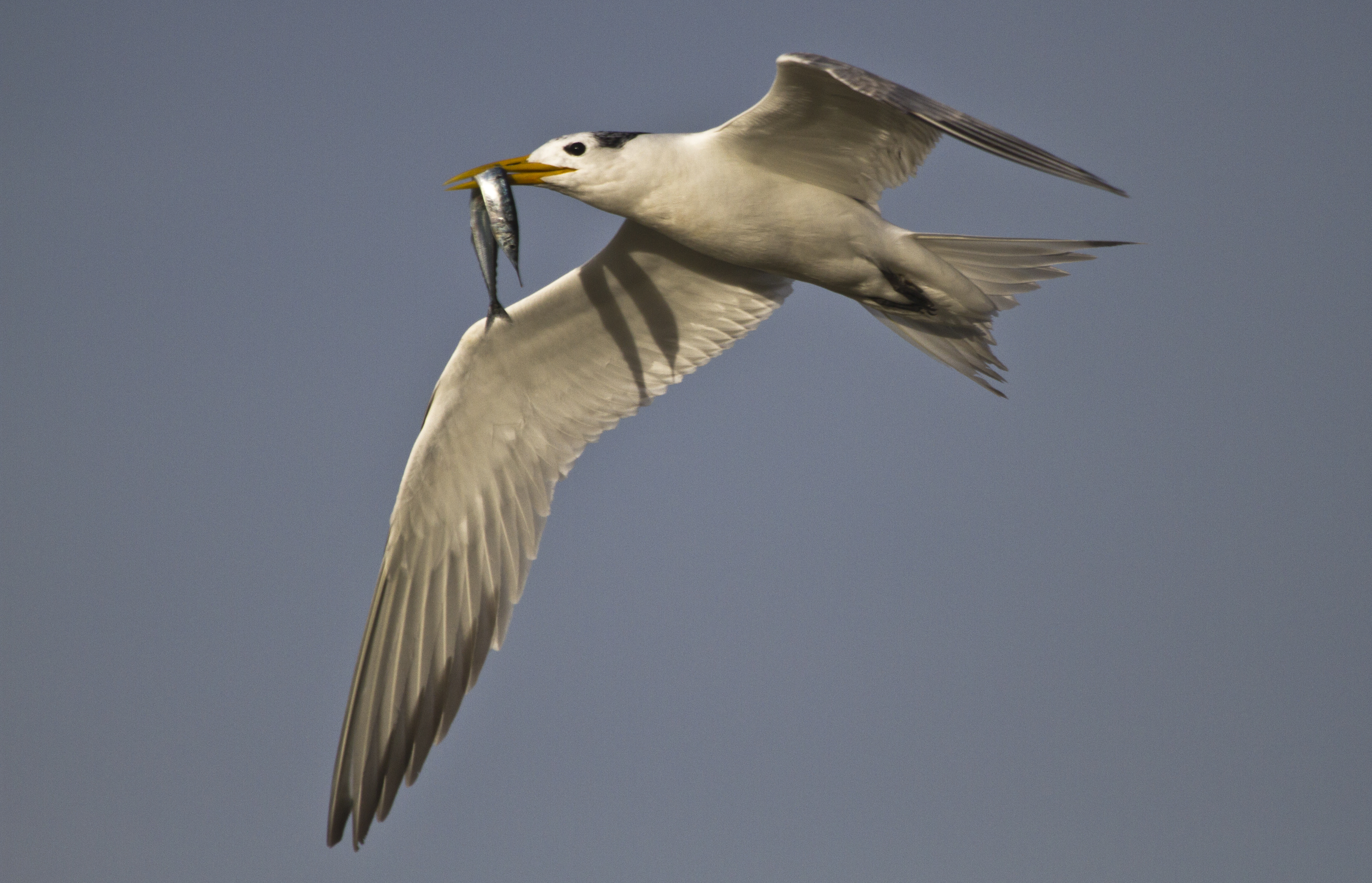
Fishy prey #3 (click pic to enlarge)


Fishy prey #4
Fishy prey #4


Fishy prey #5
Fishy prey #5


Fishy prey #6
Fishy prey #6


I promise to reveal the correct answers by next week Wednesday, in the comments section. At the moment, I am collecting many more photos and soon it will be time to identify new prey species, which I will publish on this blog. So, are you ready to join the challenge in trying to identify their prey and give me your comments? Whether you are a keen photographer, or knowledgeable on fish identification or you just like to know more about it, you are welcome to comment and vote, and let me know your thoughts.

I have found many prey species so far, and it’s exciting everyday, although sometimes it can be exhausting and challenging… but chicks must eat in the wind, rain, fog, well … anytime!

The ultimate goal of my research is to understand how Swift Terns cope with variable food availability and understand differences to other seabirds. I am investigating to what degree their behaviour flexibility underlies their success, in order to assess the impact of commercial fisheries on marine ecosystem dynamics. So there is a lot of stuff to learn, and I have many more adventures to tell you! Keep connected and don’t forget to complete the polls about the prey photos…. the more votes… the more photos 🙂 See you next time!