Collaboration: It’s the African way!

Africa is a very beautiful continent with vast possibilities, especially when it comes to research. This is because of our natural resources, something in which we can take great pride. Unfortunately, as I’ve mentioned before, we run the risk of over-exploiting our own resources as we’re slow in taking up research to address environmental degradation and climate change. I think, however, there is a solution.

Collaboration. The classical definition of the word is working with someone to produce some shared end result. But how can this benefit Africa and its researchers? Let me firstly reflect on the “great” (and rather pervasive) idea of a solitary scientist.

One of the most momentous discoveries of the modern era was the discovery of penicillin. History has it that penicillin was discovered in 1928 by Alexander Fleming,
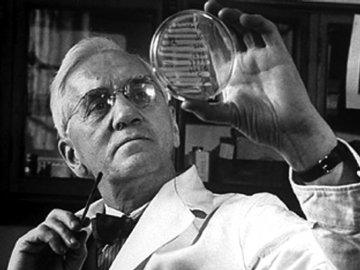
Sir Alexander Fleming at work.jpg
Sir Alexander Fleming at work

who was a professor of Bacteriology at St. Mary’s Hospital in London. After realizing that many soldiers were dying from festering wounds during the 2nd World War, Prof Fleming decided to go to the lab and try to find a remedy. As history now tells us, he was able to isolate a rare strain of Penicillium notatum which was able to inhibit the growth of bacteria. This was the greatest discovery that  paved way for further development of antibiotics. Today, Prof Fleming is celebrated as one of the greatest scientists to have ever lived. But was Prof Fleming really alone in the lab? Formal history rarely acknowledges that it was his assistants, Stuart Craddock and Frederick Ridley, who successfully isolated pure penicillin from the mould juice that Fleming had observed.

My argument here is not that these people should be credited but rather that even the greatest discoveries were a team effort – a collaboration between two or more people. Today, this is what Africa needs. Internationally, collaboration is increasing at an incredible rate. These consortia between multiple institutions and even countries ensure maximum access to resources and further advancement of all team members’ work.

In Africa, I get the impression that we believe in making the name for ourselves, as individuals. It is almost as if not being known as a solitary researcher discredits one’s work. Sure, you can protect your ideas and discoveries if you’re working in isolation, but there are major drawbacks to keeping to yourself. Limited funds, resources and slow processes are just the beginning. We often forget that science, in its nature, is collaborative.

Let us look at what will happen if Africans were to collaborate more, instead of working in isolation.

African scientists will have access to cutting-edge technology which will open up vast possibilities for research. The networks and consortia will help with access to bigger grants that are tailored for improving the African research.

Capacity building in terms of retaining skills, more knowledge and tools will also be born from these collaborations. This directly leads to the last important element of collaboration – critique.

Much of science works better if it is critiqued. You may have two people from the same field with the same set of skills but I can bet that their opinions will not be the same. This is the reason why collaboration works. The scientist whose ideas are critiqued and pass through some amounts of fire comes out golden on the other side.

It is high time that we get these collaborations going as Africans, otherwise we are doomed to stay where we are in research. As with the true spirit of Ubuntu, we become better by working together and helping others. I do not believe that the developed countries have the intellectual capacity that we don’t. For us it just takesgoing back to our African way of being – collective action – to ensure that we see a better tomorrow.


Ubuntu-The true African way of being.jpg
Ubuntu-The true African way of being

FameLab: Three minutes can change more than just your life

Three minutes doesn’t seem like a lot of time. In three minutes you could answer an email or two, write a tweet or make a cup of coffee. Three minutes in a PhD isn’t much either; I can capture a couple lines of data, transfer a few cultures to fresh agar plates and share a short conversation with one of the undergrad mentorship students in our lab. In three minutes it doesn’t seem like you could accomplish a lot… except when you’re competing in FameLab.

IMG-20180510-WA0004

FameLab is an international science communication competition hosted in over 25 different countries. It gives young scientists a platform to entertain and engage audiences about STEM by deconstructing complex topics into just three minutes. This year I had the privilege of taking part in the South African FameLab finals and it was awe-inspiring!

Before one can compete in the finals, you need to make it through one of the several heats, hosted at various institutions across the country. I took part in one of 2018’s first heats at Science Forum South Africa, which was hosted at the Council for Scientific and Industrial Research (CSIR). There, I was runner up after the very talented, Khavharendwe Rambau—a renewable energy scientist at the CSIR. In her talk, she used the metaphor of killing two chickens with one stone to demonstrate how her research is looking at converting waste material into energy. It was an entertaining talk; a real eye-opener and a testament to what young South African scientists are trying to accomplish to help tackle our energy and waste problems.

The FameLab semi-finals and finals were then held in Port Elizabeth, between the 7th and 9th of May, and brought together thirteen of the fourteen heat finalists—all incredible scientists with a passion to communicate their work. Before the semi-finals, we took part in a Master Class, a two day hands-on workshop with Karl Byrne—an award winning professional science communicator trainer. We were all nervous. Nearly all of us were from different institutions, working on very different things but Karl (very cleverly) had us start off by telling stories, not about our science but ourselves. This helped break the ice, calm the nerves and turned the stranger across from you into a new friend.

While FameLab is a competition, and we were there to compete, the Master Class and the build-up to the finals really became about getting to know one another, learning from one another and sharing our stories. From a physicist that loves playing rugby to a young biologist with her own company, we had a vibrant collection of people doing great things in science and outside. I have always considered myself an informed member of the scientific community but there are so many great scientists producing fantastic science, even just in the South African space, that I wasn’t even aware of. We need to change that.

I found FameLab to be a celebration of science, a bringing together of young people with a desire to share just how their good science is going to make a difference in the world. During the training and my engagement with the other semi-finalists, I felt the science barriers fade; we weren’t biologists looking to stop plant pathogens or physicists trying to develop a more efficient energy source, we were regular people with a dream of a better tomorrow. Our areas of expertise were the tools we chose to help us realize those dreams.

One of the tools we rarely use or use incorrectly (because we weren’t trained enough) is communication. Our strength as a society has been through the transfer of information. It is how we grow, evolve and adapt—our strength lies in community and the science community is no different. To grow and strengthen our community, we need to practice using our communication tools, more and more. At your own institutions, make your own FameLab stage; in the hallway before a departmental meeting, at someone else’s table during your lunch break, in a different colleagues lab, etc. and take three minutes to share your dreams (with a stranger), start a conversation, share knowledge and even build a collaboration (a friendship). When put into practice, over and over, those three minutes, put together, will change many people’s lives.

Congratulations to Emmie Chiyindiko, my friend and chemist from the University of the Free State, on winning the FameLab SA finals at the Future Earth Conference! The FameLab finals were recorded; you can watch the whole function here! Emmie gave an excellent talk that taught me more about catalysts. Good luck in the finals, I hope you blow them away! See you on YouTube soon!