I first came across the term “impostor syndrome” about a year or two ago while skimming through my Twitter feed. A fellow #WomanInSTEM had posted about a personal experience and I read on in amazement. She was a senior in my field and someone I greatly admired and here she was, sharing her story and I could relate to it in every way.
Academics, look away, I am about to quote Wikipedia. According to this valuable resource, impostor syndrome is defined as “a psychological pattern in which an individual doubt their accomplishments and has a persistent internalized fear of being exposed as a ‘fraud’”. This essentially means that for some, their accomplishments seem too great to have been their own, and instead, they attribute it to various factors such as luck or deception. There is a short Ted-Ed video by Elizabeth Cox which explains the phenomenon in greater detail.
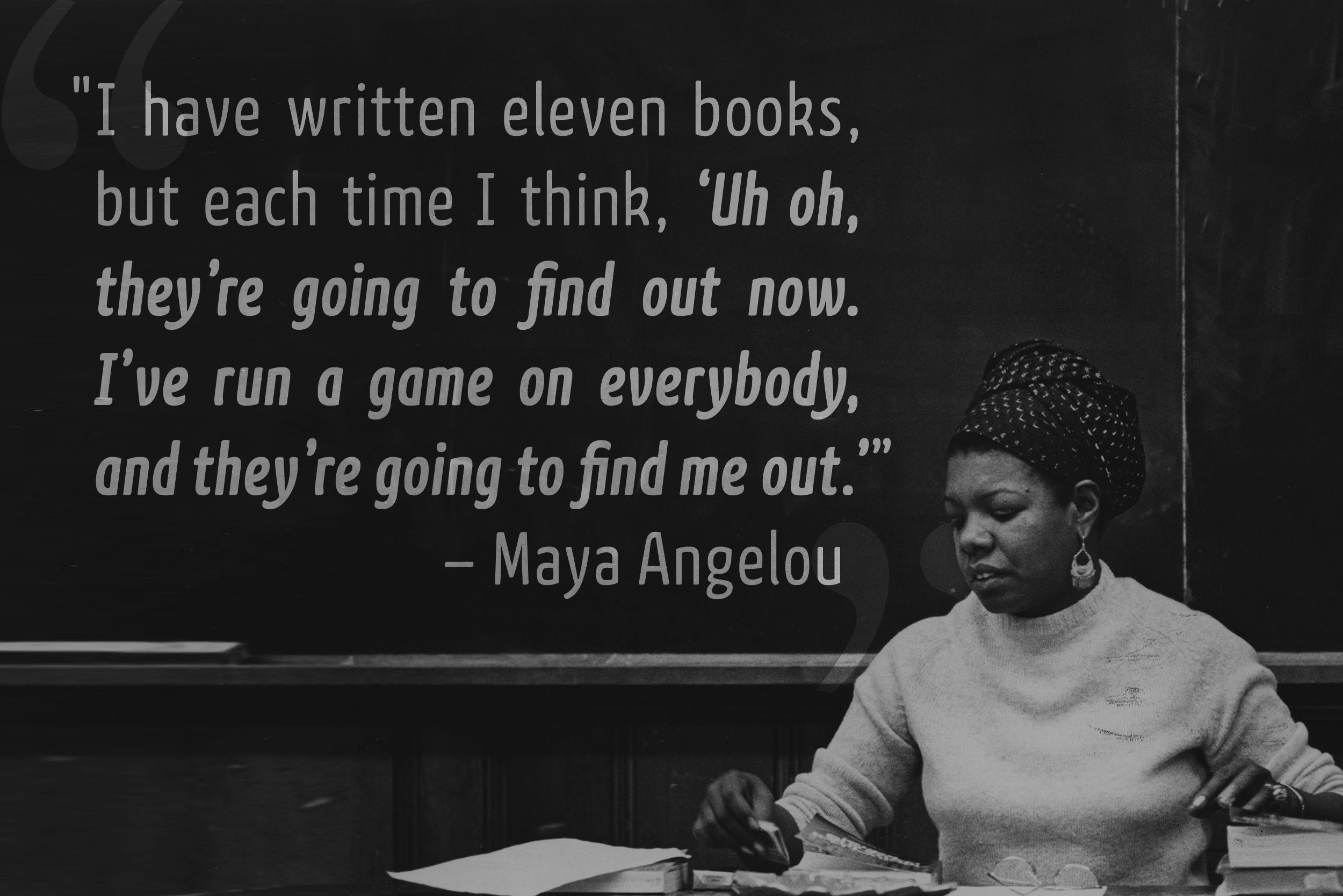
The New York Times published an article by Kristin Wong which details experiences of people in different fields, such as entertainment and journalism, showing how prevalent impostor syndrome is in every industry. There are many successful individuals who have shared their experience with impostor syndrome including Ms Maya Angelou who once said “I have written eleven books, but each time I think, “Uh-oh, they’re going to find out now. I’ve run a game on everybody, and they’re going to find me out.”
In recent years, many scientific publications have also focused on this topic as it is prevalent in academic communities all over the world. Another article worth reading was published in Science in 2008, appropriately titled “No, you are not an impostor”. Although impostor syndrome has a universal impact, research has shown that minority groups are particularly vulnerable. A study published by the University of Texas at Austin in 2017, suggests that the impostor phenomenon is an additional factor that compounds pre-existing stresses in minority students. Of 332 undergraduate students questioned, who represented Black, Latinx, and Asian students, many cited impostor syndrome as something they deal with often. For Black students, this was often coupled with high levels of anxiety. This is a very nuanced topic but demonstrates the need for change and discussion in university settings.
This type of study has yet to be conducted in a South African setting where minority students face many challenges including self-doubt as they are often referred to as “quota” selections. In truth, when trying to understand impostor syndrome we must acknowledge that there are many contributors. Snide comments and microaggressions have long-lasting effects on the psyche of individuals, for instance, being told that you have only achieved something because of transformation efforts is dismissive of hard work and talent. Academic challenges, even at a postgraduate level, are daunting when you do not have adequate support.
My experience with constant impostor syndrome
My first real experience with impostor syndrome happened during my honours year. I had made a switch from biology to palaeontology and as an aspiring palaeontologist, I had to have a basic understanding of geology in order to contextualize the fossils I so adored. When it came time to writing exams I thought “they’ll never take me seriously” because no matter how hard I tried, I could only achieve so much in terms of understanding in a short space of time. I passed my courses, through a lot of hard work and dedication but at the end of it I thought “that was a lucky break”.
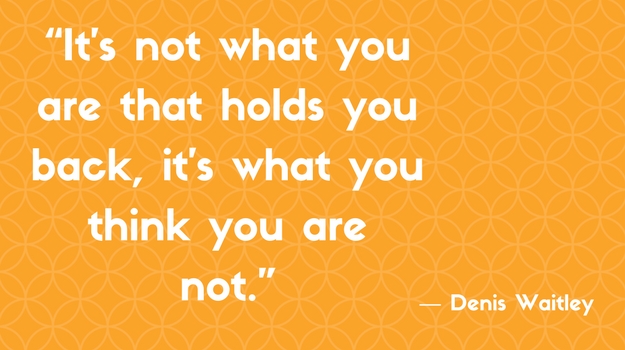
My worst experience with impostor syndrome has ties to my greatest achievement as a young academic, getting my Masters degree. I completed my Master’s degree in a year and when my examiners’ reports came back, my supervisor and I were both so overwhelmed by the positive feedback that we cried a little. I had achieved it, with distinction and no corrections, this is truly rare in academia. However, if I am asked about my Masters, I tend to try and play it down: “I had to edit my page numbers” or “My supervisors were really great” or “It’s because I had 8465365 drafts before submitting” are some of my typical responses. And although all of this is true (the page numbers haunted me for weeks), I never acknowledged my own role in my success. I had the drive, I put in the work and endless hours, I wrote the drafts and even if they came back red with corrections, I would read through each point, question what I did not understand, correct it and try again.
As I mentioned earlier, microaggressions are a devastating tool that can dismantle the self-confidence of students. This is something I have dealt with, comments such as “You should be staying later if you want to finish”- when I already felt guilty for leaving at a reasonable hour so that I could catch public transport- do not help. Neither do comments like “Is this sound methodology?” when many researchers before me have tested it but when I try, suddenly, it is questionable. These are expressions I will probably never forget but now realise that they are not a reflection of me, because I am not an impostor.
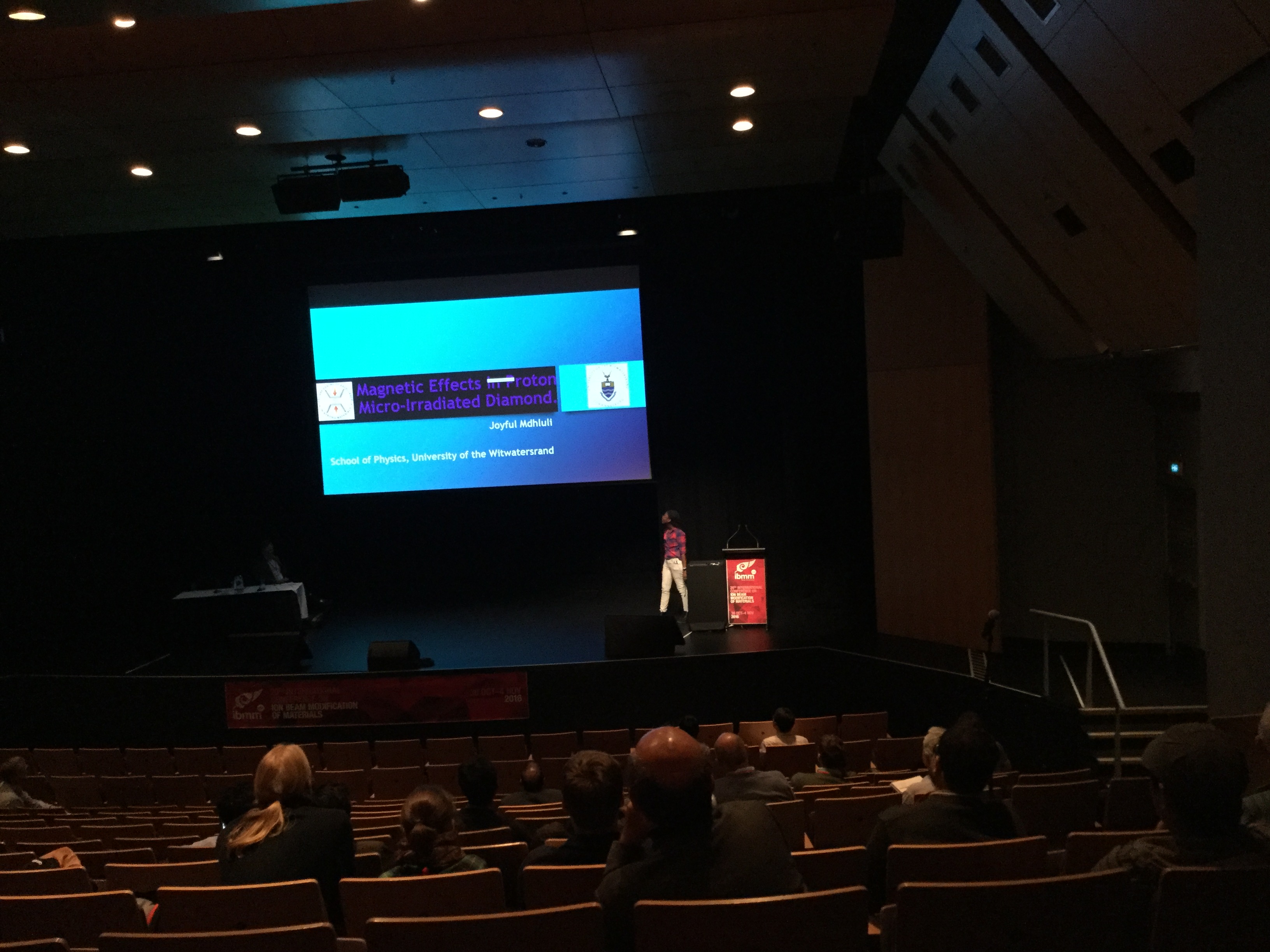
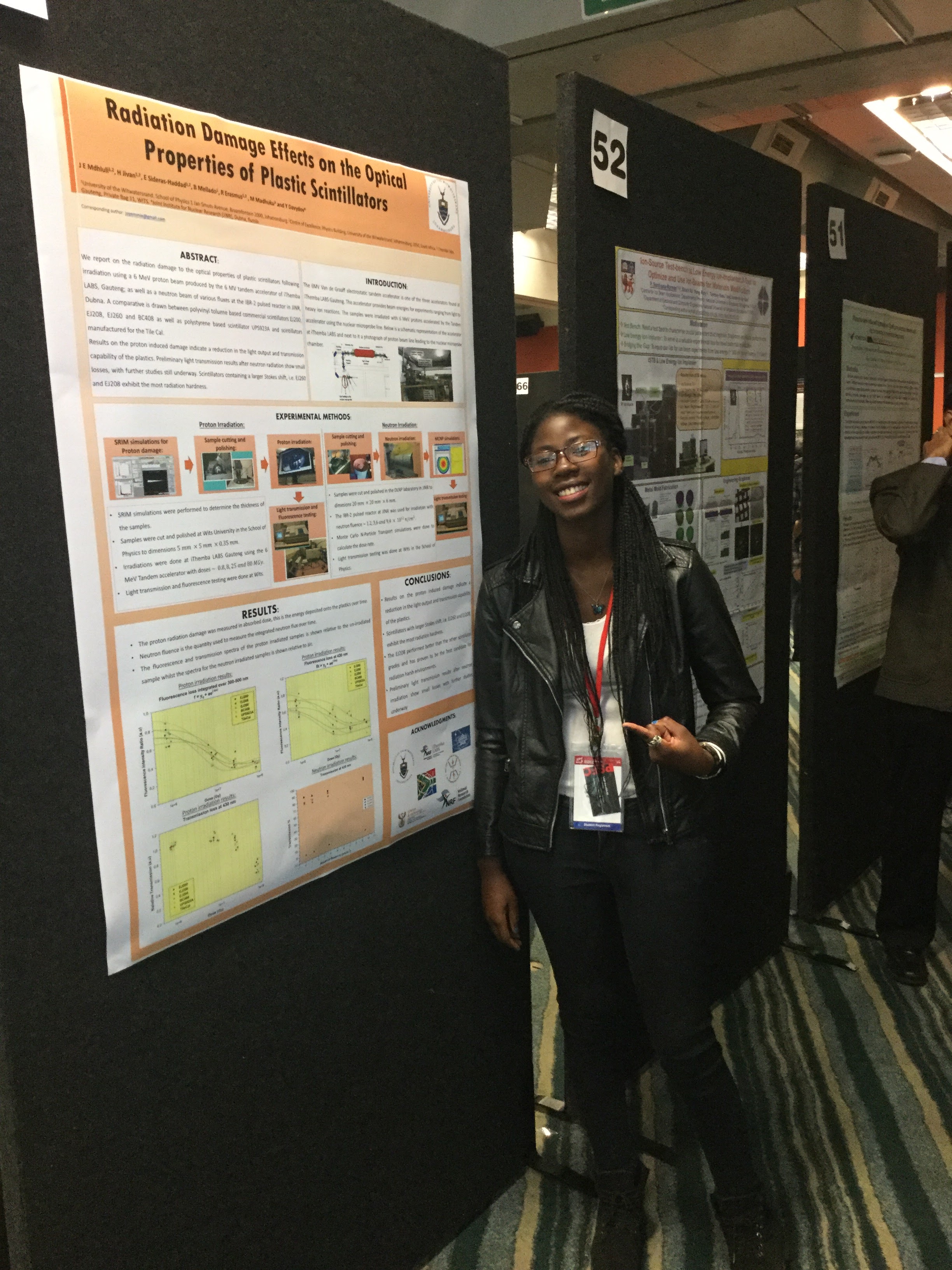
It is a constant learning and unlearning process, especially as a young woman. Girls are often told to be ‘humble’, that it is ‘unladylike’ to assert yourself and that when you do, you are labelled ‘angry’ or ‘hostile’ or (the worst one for me) ‘EMOTIONAL’. When you use your voice and demonstrate confidence it is met with shock and fear. There are many posts which detail tips for dealing with impostor syndrome (check out the article by Kristin Wong) and I’ve prepared a handy little infographic that helps me cope. I use the word ‘cope’ because I am not over my impostor syndrome, I still struggle with it when I have to speak to seniors, when I go to conferences, when I am asked about my research work and even now as a PhD Candidate, I still feel like I know nothing some days. It is not a quick fix, it is a constant battle, but you will become better at checking yourself when you feel it coming on!
In the iconic words of spiritual activist and author Marianne Williamson, “Our deepest fear is not that we are inadequate. Our deepest fear is that we are powerful beyond measure. It is our light, not our darkness that most frightens us. We ask ourselves, Who am I to be brilliant, gorgeous, talented, and fabulous? Actually, who are you not to be? Your playing small does not serve the world. There is nothing enlightened about shrinking so that other people will not feel insecure around you.”
 SAYAS BLOG