“Let us choose for ourselves our path in life, and let us try to strew that path with flowers.” I really like this quote from Émilie Du Châtelet, a natural philosopher, physicist, mathematician and author, who is well known for translating Newton’s Principia into French, her advocacy of Newtonian physics and contributions to Newtonian mechanics. This quote, I believe, was aimed at women in science, but it has meaning to me too, as a man. When I think about this quote, I believe Émilie is asking us to choose our own path, own it and give it our own personal touch, with flowers. (If you don’t like flowers, it could be something else, like a collection of mini Star Wars Lego figurines…)
The 11th of February was International Day of Women and Girls in Science. This day was declared, by the UN, to improve gender equality, empower women and give full and equal access to science for women and girls. There were two trending hashtags on the day, #WomeninSTEM and #Womeninscience, which I followed quite closely in anticipation of writing a blog piece on women in STEM (Science, Technology, Engineering and Maths). I read a number of blogs, tweets, articles and stories about new and old science and the contributions women made and continue to make across the globe. It was interesting and I learned a lot.
It got me looking at the people around me. I realized that I am quite lucky that I get to work with and study under a number of incredible female scientists who are always publishing (well) and contributing (significantly). Our newly formed department, the Department of Biochemistry, Genetics and Microbiology, recently had a research day to share ideas, research and promote collaboration. Of the 40 speakers/PIs who presented on the day, 20 of them were females.
What really moved me about the 11th of February was the coming together of a community. Women scientists, from around the world, famous or not, participated in this day to promote women and STEM. My Twitter feed was filled with stories about amazing scientists, their wonderful science, the challenges they faced, their hopes and dreams; and the amount of encouragement for those trying to make their way in STEM, inspiring! Those hashtags still popup today; it’s like its women in STEM day every day! Amazing!
Many women in STEM followed paths that chartered new territories, while often they were vocal about not making these discoveries/breaking boundaries only for themselves. In some cases, the discoveries changed the world, while the women themselves were hidden away.
One of the more touching stories that stuck with me was that of Alice Ball (1892-1916). She was an amazing scientist. In her short life, she received two degrees from the University of Washington for pharmaceutical chemistry and pharmacy; published a 10-page article in the Journal of the American Chemical Society, which was quite rare for a woman at the time; and got a Master’s degree from the University of Hawaii. With the completion of her Master’s she became the first African American to graduate with a Master’s degree from the University of Hawaii. She then joined the chemistry department and, again, was the first African American chemistry professor at the University of Hawaii.
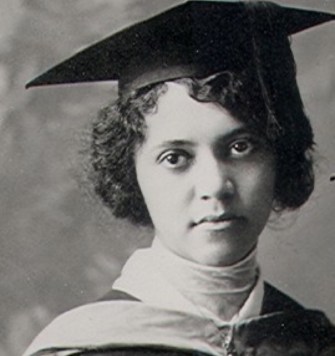 Following on from her Master’s, Ball was asked to work on improving the treatment for Hansen’s disease (leprosy). Many had tried to modify the traditional treatment, the oil from the chaulmoogra (Hydnocarpus wightianus) tree, to treat leprosy but could never get consistent results or overcome the unpleasant side effects. Eventually, Ball isolated the ethyl ester compounds from the fatty acids in the oil, which meant that it could now be used in an injection to treat the disease more consistently without the side effects. The isolation technique or “Ball method” was the preferred treatment for leprosy for nearly two decades, until 1940.
Unfortunately, Ball passed away before she could publish her work and it was completed and published by the then-president of the University of Hawaii. He proceeded to name the technique after himself, and with time, all of Ball’s achievements were forgotten. It was not until the 1970s that her life was investigated, the truth uncovered and her legacy re-established. Alice’s path will always be remembered for challenging the status quo.
Like Ball, there have been many other firsts for women in STEM. Marie Curie (1867-1934), a polish physicist and chemist, was the first woman to win a Nobel Prize in science, after her win in physics in 1903. She was also the first person to win one again for chemistry, eight years later. She was also the first woman professor at the Sorbonne. In 1992, Mae Jemison, an American engineer, physician and NASA astronaut, became the first African American woman to travel in space, nine years after Sally Ride—the first women in space. Jemison’s passion doesn’t only lie in science but people. She is a crusader for women’s rights and civil rights and was inducted into both the National Women’s Hall of Fame (1993) and the International Hall of Fame (2004).


Much was written and shared about these three brave women on the International Day of Women and Girls in Science; I hope that they are still being spoken about after that. (Well, at least in this blog they are). While both Ball and Curie began paving the way for women in the early 1900s (and inspiring more today), Jemison is one of the many brave women still leading the charge for STEM. She is inspiring young women to reach beyond the stars, advocating for more people to start careers in STEM and is always fighting to bridge the gap of gender inequality.
There are many other examples that I could write about, but I would encourage you to discover them for yourselves. They can teach you a lot about your career, passion and life. To end off, Marie Curie once said:,
“You cannot hope to build a better world without improving the individuals. To that end, each of us must work for his own improvement and, at the same time, share a general responsibility for all humanity, our particular duty being to aid those to whom we think we can be most useful.”
We should learn to be more like the women in STEM community to help and develop others, both in STEM and those who will benefit from STEM — society. In doing so we should follow our own paths, making it our own.
 SAYAS BLOG