International Day of Women and Girls in Science: why not to like it!

By Roula Inglesi-Lotz

“I was never sure if I liked the idea of an international Woman’s Day and now #InternationalWomeninScienceday. I want to live in a world where the self-evident is not a reason for celebration. We ARE Science! Celebrate us at the workplace everyday”.

That was my twitter post last week- I felt alone in the downpour of celebratory messages, posts and stories for International Day of Women and Girls in Science.

My post might have been perceived as sour and bitter and to a certain extent, it was. To explain myself, I am not a big fan of International Days – we have too many and they’ve started to lose their real meaning. In addition, I have a feeling that International Days are established for the weak, the lesser known causes, the ones that do not attract attention the rest of the year. So, being the target of an International Day makes me feel weaker, rather than stronger.
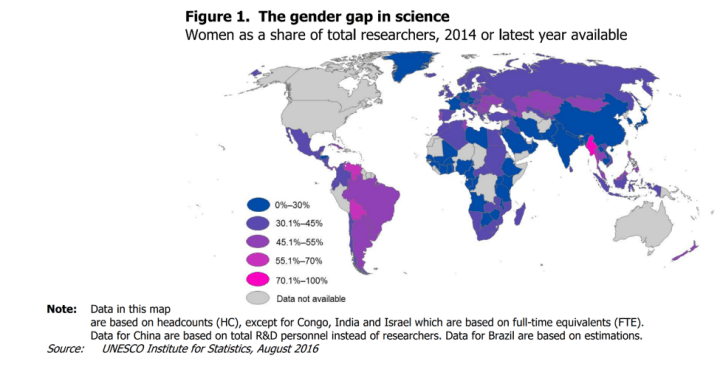
Roula1
Source: http://uis.unesco.org/sites/default/files/documents/fs43-women-in-science-2017-en.pdf


Yes, you guessed right! I am one of those people that are NOT counting the days to Valentine’s (although some roses, chocolate and a romantic dinner is always welcome). Which is exactly my point: Yes, let’s talk about women in science one day a year, but daily/regular “flowers, chocolates and romance” is what makes the celebration substantial, until there is no reason for acknowledgement of the issue. I mean, have you ever seen an international day of CEO’s?! It’s only for secretaries.

I would rather live in a world where:

  • women in science are not a minority – in 1987, 20% of STEM researchers worldwide were women, in 2018, still only 22% (thestar.com);
  • there are not special awards for women (how about all scientists competing — and evaluated without bias — against each other?);
  • when applying for jobs, women are not evaluated based on how many kids they have or want (paternity leave is still not = maternity leave);
  • people are not surprised (or shocked) when they hear a CEO or HOD is a woman;
  • young talented girls and great minds do not miss opportunities because they have to provide for their families or because they are disadvantaged compared to their male siblings;
  • infrastructure (both capital and emotional) is constructive and supportive of women and — let me also say — mothers in the work environment;
  • where a girl in Engineering or Programming doesn’t feel excluded;
  • women’s experiences and local knowledge are not ignored, especially in the developing world;
  • where women are full, active participants in the scientific community.

Roula2

In the world right now (unfortunately), an International Day might be a good tool to shape this “new” world I am dreaming of.

But it is certainly not enough. We need to celebrate women’s perspectives every day. We (women) need to support each other and advocate for each other. We need to provide role models, support motivation and inspiration for early career women academics and the girls of the future. We have to make sure we assist and reward young girl scientists from the very beginning and all the way up, also for those already deep in the biased system; but most importantly, we must support women in following their dreams.

Easier to say than done, I guess. It needs an ethical code and an inner drive by women to “show off” their strengths. At the same time, it needs support, programmes and practical assistance from policymakers and society as a whole.

I hope that I will live in that world one day where being a woman in science is not an exception, where there is no need to celebrate every single woman in science as we will be the norm –nothing special – just us!

Women in science are not competitors to men in science; they are the missing puzzle pieces. Only by working together and learning from each other, can the human race (and science!) progress.


P.S. (Here I am again…) Having said all that and raising two boys, I have to emphasise that we should not underestimate the importance of boys’ education (formal and family), as well as maintaining gender perceptions and biases. However, that’s a long discussion… for another time.

A new kind of scientist

I had some time to reflect on my career after the Science Forum South Africa meeting at the CSIR in December last year. Before I began my postgraduate journey, I thought that pursuing a PhD was all about equipping me with the skills I needed to do a job or more specifically to be a scientist. Back then I didn’t understand what a scientist really was.

While the movie Outbreak did give me an idea, some of my teachers and even my dad painted a completely different picture. To them, a scientist worked in a lab, wore a white coat and did really complicated experiments to test hypotheses. Scientists didn’t venture out, they only cared about publishing and, where they could, they stayed away from the limelight. Over the years I have met some scientists like that but there weren’t many.  Was this the career I really wanted to follow?

Yes. My love for science and the need to satisfy my curiosity overpowered any stereotypes that might have discouraged me. Fortunately, as I started on this journey, I learned very quickly that a scientist was nothing like what was described to me—unless you wanted to be that kind of scientist. Being a scientist was so much more.

Why was I thinking about this after the Science Forum? For anyone who hasn’t been to one, I encourage you to attend. It really is something special. The forum brings together scientists, journalists, policymakers, business people, etc., from around the world, to discuss the importance of science, technology and innovation for development of the African continent. It also seeks to unify the African science community so that we can work more closely together to build a better continent for everyone.

The scientists I observed at the forum weren’t wearing lab coats, they weren’t hiding in their labs, and they weren’t sitting in a corner huddled over a laptop. The scientists I met were leading panel sessions and science talks. They were asking questions of other scientists, policy makers and business people. Some scientists weren’t scientists anymore — at least in the strict sense — they were starting their own companies, managing others, running communication firms, doing PR, advising ministers and so on. These scientists were different.

While the training of scientists hasn’t changed too much over the years, there are a number of critical skills, general and field dependant, which one will acquire. Outside of science, companies have found many of these skills useful for other tasks. Ever analysed large amounts of information with some comparative work? You might want to look at becoming a market research analyst. There are many more examples where training in STEM can be used for a variety of jobs—old and new.

SAMSUNG CSC
Mulalo Doyoyo: an engineer and researcher from Limpopo who is a business owner, inventor and lecturer
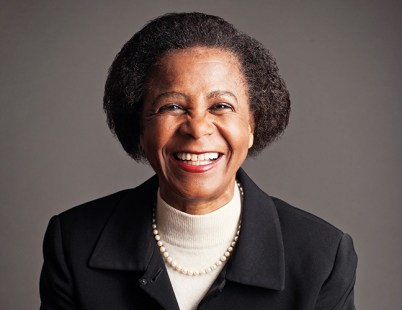
Mamphela Ramphele
Mamphela Ramphele is a South African doctor, struggle icon, academic, top business woman and author.


Elon Musk
Elon Musk is a South African-born Canadian American who studied Physics and became a business magnate, investor, and philanthropist.


As scientists we are rather lucky. There aren’t many careers which offer the same kind of flexibility and allow you to diversify. Being a scientist is not a dead end (nor is the path there straight). I have found that as a scientist— a microbiologist, in my case—I have been given more opportunities than I could have dreamed of. Yesterday, I took part in a science communication competition. Today, I have written a blog piece. Tomorrow, I will lead a discussion inspiring young scientists. The day after that, I will carry on my experiments. In a few years, I might lead a panel discussion on policy change in Africa at the Science Forum as CEO of my own private consulting firm; or perhaps I will be on a tropical island somewhere celebrating my Nobel Prize(!). As a scientist, we don’t need to keep our science in the lab, there’s a wide world out there that needs a new kind of scientist.