Africa is a very beautiful continent with vast possibilities, especially when it comes to research. This is because of our natural resources, something in which we can take great pride. Unfortunately, as I’ve mentioned before, we run the risk of over-exploiting our own resources as we’re slow in taking up research to address environmental degradation and climate change. I think, however, there is a solution.
Collaboration. The classical definition of the word is working with someone to produce some shared end result. But how can this benefit Africa and its researchers? Let me firstly reflect on the “great” (and rather pervasive) idea of a solitary scientist.
One of the most momentous discoveries of the modern era was the discovery of penicillin. History has it that penicillin was discovered in 1928 by Alexander Fleming,
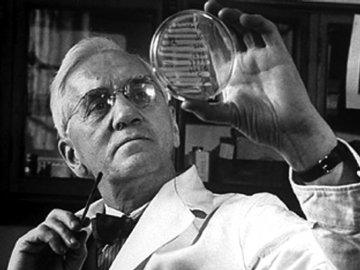
who was a professor of Bacteriology at St. Mary’s Hospital in London. After realizing that many soldiers were dying from festering wounds during the 2nd World War, Prof Fleming decided to go to the lab and try to find a remedy. As history now tells us, he was able to isolate a rare strain of Penicillium notatum which was able to inhibit the growth of bacteria. This was the greatest discovery that paved way for further development of antibiotics. Today, Prof Fleming is celebrated as one of the greatest scientists to have ever lived. But was Prof Fleming really alone in the lab? Formal history rarely acknowledges that it was his assistants, Stuart Craddock and Frederick Ridley, who successfully isolated pure penicillin from the mould juice that Fleming had observed.
My argument here is not that these people should be credited but rather that even the greatest discoveries were a team effort – a collaboration between two or more people. Today, this is what Africa needs. Internationally, collaboration is increasing at an incredible rate. These consortia between multiple institutions and even countries ensure maximum access to resources and further advancement of all team members’ work.
In Africa, I get the impression that we believe in making the name for ourselves, as individuals. It is almost as if not being known as a solitary researcher discredits one’s work. Sure, you can protect your ideas and discoveries if you’re working in isolation, but there are major drawbacks to keeping to yourself. Limited funds, resources and slow processes are just the beginning. We often forget that science, in its nature, is collaborative.
Let us look at what will happen if Africans were to collaborate more, instead of working in isolation.
African scientists will have access to cutting-edge technology which will open up vast possibilities for research. The networks and consortia will help with access to bigger grants that are tailored for improving the African research.
Capacity building in terms of retaining skills, more knowledge and tools will also be born from these collaborations. This directly leads to the last important element of collaboration – critique.
Much of science works better if it is critiqued. You may have two people from the same field with the same set of skills but I can bet that their opinions will not be the same. This is the reason why collaboration works. The scientist whose ideas are critiqued and pass through some amounts of fire comes out golden on the other side.
It is high time that we get these collaborations going as Africans, otherwise we are doomed to stay where we are in research. As with the true spirit of Ubuntu, we become better by working together and helping others. I do not believe that the developed countries have the intellectual capacity that we don’t. For us it just takesgoing back to our African way of being – collective action – to ensure that we see a better tomorrow.

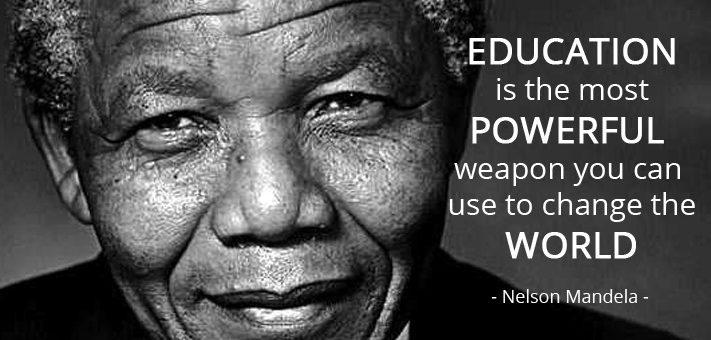
 The solutions to South Africa’s and the world’s problems, according to Obama, lie with the youth; an undivided youth who love more, who lead and build communities that fight for what Mandela, and others, were and are trying to build. I was inspired by Obama’s messages of hope and the vision he has for achieving an undivided, educated and loving global community. I want, more than anything, to be a part of that community.
 SAYAS BLOG