SEASONED

As the trees shed their leaves and animals go into hibernation, so do we, sometimes. There is a natural progression in life that we cannot avoid, but must embrace if we wish to see positive changes. I must admit I am bound by these thoughts as the year progresses and the final submission of my thesis draws nearer. It is a stage of much anxiety and anticipation, which can oftentimes be confusing. Metaphorically speaking, that just about sums up the life of a postgraduate, particularly mine.

Four season of the year

This year marks the final year of my studies. As most postgraduates know, this means you have to finish doing all experimental work (which took lots of energy and activity – rather like summer!) and start compiling the data into an understandable format. The smell of coffee, fuzziness of warm blankets and a jersey, all linger in my mind at the thought of this. Winter is indeed coming. Loose ends need tying up. Lab equipment must be put to rest. “Doing” is done, and now I have to solidify the findings! That mammoth task can give anyone the heebie-jeebies!! And I’m tempted to curl up and just stay in a warm little ball…

But after months of trial and error, you will hopefully come out strong and triumphant, having run the race, closer to the answers than you were at first. As for me, more than two years have past; what’s done, is done. It is time to pick myself up, do some introspection and turn all my energies into displaying the guidance I’ve received. In the end, all the work I’ve invested will become an actual physical something that makes a contribution to science and possibly change peoples lives. That thought makes the coldness of my winter start to thaw away.

So, I hope to not just freeze mentally or physically in the months ahead, but keep my eye on the prize. Because winter will also lead to the beginning of a new season, the air filled with freshness, newness and anticipation for beautiful things. In the end, I look forward to the promise of bright flowers, green trees and yes, to graduating. Until then we have to acclimatize ourselves with the changes in season, for these too bring with them gifts for those that know how to seize the day!
The future of intelligence

Humans are born inventors – we keep on devising new technologies to (supposedly) make our lives easier and have a deeper understanding of how things work. There exists a collaborative relation between the human input and artificial intelligence, transforming our thoughts into tangible results. Computers are the closest form of technology that strives to ultimately match the human mind, albeit with much effort. Of course, this revolutionary equipment, introduced in the 80s and 90s, has changed our lives forever. Moreover, we now carry little computers in our pockets — the worst invention, according to parents — but it has improved our lives none the less. I would think that without applying technology effectively, researchers would be finding it quite difficult to make the leaps they have. In fact one would say that technology is both the fruit and the root of research. Our aim as researchers, broadly, is to investigate and discover, answering unanswered questions, if you will. The tools we use that aid us toward this are constantly evolving, trying to reach an age of high efficiency and turn-around time. 

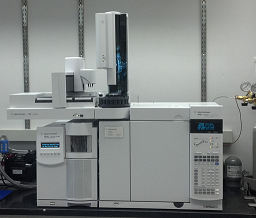
mathapelo-agilent-gc-ms
Oh, if only you could speak…

In a chemistry context, chromatography, a traditional method used to determine different kinds of chemical compounds in a sample, has evolved quite significantly over time. Before engineers built an instrument that could do this, many researchers used thin layer chromatography, which uses a sheet of glass, plastic or aluminium foil, coated with a thin layer of an active substance. Think of what happens when a piece of tissue and dip it in water; the water moves up the sheet- that is a form of chromatography!! In the former the ink would move with the “water”, leaving a trail behind it from the starting point, while in practice, the sample would separate into its individual compounds. Well, what my point is: as long as my explanation was, so were the processes one would have had to get through long before getting the results. But now, technological advances have improved the selectivity, efficiency and difficulty in carrying out all operations. I am not saying that we should over indulge and let it run wild, but use it within limits. I have come to know, that while it may be nice to have a machine that analyses your samples while you are at home, unsupervised technology has its disadvantages. I’ve sometimes returned to my beautiful machine and found a bent needles, upside-down sample containers and no results!!! In these cases, I would have preferred a talking instrument that could tell me what went wrong… Alas, we are in the age of discovery, I may be lucky with that one!!

Technological advancement is unavoidable and the debate of whether people will be replaced by machines is controversial. But one thing is clear, technology is there to make our lives and research easier, faster, more efficient. Whether we reach an age where instruments think for themselves, is for us to see in the future! Without people, the thought processes and emotions behind these creations would not be possible!