Fallacies and freedom of expression in Science

Can ignorance be cured?

The Coronavirus (COVID-19) pandemic has caused a global panic, unfortunately, during these trying times many people have suddenly become ‘medical experts’. It was alarming for me when I received a WhatsApp text message claiming that the virus ‘can be cured by a bowl of freshly boiled garlic water’. The panic was; how many people received this message? How many people believed it? How many lives are at risk because of it?

The results of spreading fake news can be catastrophic. They could lead to deaths that could be prevented if the people received scientifically correct information. The World Health Organisation (WHO) reported that the vast majority of coronavirus information shared across social media comes from fake news sites. These fake news range from conspiracy theories of where the virus originated from to healing remedies. It was unsettling to see prominent leaders also prematurely announce treatments that weren’t approved by medical specialists. The repercussions of this misinformation have even sparked racial discrimination and lead to shortages of Plaquenil which is used to treat malaria.

I hope that as a community we can work together to spread the scientifically correct news and save lives! The NewsGuard has created the Coronavirus Misinformation Tracking Center which keeps a record of all the fake news websites. In South Africa, it is best to read updates and health-related advice directly from the government’s website (https://www.gov.za/Coronavirus).

In the age of the fourth industrial revolution (4IR) people have become more susceptible to fake news. Old wives’ tales are no longer just beliefs of small groups but are vastly spread through the internet. Unfortunately, science is not exempt from fake news. An article posted by Psychology Today mentions that people fall for fake science news based on their individual ability to recognize misinformation, group beliefs, and societal factors. Addressing these individual/societal beliefs with facts doesn’t help much, research shows that evidence-based arguments are most likely to curb these beliefs. 

The most popular in Astronomy has to be the belief in astrology, even print media cashes in on this one. People strongly believe that star signs directly affect their moods, personality, finance and love life. A study carried out at the University of Arizona showed that 78% of 10000 students believe that astrology is ‘sort of science’. A shocking 48% of students from the science faculty also believed that astrology is science-based. Counter to popular belief, star signs are based on a group of stars that appear in the sky at a particular time of the year, they have no effect on any individual. They were initially used by farmers to indicate the time of the year and navigate through a season change.

Right after astrology would be the ‘flat earthers’, a group of people who choose to still base their belief on an experiment performed in 1985. What is alarming is that the number of people who believe this myth seems to be on the rise. An experiment carried out by science enthusiast clearly shows that the earth is spherical and not flat.

The above examples are less critical, however, results of believing fake science news can be life-threatening.  For example, a study carried out in the US showed that a third of the public disagrees that climate change is due to human behaviour. These individuals would be less likely to be more precautious when using objects that cause pollution or directly impact climate change. The truth is, we only have ~ 10 years to curb the climate change catastrophe, this can only be achievable if we work in unity. It is promising to see young individuals boldly advocating for this cause because it is the younger generation that will suffer the consequences of our ignorance.

Another hazardous myth is that vaccines are harmful to babies. This myth stemmed from a fake study that linked autism to the measles‐mumps‐rubella (MMR) vaccine.  This hesitancy to vaccinate has caused a global increase in vaccine-preventable diseases and sometimes result in fatalities that could have been prevented. The truth is research has shown that vaccines save lives! They do not just protect the vaccinated individual but also provide community protection by reducing the spread of disease within a population.

It is promising to see that as much as 4IR might be the cause of the acceleration of the spread of fake news, it can also be the solution. A lot of research has gone into using machine learning and artificial intelligence as a resolution. These 4IR tools can be used to detect fake news based on text. Other studies include adding warning texts to articles that emanate from untrusted websites, these studies reveal that people are less likely to believe articles that are tagged as fake.

As scientists, I feel that it is our duty to educate the public with matters that we are well informed about. Ideally, it should be mandatory for all science postgraduate students to be enrolled for a science communication module. This would enable us to effectively communicate our science with a range of audiences. Hence, allowing us to engage with the public at a level which is not condescending but equally informative.

Majority of postgrad funding is from the government, either directly from NRF or through SARChI chairs, hence, science communication should be a public service from the recipients of the funding. The government already has science engagement avenues such as SAASTA and could escalate public engagement by working with more postgrad students.

Finally, as scientists we should be equally visible on social media, presenting evidence-based facts to combat the spread of fake science news. If we are not thrilled to do this as a public service then let us consider it as a mission to save mankind (Science Avengers maybe?).
Locked Down and Dancing – Physical Activity over the Next 21 Days

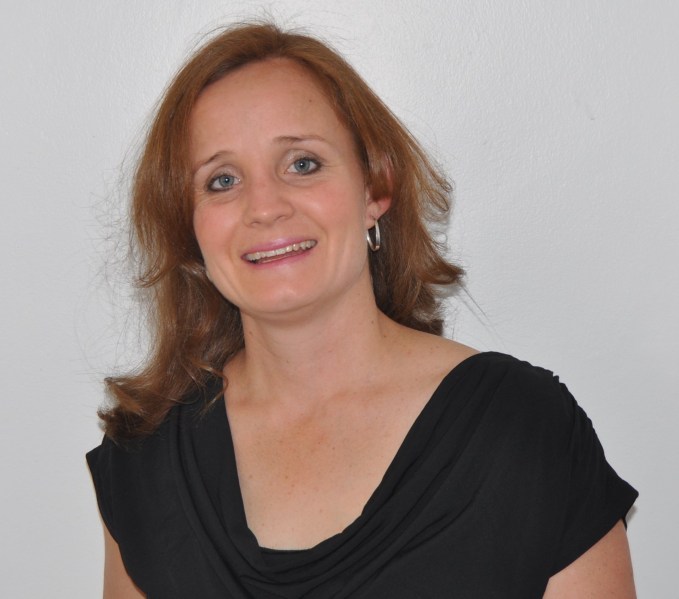
By Prof Benita Olivier

On Monday evening, 23 March, President Cyril Ramaphosa broke the shocking, nonetheless expected news: South Africa will be under lockdown as of Thursday, 26 March 2020, at midnight.

At that time, many practical challenges raced through my mind. Some of my instantly created questions were answered during the president’s address that same evening while others remained dangling. One of them being: will I be able to take a walk around the block or run a kilometre or five in the hood during the lockdown period? After a spur of confusing communique, along came Health Minister Zweli Mkhize on the morning of the 25th of March  and said something that gave all dogs, strollers, walkers and runners hope – we are permitted to walk our dogs or go for a jog in the street. Brilliant news… until a few hours later when Police Minister Bheki Cele said: “There shall be no dogs that will be walked, the cluster met, discussed and we agreed that it doesn’t enhance the call made by the president. If you do really want to walk your dog around your house, it ends there, it can’t go beyond that.”

I made the logical deduction that my running shoes are not going to hit the tar for the next 21 days… It felt like a basic human right is being taken away. Instant rebellion. How can a solo runner inside an estate in a secluded neighbourhood make less sense than the 100 people hanging around in Pick ‘n Pay? I then came to the realisation that my individual human right to stay healthy and feel good are now second to the collective’s right to heal. In order for the lockdown measures to be implemented effectively, rules need to be applied consistently and stringently. I can imagine that it will be very difficult for the police to enforce control if all of us take to the streets to “walk our dogs”. For the greater good, I will comply, but this does not mean that I will throw my exercise attire into the back of my cupboard. No, we are humans and we have a great ability to adapt, and adapt it will be.

This is the time to look after our physical and mental health. Physical activity is globally recognised as the best medicine for attaining optimal health and preventing non-communicable diseases (diabetes, stroke, coronary heart disease, obesity, chronic respiratory disease, cancer, hypertension, chronic pain and mental health conditions). Especially relevant to our current situation, physically active people have a stronger immune system and a lower risk of infection. Physical exercise is important to maintain a healthy mental state. Exercise, specifically aerobic exercise, improves mood, self-esteem and cognitive functioning and it reduces anxiety, depression and negative mood. It is therefore clear that during this time, exercise is a lifeline!

I do urge you to keep going if you are already in the habit of doing some form of regular exercise. A decline in cardiovascular fitness present itself after 12 days of no exercising, not even to talk about doing nothing for 21 days. The heart and blood vessels fail to function as they should, while muscle strength, endurance and coordination reduce. Negative effects on blood pressure, blood sugar and the immune system will follow as soon as two weeks after you stopped training.

If you are not a regular, only you will know if this is the right time to start a brand new exercising habit (remember to consult with your doctor if you have an underlying illness). And actually, thinking about it, now is a brilliant time to start exercising! A time to fight the blues with some sweat!

The American College of Sports Medicine’s Exercise is Medicine initiative recommends 150 minutes of moderate-intensity or 75 minutes of vigorous aerobic physical activity per week. Moderate means that you can talk or sing while you do the activity, while during vigorous physical activity, no comfortable talking or singing is possible. You can do this in short spells of activity throughout the day or, say 30min to an hour at a time. In addition to aerobic activity, strength training is recommended twice a week.

How are we going to achieve the above? Here is where the innovation comes in. You can do it with or without exercise equipment. Body weight works brilliantly, but if you are fortunate to have a stationary bicycle, some weights and maybe a Pilates ball, great stuff. Star jumps, on-the-spot running, squats, lunges, arm dips, sit ups, all of these don’t require any special equipment. You will find a lot of exercise programmes on YouTube. The Exercise is Medicine website also has a few suggestions that can be found here.

Another solution is to download an app to your phone. Go through your app or play store and search for “exercise apps”. You will find quite a few. The one I use is called the “30 Day Fitness Challenge” – it mostly contains strengthening exercises where no special equipment is needed. The app contains various 30 day challenges – different body areas and different levels. It starts gently and slowly progresses. You even get an applause when you reach your daily goal. Another app, which has a specific cardio section is “Daily Workouts – Exercise Fitness Workout Trainer”. I don’t use these apps for any specific reason other than because they work for me, but there are many out there and it will be worth exploring a few options (while you lie comfortably on the couch).

If organised workouts are not the thing that makes you tick, then the good old traditional “counting the steps” is for you. Put on your step counter and get going with your chores while at the same time conquering your goal of 6000 to 10 000 steps per day. And… why not throw some dancing into the mix?

Things are serious out there and the best we can do is obey the rules and stay at home, but that does not mean we have to be miserable. We will be able to look back in 21 days’ time and think, not all was bad. We may be locked down, but our happiness is in our own hands.

#stayhomesavelives #exerciseathome

Benita Olivier is a professor in physical activity, exercise and sports and Research Director of the Wits Institute for Sport and Health at the University of the Witwatersrand. https://www.wits.ac.za/staff/academic-a-z-listing/o/benitaolivierwitsacza/