Life lessons from the laboratory (and beyond)

By Ruenda Loots

It’s that soul-searching, what-have-I-done-with-my-life time of the year. This year it feels more gut-wrenching than usual because 2015 was…unusual. A “not according to plan” year: not only for a struggling PhD student but for our universities, our country and the world. I still don’t have it all figured out but I have tried to extract some value from the chaos of this year.
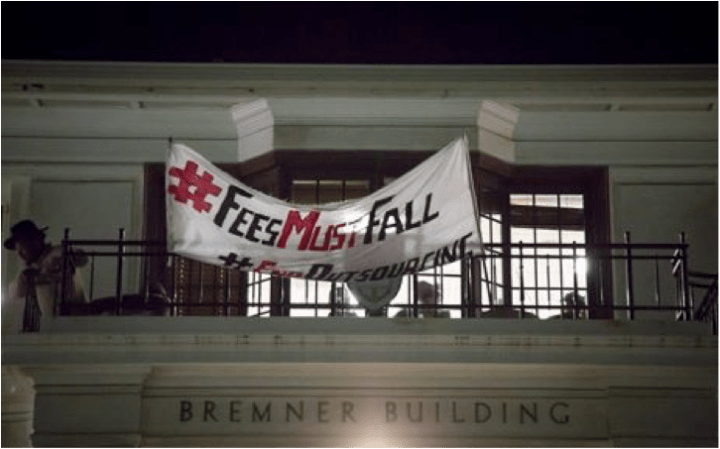
feesmustfall
#FeesMustFall (Picture: Anthony Molyneaux/EWN).


Science in a time of load shedding

Remember earlier this year, when you would get up, brush your teeth and check the daily load shedding schedule? Although it’s a vague memory by now (and a false sense of ease), there was a time when our experimental planning was determined by Eskom. Yes, we complained when it happened but, like true South Africans, we ultimately made the best of the situation (“Power’s out – let’s go grab a beer!”). And, of course, we found ways of laughing during the disasters.
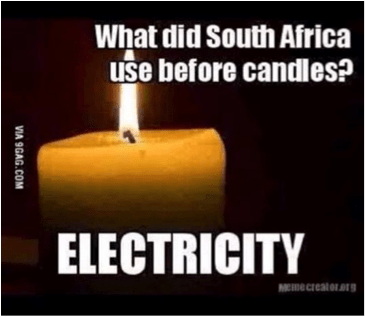
candlesIrregular power supply, slow internet, limited equipment, expensive orders and looooong delivery delays – practicing science in South Africa has its challenges. But this makes us a more resilient breed of researcher. Appreciate the challenges as opportunities to think outside the box (especially over a beer with your colleagues in the dark).

Privilege

Because when you think about the challenges of doing post-graduate research, you should remind yourself how lucky you are to experience those challenges. The #FeesMustFall protests this year have been a chilling demonstration that tertiary education remains an elusive privilege in our country.
As I reflect on my journey, I am humbled by and deeply grateful for the sacrifices of my family, each tax payer’s contribution to my bursaries and for supervisors who complete tedious funding forms. I am incredibly privileged to have studied at a world-class university under the guidance of renowned scientists.
The only way I know to show this gratitude is to be a mindful citizen who participates in real issues that affect those around me. I intend to share my knowledge, skills and resources as much as I can, for as long as I can, in this beautiful, evolving country.

When Life Happens

Because this is the country I want to raise my children in. When I decided to go take on this degree, I promised myself that I would not put my life on hold for the sake of research. So during my PhD I have worked part-time, taken other courses, married my best friend, took on grownup things like paying taxes, blogged about doing a PhD, adopted two puppies…and started a family.
As I write this last blog (and the last chapter of my thesis), I can feel my daughter’s heel kicking my ribs, like she’s reminding me of the two looming deadlines: finish the thesis & give birth. I’m not entirely sure which one is more painful, but I am grateful that I get to experience both of these life-changing opportunities.

Perspective

Like the bacterial biofilms I’ve been studying for five years, my research has taught me the importance of adapting to changing conditions and evolving to survive. Completing a thesis has taught me perseverance and patience. And parenthood is teaching me…every day.

The journey to step 1: choosing a PhD topic

By Dorothy Ngila


In 2009, I was interested in transboundary water management.


In 2010, that changes to something — anything! — about gender.


In 2011, it was all about mentoring of young girls and women in science and technology.


By 2012 and 2013, it was all about women in leadership in science and technology.


Would you believe it if I tell you that my final topic, and what I am now pursuing as my PhD topic is, ‘The role of academies of science academies as health science advisers: the case of Nigeria, Uganda and South Africa.’


So, how did this all come about?


For as long as I can remember (okay, lets rephrase that, for as long as I have been a post-matric student!), I have yearned for the day I would be called Dr Ngila. Part of it is because, I would be the first of my paternal grandmother’s grandchildren to attain this, and part of it because I think I have some innate pressure to follow in the footsteps of my aunt (who has also doubled as my mother for the last 15 years), Prof Catherine Ngila.


So there I was, having finished and graduated from a Masters programme in Geography and Environmental Sciences from the University of KwaZulu-Natal and settled into my job at the Academy of Science of South Africa (ASSAf) in Pretoria. The next logical step was to start my journey to a PhD.


I knew that I was passionate, disciplined and dedicated enough to pursue a PhD, but since 2009, I had toyed with way too many ideas.


But with my quest for trying to save the world (not literally but it’s been a hectic run at work over the last couple of years), and trying to figure out how I would fit a PhD in 3 years, I eventually settled into trying to get this done in 2015.


So how did I eventually choose a topic?


There were many, many concept notes…I kid you not, I read more than 200 scientific papers and produced no fewer than 20 concept documents in the last few years in my quest to finding the appropriate topic. In the end, however, my choice boiled down to three things.


  1. What kind of study

‘Will you full time or part time?’


I spent a lot of time thinking about whether I would leave my job and go into full time study or whether I should rather consider part time study. There are pros and cons to either but for me, it came down to the reasons for wanting to engage in PhD studies. If I wanted to have a PhD so that I could get into academia after completion, it was a no-brainer that I needed to go into full time study. However, I wanted to pursue the PhD for other reasons. It would boost my career development, enhance my critical thinking within the workplace, further my academic achievement, represent significant personal fulfilment, and contribute to building Africa’s knowledge economy outside of academia. I chose the part time route.


  1. Smart topics

‘Am I choosing a smart topic?’


For the last few years, I have been privileged to work in an array of portfolios within ASSAf. The ones that have truly spoken to my passions have been our African collaborations, and gender in science, technology and innovation. When I first discussed my desire to engage in PhD study to one of my mentors, she gave me the best nugget of wisdom ever, ‘choose a topic that is linked to the work that you engage in at ASSAf, as this will be easier to manage.’ This helped me to shape the topic I am working on right now. Regardless of how pressured the work is, every day, I read, have conversations, engage with topics that enable me to add value to the PhD process. Therefore, though I’m working a bit harder, mostly, I’d like to think I’m working smarter.


  1. The supervisors

‘They are renowned for their craft and are invested in the subject matter’


Once I had drilled down into the topic I was interested in, it became easier to find renowned scholars who were interested in promoting the PhD. They then helped me to shape the boundaries of the final research topic, ensured that my topic was relevant to my goals, and led me to the correct literature. For a part time PhD student (probably ALL PhD students), perhaps the most important decision that one can make is the choice of a supervisor. I have found supervisors who are not only understanding, supportive and invested in my completion of the PhD but also who give me important nuggets of wisdom on work/ life/ PhD balance (and let’s face it, I need this advice so much more as a part time student).


Many people will have different journeys into deciding on the PhD topic. What is more important is that you end up with a topic you are passionate about (but perhaps not too passionate), a topic that will endure the duration of study, and a topic that will contribute meaningfully towards your future career goals. Because mere curiosity is not going to sustain you through this PhD journey…