We may have surpassed the age where scientists said the flu is caused by “mysterious somethings”, but we are still very much in the dark about viruses. Virologists are even torn when it comes to knowing if they are alive. At the very least, viruses are shortcuts on the principle of life itself. While the rest of life is scrambling to evolve complex mechanisms, viruses are the couch potatoes of micro-organisms. Essentially they are just Netflixing their way through series in their sweatpants while the world around them runs the Comrades. Then, instead of putting on the pounds, they end up winning an Olympic gold for marathon running and everyone else is left a bit bewildered. They compete, they attack, they overthrow and they invade. They are the Hitlers, Mussolinis and Idi Amins of the immune system – but unlike their human counterparts, I love them.
I was 14 when my love affair with these tiny parasites started. I was (and am still) small for my age — perhaps that is why I found a kinship with them. They are in the smallest of packages and have managed to jump across species, dominate lifeforms and cause havoc without lugging around any of their own cellular machinery. HIV impressively hijacks the very system that is there to destroy it, Ebola can hide its cell surface proteins to avoid detection, and influenza forces cells to burst to enhance viral release. I appreciate the skill with which they shrewdly take command, often under the radar of our supposedly complex but largely unprepared cells. Another feature that sets viruses apart from their microbial brethren is how quickly they can adapt. Viruses that consist of nothing more than a bit of DNA or RNA wrapped in protein can change dramatically within a couple of hours, whereas bacteria have a far slower mutation rate. It is their simplicity that gives them power that very few complex systems can counteract.
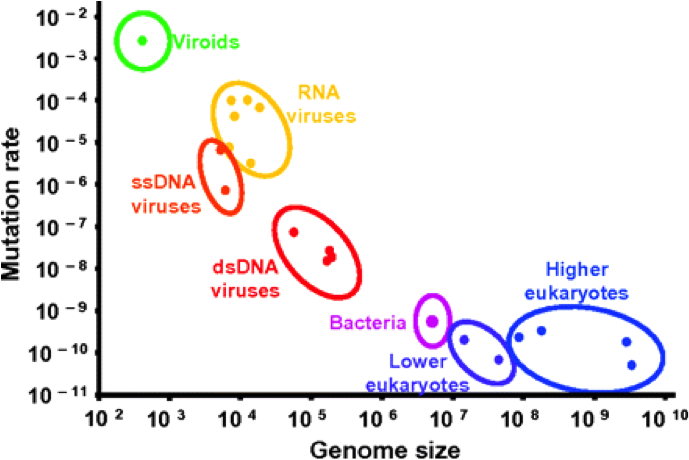
Read more about complexity versus success here.
A virus doesn’t necessarily achieve anything by killing its host – that could lead to its untimely destruction. Ultimately, self-interest just requires simple transmission and replication. Often a virus enters a host benignly with no visible symptoms and while it may kill a few cells, it does so with limited destruction. In a reservoir host, the host that the virus originated in, there is a truce; a sort of dictator parlay. In these situations the virus ‘rents’ the space and the space doesn’t complain (sort of like Donald Trump in the Republican party). When the virus makes a move and spills over into a new host, though, all bets are off (i.e. Donald Trump becoming president of the USA). HIV, Ebola, Marburg, swine flu and yellow fever are just a few examples of successful plagues (or, zoonoses) that have made the evolutionary leap and caused massive damage in doing so. Like a horror movie they are so intriguing, I can’t stop watching them through my fingers.
As I speak with admiration for them, it may seem counter-intuitive that I spend my days growing them, giving them some host cells and then finding cruel and unusual ways to kill them. This is the first lesson about medial science: know your enemy, appreciate them, truly have passion for them. Scientist need to be devil’s advocates, always balancing disdain with adoration. In this way you will find creative answers to hard questions. You can get a PhD that really means something. In my case, knowing what I’m up against is what will always keep me a few replication cycles ahead. I constantly marvel at what nature has to throw at us and I hope this will make me a good virologist: over-thrower of dictators!

 SAYAS BLOG