Building a cohesive world

“Dream,” by Mathapelo.

I recently had the opportunity to attend the 9th HOPE Meeting in Japan, with 110 delegates. This was quite an educational and exciting opportunity. Apart from learning about the culture and people of Tokyo, which included writing in Japanese, we had the chance to interact with Nobel Laureates. Through their unwavering consistency, these researchers achieved major scientific discoveries.

A Nobel Prize medal that belongs to Professor von Klitzing.

They, of course, gave us lectures on their Nobel winning work, but we were also given the opportunity, in small group sessions, to have discussions with the Laureates. These included their mindset, postgraduate journey, challenges and triumphs. They highlighted their need for consistently seeking knowledge, asking and answering questions differently, as well as resolving problems. They key driver to their success was the environment they were in at every stage of their lives.

The need to create relationships with people not only assisted them in growing as individuals, but also fostered their involvement in intercontinental research.

Team K

And we had the experience of true team-work and thinking with those who can challenge you. We we placed in teams, comprising exceptional doctoral and post-doctoral students from the Asian-African-Pacific regions. WOW!!! My passion was truly galvanized by this group of individuals. All teams arrived at similar conclusions: if we don’t work together, our progress as a world will be tainted. And, if we resolve mundane or even global problems, do the people who can use these solutions have access to them? We need to create platforms that ensure that science is not restricted to formal publications, but is distributed to societies through platforms they regularly have access to.
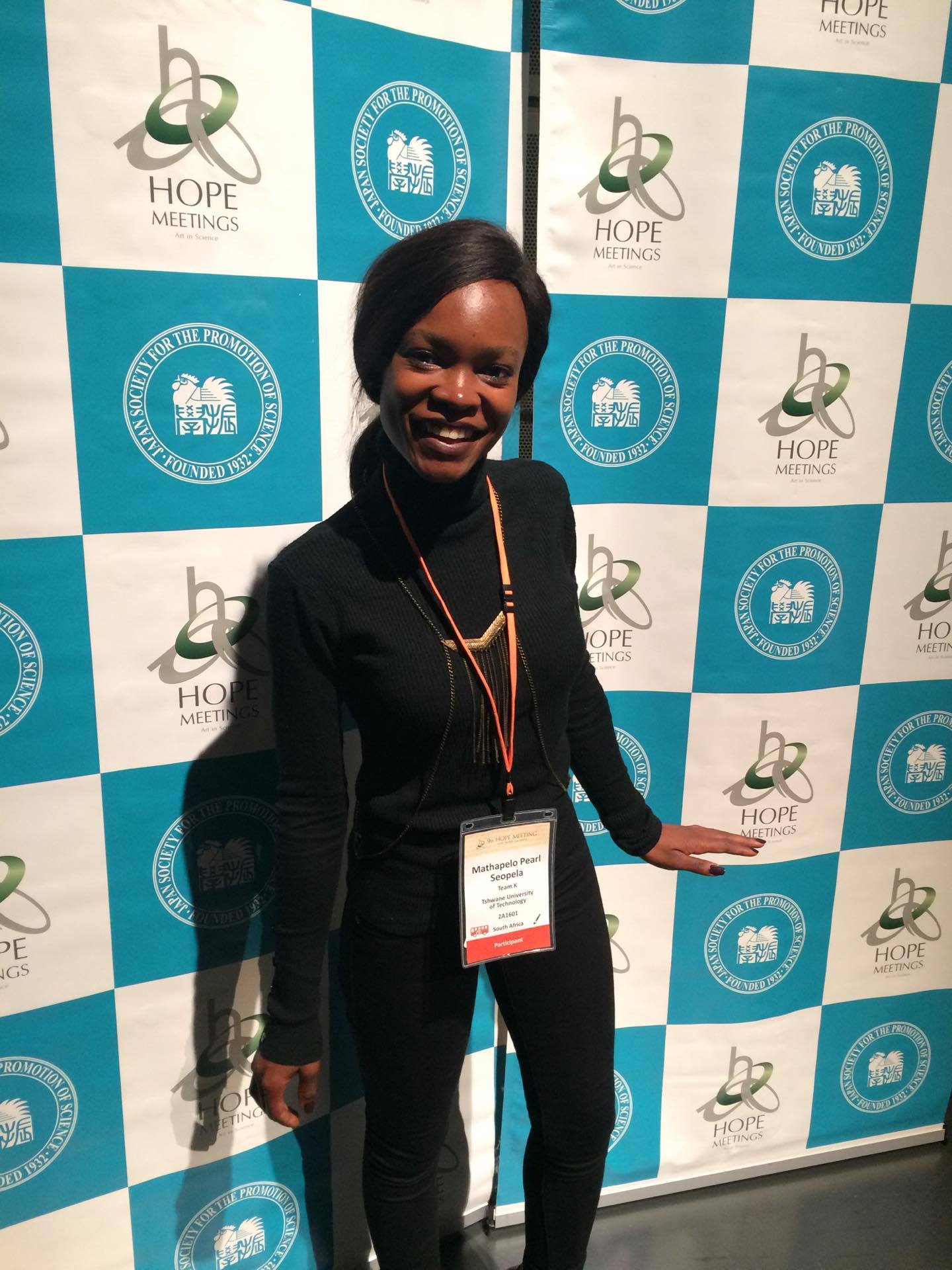
Photoshoot

Each delegate also had the opportunity to present their work. This was done in the form of a 60 second presentation and poster! If you haven’t done this before, you have no idea how hard it is to condense your life’s work into a single minute…The works covered ranged from chemistry to out of this world science (astronomy). I left the meeting feeling that the future is indeed bright in the hand of the young people I met there.

As we thrive to become individuals in a world full of pressures, in addition to inner drive, it is through the relationships we build that we are propelled into becoming better beings. Most of the idioms that carry us through the perils of life, mostly talk about giving rather than receiving. A Chinese adage I often reflect on speaks to “the life of a candle never getting shortened by giving light to another”. We cannot evolve as individuals and society without the aid of people that we come along in our path. On the whole, South Africa – at its best – is a true reflection of this example. Ubuntu: working together, encouraging each other and effectively bringing change to our world.

Return of an expat: concerns and opportunities


There are many blogs and YouTube videos showing what the rest of the world gets wrong

2
Source credit: http://www.generationcedar.com/main/2013/02/the-true-meaning-of-home-lies-in-our-true-identity.html

about our beautiful country, some of it funny, some of it quite horrifying. As a young African explorer and traveler, I have been asked all the clichéd questions… “Do I have pet lion?” or even worse – “Have you walked to Nigeria?” Because you know, it’s all in Africa. Here, I want to give you a

taste of the cultural clashes and surprising culture shocks you might experience should you start using your student passport seriously.

Firstly, I think we South African are more prepared to travel the world, because we are regularly exposed to multiple cultures and languages back home. When I did my MSc degree in Korea (the “good” one!), I discovered quite the language barrier. English is not an official language over there, and very few schools use English as a medium of instruction. But, when I mentioned that South Africa was multilingual society and the average South African speaks more than 3 languages, people were flabbergasted. It made me realise how much of a mono-culture Korea was, and I missed our crazy diversity. I became involved with the South African Students(?) in Korea group – not to cling to my past, but to find people that shared my ‘rainbow nation’ mind-set. It was here that we had a space to discuss our academic concerns and speculate about opportunities that existed back home. It was during our meetings that we laughed and swapped stories; we used humour to mask the pain and ridicule that we felt being outsiders in this mono-cultural society.

Source credit: https://kr.pinterest.com/pin/109001253456956116/

When I later moved to Canada, though, I was not ready for the whole new set of expectation and questions that I’d face in North America. Here, academics were generally concerned with the life quality of South African university students (the #feesmustfall movement has captured the world’s attention). I must admit it was refreshing to converse about the status quo in south Africa – even though I admit I’m not an expert on the topic.

I find there are major differences between the east and west- notably, in the east it is often asked, “When are you going back to your country?” and here I get asked, “ So, have you decided where you will settle in Canada?” It is always shocking when I tell my colleagues that I have every intention of going back home (why would I stay in a place that gets over a metre of snow on random Tuesday- THAT is another story).

Source credit: https://kr.pinterest.com/pin/109001253456956116/

There is a lovely mix of people within the South African diaspora community: some who have no intention of returning home and those of us who recognise the potential impact/significance of our contributions to the South Africa academic landscape. Those of us wanting to return often share similar concerns- Have we been gone too long? What opportunities exist for someone with a foreign qualification? What is the academic landscape like now and how is it evolving? Is there a niche for my work? Would we be able to integrate back into mainstream south Africa? What challenges await us? When you have been gone for as long as I have, these questions are enough to give you mild anxiety and keep you up at night.