HELP…..I’M NOT READY TO “ADULT”

I have always made jokes about how I want to be a housewife after getting my PhD. A housewife with a PhD in Physics has a nice ring to it. I just recently celebrated my birthday (April baby) and I should admit that it wasn’t one of my happiest days. I woke up on my birthday last month and realized that I am 26. Everyone kept telling me how close I am to 30 after wishing me a happy birthday. Just the other day I was celebrating my 21st and thought to myself that I have all the time in the world. I was depressed half of the morning of my birthday and refused to leave the house. Finally, when I did leave the house, I tried to avoid as many people as possible who knew it was my birthday.

I always say that I have a fear of “adulting” but it never really occurred to me how serious this was until now. Everyone keeps asking me what I want to do with my life, sometimes I am honest enough and tell them I don’t know but they don’t believe me so instead I say I want to be an academic because that answer doesn’t have as many follow up questions.

I know I want to stay in academia and do a post-doc somewhere in Europe but I cannot seem to visualize myself in that situation. I am almost finished with my second year of PhD, this means that I am almost finished with this degree and will have to make serious life choices. Do I really want to stay in academia? Do I want to start a family? Do I want to get married? Do I even want to get a job? So many questions that I don’t have answers to.

MayI am at that point in my life where I cannot continue avoiding responsibilities by staying at school. I will definitely not start a completely new degree just to stay in school longer but at the same time, I don’t know if I want to leave school. I have repeatedly said that I want to stay in academia for the past 5 years that I can’t actually imagine myself anywhere else. At the same time, I can’t help question if this is really the right fit for me.

My friends and families around me are getting married, having babies, starting new jobs and building houses. I feel no pressure whatsoever to do the same which worries me a little, I feel like everyone has their lives planned out and then there is me. I’m just like “I wanna do a post-doc after my Phd”, I don’t know where, when or how but I am going to do it. People have detailed 10-year life plans, I don’t even have a detailed research plan for 3 years.

Growing up is difficult, especially since you realize along the way that not everything goes according to plan. Do we really know what we want to do with our lives or do we just go with the flow? Why can’t life come with a manual?

So my refusal to grow up is justified by all the unanswered questions I mentioned above but what are the reasons I feel like staying young is better? Well for starters, the responsibilities that come with growing up are too much. As a young person, the most you have to worry about is making sure you eat every day and remember to pay the rent. Even when it comes to the rent, if you find yourself without money that month, you can easily call home and cry your eyes out.

I have a rough idea of what is out there waiting for but at the same time, I feel like I don’t know enough to be out there. I know the best way to really know is to go out there and learn as you go but I don’t know if I’m ready to put myself out there. Every time I spend time with my mother/aunt and they tell me all the problems they have to deal with, I don’t know how they handle it all. I am scared that if I grow up “mentally”, I will have to start thinking about grown-up things. I will have to be more responsible for most aspects of my life. I am currently proud of the fact that I can walk into a grocery store and buy vegetables as part of the groceries. Am I ready to start worrying about utility bills and getting a payslip every month?

Honestly speaking, academia right now feels like the best option for young people like myself to be in. I know very few people in my life who actually want to stay in academia and for that reason, I keep them close because I need all the support I can get. Academia has flexible hours, allowing us to only work when we are most productive. As scared as I am about working, I am not scared about being an academic. I mean I hear academics complain about the admin that comes with the job and the endless frustrations of dealing with students but that doesn’t scare me as much as sitting in an office every day from 9-5pm writing reports.

I think I am ready to be open to the idea of “adulting”, after all, the clock is ticking (both biologically and approaching the submission deadline).
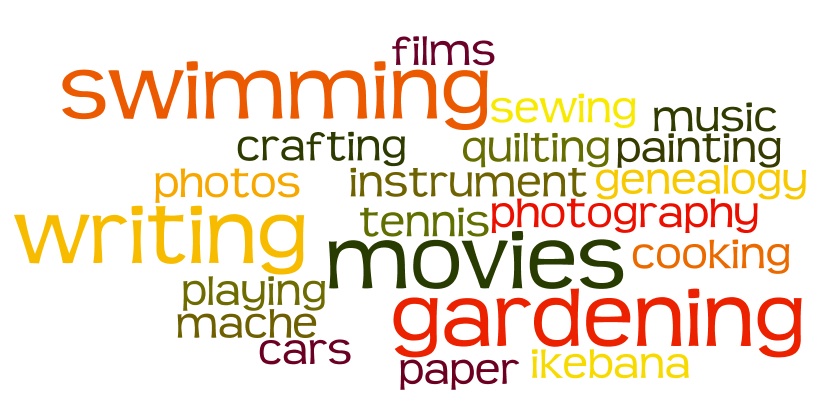
How having a hobby can help with postgrad life

I know what you are thinking – ‘I don’t have time for a hobby!”. And that might be true, which might be exactly the reason why you will benefit from a hobby. I have a few hobbies and I thought I would share why they help me, why they are especially important if you are a postgrad student and some ideas for low-cost and easy hobbies. I am going to concentrate on my love of reading fiction and running a blog about my reading – which I have been doing throughout my Honours year and I am still continuing even during my Masters!

hobbies.jpg

Postgrad is stressful

Deadlines, failed experiments, computers that somehow do exactly what you tell them to do and not what you actually want them to do, supervisors, admin, funding…there is no end to the stress that comes with being a postgrad student. Severe stress for long periods of time can make your life feel absolutely miserable. A hobby is something that can provide some relief from all that stress. It gives your mind something to focus on that isn’t all of your academic woes and bring you lots of joy.

It uses different parts of your brain

Academic work requires very specific types of thinking. When you’re wrapped up in solving equations, pipetting (that’s something that biologists do…right?), or coding all week, it can become mentally exhausting. Picking up a soccer ball, a paintbrush or – my personal favourite – a good novel in your off time can activate the other parts of your brain that haven’t gotten much use lately. Your research-academic brain has a chance to switch off and have a rest for once. This might even stimulate some new ideas for your research!

https___blogs-images.forbes.com_autumnadeigbo_files_2017_03_Right-Brain-Left-Brain

You can learn new skills that benefit you both inside and outside the lab

These might be tangible skills – like writing for the public and search engine optimization through blogging – or less obvious skills like persistence and discipline from learning how to do something new without having deadlines to motivate you. Having a lot of practice at writing blog posts has helped improve my confidence in writing – which translates into more confidence in my academic writing.

It can turn into a side-hustle

While I think you should have one hobby that is purely for your own personal enjoyment and has nothing to do with your overall productivity, you might be able to monetize your hobby to stretch your tiny postgrad budget a little further. I recently got to enjoy a box-full of free books in exchange for advertising an upcoming book sale because I regularly post pretty pictures of books on Instagram. This has helped me free up a bit of extra cash since I would have purchased many of those books on my own anyway. If you have got a creative or crafty hobby, there may be easy ways for you to make some money off of it.

It gives you a place to succeed and fail in ways not directly linked to your academic progress

This is something that I think is especially important if you’re someone who takes failure and rejection really badly. I don’t handle those things well, but having hobbies where small failures show quite quickly that I’m making progress. For example, if I a blog post of mine isn’t as widely-read as I would have liked, I can look at it and figure out ways to write a better post the next time. All I have lost is the small amount of time I spent working on the post – and it doesn’t mean that I’m a bad blogger. Similarly, if something goes wrong in my academic work, it doesn’t mean I’m a bad scientist. Failure is an important part of the scientific process and every academic career, and hobbies are a way to make failure less intimidating.

It helps you with your time management

This sounds a bit odd, I know. While there are exceptions during really busy periods, but if you have less time to finish something – you’ll finish it in less time. For example, if you have two days to finish an assignment, then it might take you all of those two days to finish it. But if you only have two hours, you’ll get that same assignment done in those two hours. Similarly, if you’re finding something is dragging on, but you’re looking forward to meeting your friends at 7 p.m. for a soccer game, then you’ll get that work done in time so you can join them. Academic culture often requires our entire lives to be wrapped up in our research and having hobbies and activities outside of academia helps you break out of that unhealthy culture.

Some ideas for hobbies

I would like to emphasise that a hobby is a highly personal thing. If your hobby is binge-watching Game of Thrones and being totally immersed in it – that is awesome because it works for you and helps you de-stress. While reading might be my favourite thing to do, you might not enjoy it at all.  I would suggest trying to have at least one, even if it’s something you’re already doing (like cooking, for example). I have put together a list of ideas for you to try if you are looking for a new hobby. These are just suggestions and are generally affordable or doable with items you already own or could purchase very easily. Most universities also have societies or clubs for various hobbies and activities that you can easily join and gain access to equipment and experts

  • Cooking (putting a bit of effort into it instead of just eating 2-minute noodles…which I am guilty of).
  • Photography (if you have a smartphone, it probably already has an excellent camera that you can use)WhatsApp Image 2019-04-23 at 13.27.45(1)
  • Soccer/Rugby/Cricket/Running/ etc. (either sign up for a class or a club to make it social and even more fun)
  • Sketching (all you need is a pen/pencil and some paper)
  • Hiking (there are hundreds of hiking trails around the country!)
  • Journaling/writing
  • Yoga (I started with free, online classes by Yoga With Adriene)
  • Blogging (get started on WordPress for free!)
  • DIY/crafts like sewing, knitting, making cool things with your hands (this will probably require you to borrow equipment from someone)
  • Reading (you can get books for free from your university library or your nearest public library. You can also get cheap books from second-hand book stores).

WhatsApp Image 2019-04-23 at 13.27.46

I hope this post has inspired you to try out a new hobby! Let me know what your current hobbies are!