It is a stressful journey

Academic life — especially if you are doing postgraduate studies — is stressful. That much most of us can agree on. The stress is caused mainly by the research itself. From trial and errors during the dawn of it all and securing working materials and equipment, to lab protocols that we can follow — and get positive results from! — up to completing that much needed first chapter. Stressful! Other stressors may be funding. Coming up with a research idea is one thing but securing funding for that specific idea is another. Colleagues, supervisors and university administration…well, these fall in the league of their own.

Once or twice all of us go through such tremendous stress that we feel the world has turned its back on us. Often, we resort to spending our nights in the laboratory, office or field trying, by all means, to make it work. The problem, however, is the more we don’t find answers we are looking for, the more we get trapped in the corner of depression and the desire to quit. The top ten reasons for depression in postgraduate students can often be avoided — but we often don’t realise that we’re heading towards them in time to change our ways.

There is, however, in the midst of it all, a reminder I would like to make to every postgraduate student out there. Just in time to save everyone’s sanity, I hope (laughs). There are a few people we should never forget while traveling in this journey of academia. I know from personal experience that I would rather talk to my fellow student about my problems because they understand better. They understand all my struggles, the terminology and some are going through the same rough patch as I am, probably. It is understandable.

However, we lose friends along the way and alienate family members at the sight of the ‘bigger picture’. Fortunately, most of them make an effort to stay in our lives. We should, I believe, make an effort to get away from it all and spend time with these people. They may not get what we do or even understand why we’re doing it but they will make sure that we can forget, even if it’s just for a minute, about the stressful research journey and often remind us why we started. They hold us dearly in their hearts and spending time with them may help make our journey a little bit enjoyable.

Remember, research will make you travel the world, see places and meet new people. Everything surely changes; but when the world stops making the noise, the smell of the laboratory coat fades away and you have had enough sleep, when you open your eyes you will see that those who may be research-illiterate surely do matter.
International Day of Women and Girls in Science: why not to like it!

By Roula Inglesi-Lotz

“I was never sure if I liked the idea of an international Woman’s Day and now #InternationalWomeninScienceday. I want to live in a world where the self-evident is not a reason for celebration. We ARE Science! Celebrate us at the workplace everyday”.

That was my twitter post last week- I felt alone in the downpour of celebratory messages, posts and stories for International Day of Women and Girls in Science.

My post might have been perceived as sour and bitter and to a certain extent, it was. To explain myself, I am not a big fan of International Days – we have too many and they’ve started to lose their real meaning. In addition, I have a feeling that International Days are established for the weak, the lesser known causes, the ones that do not attract attention the rest of the year. So, being the target of an International Day makes me feel weaker, rather than stronger.

Roula1
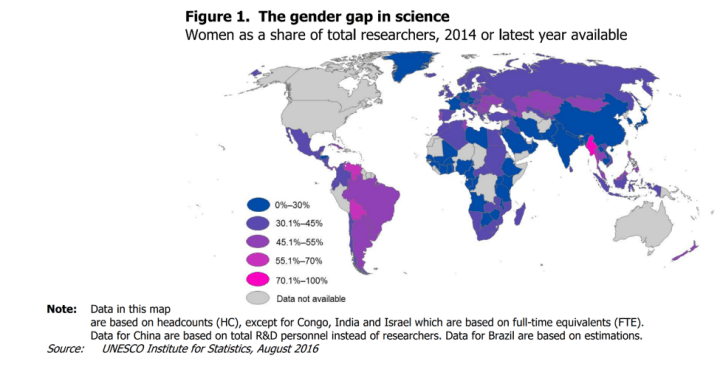
Source: http://uis.unesco.org/sites/default/files/documents/fs43-women-in-science-2017-en.pdf


Yes, you guessed right! I am one of those people that are NOT counting the days to Valentine’s (although some roses, chocolate and a romantic dinner is always welcome). Which is exactly my point: Yes, let’s talk about women in science one day a year, but daily/regular “flowers, chocolates and romance” is what makes the celebration substantial, until there is no reason for acknowledgement of the issue. I mean, have you ever seen an international day of CEO’s?! It’s only for secretaries.

I would rather live in a world where:

  • women in science are not a minority – in 1987, 20% of STEM researchers worldwide were women, in 2018, still only 22% (thestar.com);
  • there are not special awards for women (how about all scientists competing — and evaluated without bias — against each other?);
  • when applying for jobs, women are not evaluated based on how many kids they have or want (paternity leave is still not = maternity leave);
  • people are not surprised (or shocked) when they hear a CEO or HOD is a woman;
  • young talented girls and great minds do not miss opportunities because they have to provide for their families or because they are disadvantaged compared to their male siblings;
  • infrastructure (both capital and emotional) is constructive and supportive of women and — let me also say — mothers in the work environment;
  • where a girl in Engineering or Programming doesn’t feel excluded;
  • women’s experiences and local knowledge are not ignored, especially in the developing world;
  • where women are full, active participants in the scientific community.

Roula2

In the world right now (unfortunately), an International Day might be a good tool to shape this “new” world I am dreaming of.

But it is certainly not enough. We need to celebrate women’s perspectives every day. We (women) need to support each other and advocate for each other. We need to provide role models, support motivation and inspiration for early career women academics and the girls of the future. We have to make sure we assist and reward young girl scientists from the very beginning and all the way up, also for those already deep in the biased system; but most importantly, we must support women in following their dreams.

Easier to say than done, I guess. It needs an ethical code and an inner drive by women to “show off” their strengths. At the same time, it needs support, programmes and practical assistance from policymakers and society as a whole.

I hope that I will live in that world one day where being a woman in science is not an exception, where there is no need to celebrate every single woman in science as we will be the norm –nothing special – just us!

Women in science are not competitors to men in science; they are the missing puzzle pieces. Only by working together and learning from each other, can the human race (and science!) progress.


P.S. (Here I am again…) Having said all that and raising two boys, I have to emphasise that we should not underestimate the importance of boys’ education (formal and family), as well as maintaining gender perceptions and biases. However, that’s a long discussion… for another time.