The Right to Freedom

It’s been 29 years since South Africa’s first democratic elections (27 April 1994), and there is a lot to reflect on since then. Understanding what it means to embody freedom has many different connotations as well. A famous Nelson Mandela quote about freedom says the following:

  “For to be free is not merely to cast off one’s chains, but to live in a way that respects and enhances the freedom of others.”

Additionally, famous activist and singer Nina Simone said the following about freedom:
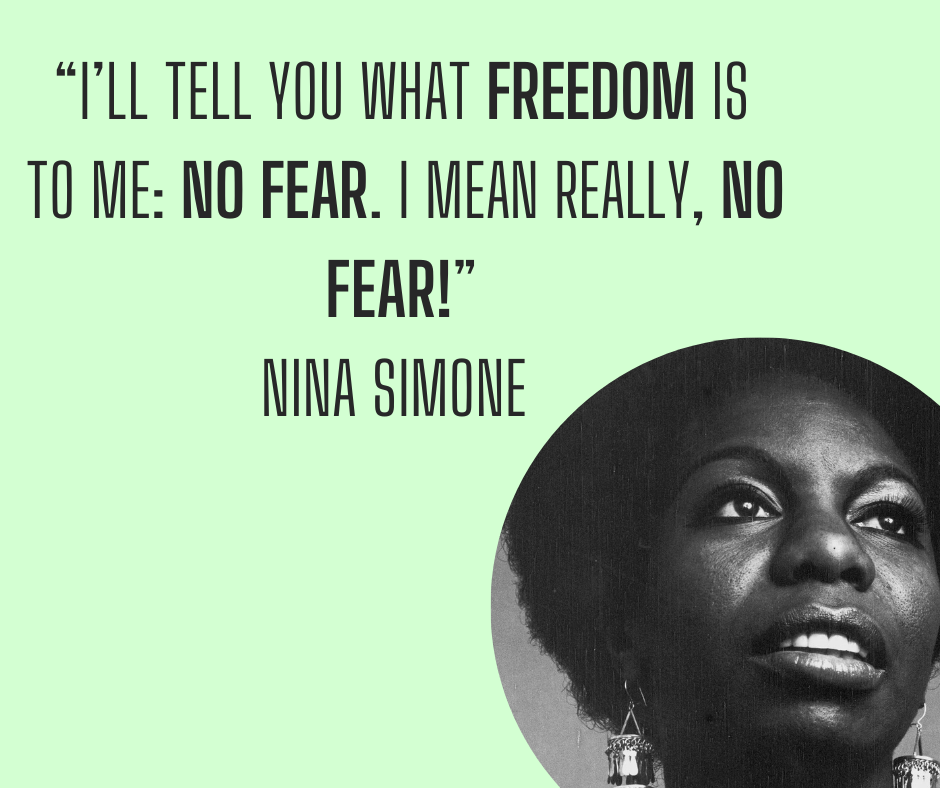
With this in mind, it is crucial to reflect on how we can ensure freedom is not only about celebrating the strides made since 1994 but also what it means to see freedom as a practice. I will take us through three examples of some prevalent socio-economic inequalities that still exist in South Africa (and the continent) today that require us to remain advocates for a just society.

Equality as a form of Freedom

The first one is gender equality. According to the National Strategic Plan on Gender-based Violence and Femicide, South Africa’s high rates of structural Gender Based Violence (GBV) is tied directly to an unequal country. What this means is that for vulnerable members of our population (women, children, LGBTQIA+ persons), the promise of freedom can only go far as it is written on paper. We need to be aware of how gender inequality affects all of us because how we treat marginalised bodies has ramifications on our own freedoms in the future.

The Freedom to Live in South Africa

As mentioned in my first blog post, my Master’s thesis explored the experiences of West African migrants living in South Africa. Although the study looked at a focus group, iterations of xenophobia against African migrants exist on a larger scale. Anti-immigrant sentiments in groups like Operation Dudula set a dangerous precedent for how we create ‘us vs. them’ mentalities, negating the Pan-African values necessary for socio-economic development and prosperity for all.

Freedom to obtain a good quality of life

This ties into the third inequity, which is the right to have a quality of life that enshrines human dignity. The United Nations Development Programme (UNDP) states that since 1990, 10% of the global population lives in extreme poverty (down from 36% in 1990). Yet if we are to contextualise this statistic in Africa, the wide gap in systemic inequality between Africa and the rest of the world highlights how much work can still be done. Eradicating poverty in Africa is crucial for promoting our freedom, as poverty can limit individuals’ ability to access education, healthcare, and economic opportunities. According to the Institute for Security Studies (ISS), Africa has the largest share of extreme poverty rates globally, with 23 of the world’s poorest 28 countries at extreme poverty rates above 30% By addressing poverty, we can improve the overall well-being of individuals and communities, empowering them to lead more fulfilling lives and participate in shaping their own future.

Final thoughts on freedom

By understanding freedom as a fundamental right that we all have, it is imperative that we know our power as a collective of human beings who want our planet to survive and thrive. As mentioned in the first quote by Mandela, the only way to ensure freedom as a practice is through practising compassionate concern for your fellow human being. Although the future remains somewhat unknown, now more than ever, it is important for us to be aware of our realities, and how they relate to others, and to trust that we are vigilantly building towards the kind of future we envision with kindness and hope. In the words of Nina Simone, without fear. We cannot contemplate without being aware that the impetus for change has evolved into something more foreboding than a ticking clock. As such, regardless of the work that we do, there is always a way to strive towards the betterment of humanity.

Studying abroad: the unceasing struggle for freedom from fear

It is unbelievable that we are already four months into the year as we observe a month genuinely worthy of its commemoration. 27 April 1994 is a day symbolic of South Africa’s democratic leap, the day which saw Africans from all walks of life vote in the country’s first democratic elections. It’s been 29 years, and we have come a long way as a country. Like many other South African holidays in 2022 and 2023, I will celebrate Freedom Day from the U.S.

While thinking about Freedom Day, I decided to look up the definition of freedom in the Oxford dictionary, and among the results I found was ‘the state of not being imprisoned’. This struck a chord with me because of my experience as a visiting student researcher in a developed country. The definition of freedom has often represented the opposite of my experience as a South African student in the U.S., specifically during the first couple of months abroad. I should, however, add that these feelings never entirely subside. They persist throughout what should be and what sometimes is the best time of your life. In many instances, I have felt imprisoned by fears of not being good enough, smart enough, productive enough, or feeling like an imposter.

Of course, when one attains a scholarship as prestigious as the Fulbright, there is a great sense of recognition that you are capable and deserving. And, sometimes, I certainly feel more confident and driven to keep pushing forward. And often, I give it my best shot. However, those fearful moments creep in occasionally, filling you with self-doubt and becoming difficult to avoid.

No one talks much about how quickly the honeymoon phase of living abroad fizzles out. The excitement upon arrival has you site seeing every weekend and opening yourself up to make new friends, despite being hugely introverted. But despite that, about a month into the transition and having adjusted to – in my case – a new time zone, everything sets in, and you remember, ‘oh, this is now my new normal’. In the same breath, you are confronted with the fact that you are now in what’s often referred to as the land of the free, which implies that the U.S. is not only the place of endless opportunities but that you should seize each opportunity on offer. And even though the positives of the new normal substantially outweigh the negatives, a feeling which closely resembles the isolation of the 2020/2021 lockdown lingers persistently.

A good few of the contributing factors to what I have now identified as fear are the massive culture shock, being away from your family and support network, adjusting to different work culture, having to master a new lifestyle, missing out on special milestones of loved ones back home, financial difficulties, adapting to local food, feeling like you do not belong, trying to make friends, the gloomy weather and oh my soul, the time difference in my case. Travelling to study abroad without a booked returned ticket is a topic I will unpack in a future post.

But, as ever, fear remains the constant by-product of change. And so long as we are willing to adjust and adapt to the change, the opportunity for growth will follow. With time, I have learned to acknowledge the fear and attempt to pinpoint what brought it up. I have had to do this every day to not stand in my own way of taking advantage of every opportunity presented to me during this time.

And so, for the past eight months, alongside leaning into this period to stretch me as it should, I have been using the following mechanisms to help free me from fear and anxiety: sharing playlists with my loved ones, getting some sunlight, leaning on my parents for support, taking walks, working out, prioritising social events, planning holidays, and being honest about my feelings and experience and asking for help.

Some might notice that listening to podcasts is not featured on this list, as it was in my ‘day in the life vlog’, and that is because the painful beauty of living abroad relies heavily on a willingness to adapt to the inevitable changes and finding new ways to move away from fear to find happiness. To a great deal, this is an initially challenging realisation for those who, like me, thrive under a strict routine. A final and principal realisation has been that while in the comfort of physically being in South Africa, we may be riddled by fear and anxiety, which prompts us to hide behind high walls and electric fences, but there is no greater freedom than being home, and that is a freedom I look forward to upon my return to South Africa.