Balancing act

By Keafon Jumbam

We are about to delve into some pretty serious stuff regarding some rather unfortunate impacts of climbing the academic ladder as a black woman. My aim is to get us talking about how to turn things around for the better. And since it’s from a personal perspective, I will dip into my private business to illustrate what I mean.

You ready? Let’s get started:

(c) keepcalmomatic

Women are supposedly great multitaskers: chairing boardroom meetings, holding down relationships, babies and family life while simultaneously globetrotting to save the world. Oh yes, we are known to juggle many balls at once. In fact, we are expected to have it all– kids, family, and a fulfilling job. The problem is – I’m almost certain I missed out on the juggling lessons. If I were to draw a distribution curve of my professional time budget, it will be heavily skewed to one side – the studies side.

Sometimes it feels like I messed up big time by focusing on education, because when I finally lifted my head up from my books, everyone my age had found “the one” and conversations had shifted to diapers and crèches. I was always the good student, holding fastidiously to my books and obeying religiously to lecturers and parents’ instructions to, “Focus on your education, there will be plenty of time for other things later”. And so I did. Nobody ever mentioned what happens when “later” becomes “now.”

Right now my success is becoming an issue. The higher I climb the academic ladder, the costlier it becomes for me to make relationships work. I’ve become a threat (by default) to married women who would cling ever so tightly to their hubbies at social gatherings. Being African has exacerbated the situation – both society and parents have suddenly changed their tune to, “No husband yet? What is wrong with you?” Or “You aren’t getting any younger, you know.” Elders ceaselessly pester one about wanting to meet their grandkids soon, amidst snide comments of “Will you marry the PhD?” Add to this a Christian upbringing and you are sure to be casting out demons from here to Jericho and back, all in a bid to “rectify” your single status.

It doesn’t help that brothers who show up at my door are immediately intimidated by my academic background. One recently told me – within minutes of introduction – that I would have to avoid talking about my academic qualifications if I wanted our relationship to work.

“Men get intimidated; it’s just a fact,” he emphasized.
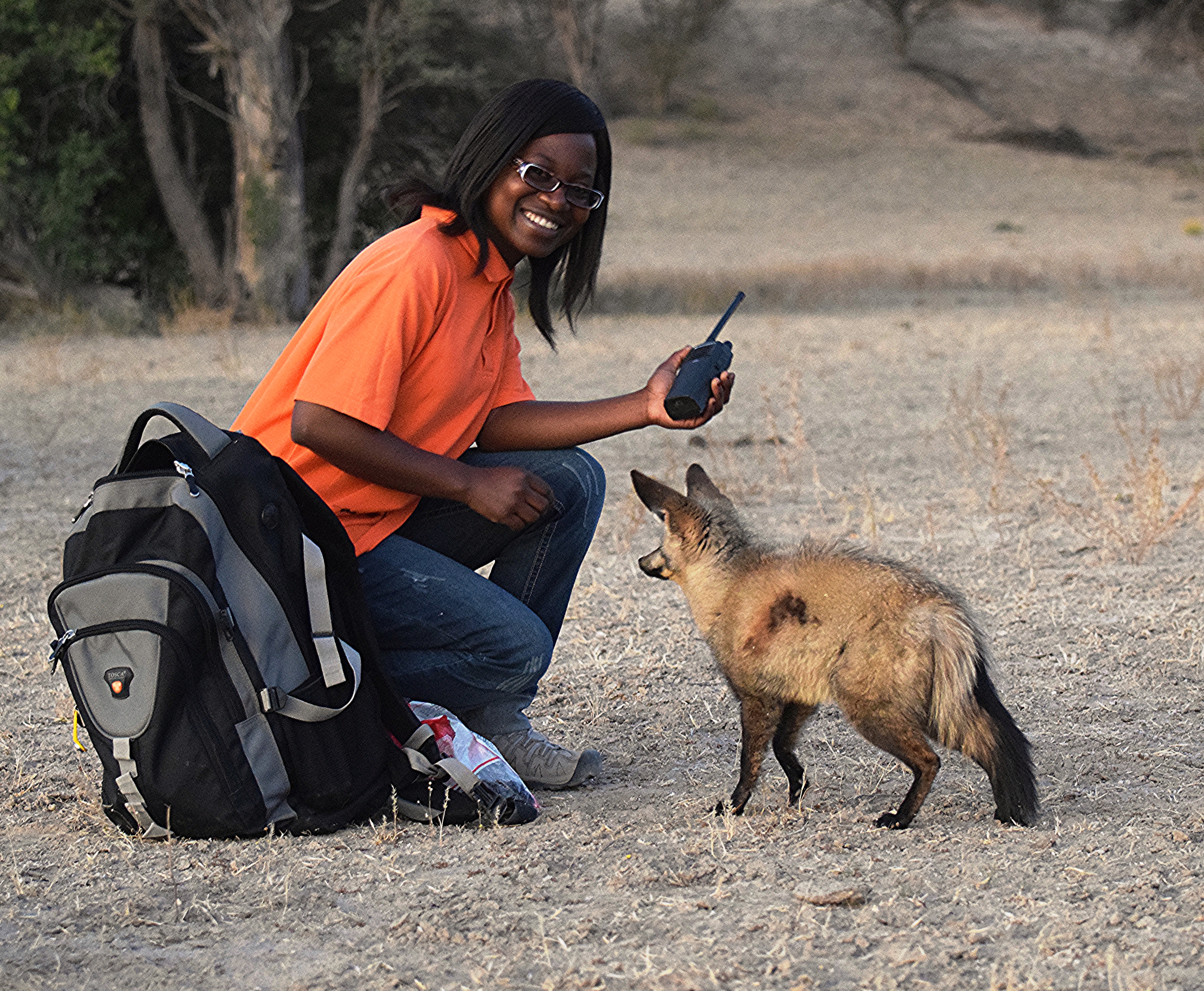
Ben is definitely not intimidated.

This was not an isolated incident; I’ve had many such comments from guys, some describing how my lobola price is sky-rocketing because of the PhD. keep calmBut it’s not just “finances”, or lack of academic qualifications in the men, oh no…One PhD fellow blatantly told me: “I could never consider dating a woman that has studied up to your level because they tend to wear the pants at home. I can’t stomach that.” Phew, did I just dig my grave by embarking on this PhD journey?

No, this blog is not a ploy to bag a guy. I really, honestly, want to know why somebody’s desire to learn should be intimidating to others?! I’m aware of how men (and particularly African men), have been socialised to be the sole bread winners, but we are in the 21st Century and educated women should not be a threat. Surely it must be nice to have a partner that can give you intelligent conversation and earning power of her own. I’m happy to be a trophy wife (emphasizing the assets ABOVE my neck, of course).

If you’re an academic achiever who happens to be female, are your experiences similar to mine? Any tips or tricks you can recommend? Am I forever doomed to just love furry four-legged males? But just in case you were wondering, I remain standing strong, with unwavering high standards. And in the words of my favorite author Chimamanda Adichie:

“A guy who would be intimidated by me is exactly the kind of guy I would not be interested in.”

The only keen male in my life?

The Fitz family

By Davide Gaglio

I am sure most of you experience the lack of money that comes with being a student. While I was a masters student at the University of Bologna in 2006, I had the opportunity to work part-time as a postman. But when my short career as a postman unexpectedly ended, I would never have dreamed of doing a PhD in South Africa, or being involved in an extended academic family in the truest sense of the word.

During my farewell at the post office, I had a long chat with a girl that had just returned from a trip South Africa. “South Africa?” I said, “Yes… but which country of South Africa?” 🙂 🙂 Well, that was when I realised I needed to fill some gaps in my geographical knowledge, but I blame my high school teacher 😉

Soon after, I started to gather information on this fascinating country and I decided that South Africa would be my next destination! I rapidly looked for an opportunity as a field assistant in South Africa and ended up applying for a field assistant job for a project run by the Percy FitzPatrick Institute of African Ornithology at UCT – mostly because I LOVE birds. But I had no idea how much the people here would make ornithology, academia, research and conservation come alive to my mind.

From August to October that year I spent a great time in the field and had the opportunity to get a glimpse of the “Fitz Institute”: the students, the post-docs, the staff members, the professors. I was particularly taken by the “Niven,” one of the most important libraries on birds worldwide. I attended some seminars there, and started to daydream about one day presenting my own research in that beautiful setting!

I was also intrigued by the social aspect of the Fitz’s people, particularly on Friday afternoons. Students, lecturers and other members meet at the pub most Fridays and discuss a wide range of topics (rugby, photography…but of course mainly birds!). I joined them on one such occasion, fresh from the field, hiking shoes still caked in mud. Over some well-deserved drinks, I became engaged in a delightful conversation about Oystercatchers, with the late director of the institute, Professor Phil Hockey. Would I have been able to chat so happily with such an august person if I’d known beforehand who he was? Probably not – I only discovered his identity after the pub visit. Phil unfortunately passed away 2 years ago. But informal meetings like this drives intellectual curiosity, and inspired me immensely. It’s probably a large reason why the Fitz is such a research powerhouse, and has been designated as a DST-NRF Centre of Excellence.

The Fitz promotes and undertakes scientific studies, primarily involving birds that contribute to the theory and practise necessary to maintain biological diversity and sustain the continued use of biological resources. Here is a photographic glimpse of the Fitz’s main research:

www.uct.ac.za/news/multimedia/photo_albums/weeklygallery/#BirdsEyeView

And a few years later…here I am…doing my PhD about one of the most, elegant, photogenic and mysterious coastal seabirds in southern Africa, Swift Terns!

However, being a foreign student, I have faced a few challenges. My family and friends are very far away and they are very much missed. Building new relationships is always challenging, especially when every year you have to renew your visa and you don’t know in which country you’ll be… or even if they will let you return! Moreover, to be socially involved is important for our species 😉 Since the beginning, I have been welcomed by the entire institute and step by step I’ve been privileged to make many friends, which share with me the same passions and dreams. Yes… I feel “like home”. Today, I like to call the institute and the people working there the “Fitz family”. Here I feel appreciated as part of a team, I can have long chats with the other students, be and wisely suggested by staff members when problems arise and am passionately guided by my supervisors. In the last few years, being proudly part of the Fitz, I did my part, giving talks about my research and the issues of our marine ecosystems to various bird clubs. I also wrote some articles to environmental magazines and attended a conference, where I was awarded runner-up with the best student oral presentation! Along with publishing scientific articles, semi-scientific articles … and recently representing the Fitz with Dr Rob Little at the launch of the 2015 National Science Week of the Department of Science and Technology at the North-West University’s Mafikeng campus.

Exciting opportunities for students arise from the passion of the people working in institutes like this. There is a wonderful sense of cooperation, which is shared amongst the different disciplines and academic roles. Many of my colleagues have become great friends, which is often a rarity. I am doing my best to make the most from my research in an institute which believes in my capabilities and I am sure the results of my PhD will make the difference! How you ask? Well, I will tell you next entry!