Animal rights and liberation: A Christian and Animal lover/ Scientist’s opinion

By Yonela Z. Njisane

As my academic mentor always says, it’s important that we tolerate each other, otherwise the wars and destructions in the world will never end. It’s good that you know who you are as a person and stick to it; it’s also good to realise that we are all different and our beliefs and morals differ.

While I was busy with various meat sample analyses in the lab the other day, I recalled a shocking comment I once heard about us (meat scientists and those who eat meat). Apparently, we tend to cover up our cruel actions by saying we are eating “meat” instead of calling it what it actually is, “Body parts”… My first reaction to this statement was laughter
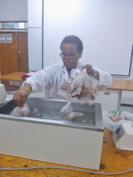
Putting meat samples in the water-bath in prep for tenderness analysis

with disbelief. I found it quite funny…

But, I attended a seminar on “critical animal studies” earlier this year and I later found this video on YouTube, which basically covers the main points the vegans and/or activists raised in the seminar that day. It turns out; this animal activism is a worldwide movement. One of the speakers that day said there should be no hierarchy placing some lives above others; everyone and everything is equal on this planet. This made me think, rather than laugh.

And then I realised:

As a Christian, I don’t think I should even be debating this issue. It is obviously a matter way outside my league. The Bible clearly states in the book of Genesis 1:28 that from the beginning God granted humans dominion over all creatures on earth. I know that even back then, the Israelites followed this idea, and so did early Christians. So there is a certain rank order, which I was even taught in primary school.

My background taught me:

Growing up, I knew that livestock and poultry are food animals. As strongly as I feel about animals, I never had problems with that fact. There was a time I was even eager to learn how to slaughter a chicken, mostly to impress, and I did it. I’m still capable of doing it, I just choose not to.

My animal science journey exposed me:
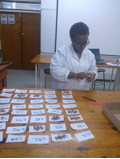
Harvesting the sub-samples for the Instron machine (tenderness determination)

Through my studies and career, it’s only recently that I grew fond of other domesticated animal species apart from dogs and cats. I almost missed out on how cute they are in nature; I just never looked at them that way. But still, that doesn’t change the fact that they are food animals.

My point of view through knowledge and education:

Of course, that does not mean we have a right to abuse and ill-treat these animals. Our responsibility is to ensure their good well-being from birth till the end. We are their shepherds and a shepherd looks after his own. The Bible does not just say humans are the bosses, but that we are stewards of the earth – everything on this earth still belongs to God – we are just managing the planet for Him. So, we may be placed at the top, but we have been given a large responsibility with this rank; it’s not just a case of ruling and doing as we please.

Maybe I am saying all this because I love meat so much (chicken and pork) or maybe it’s because I am a fan of eggs and milk. I don’t know. We were born omnivores after all.
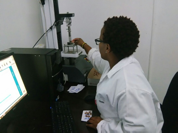
The famous Instron machine, in the process of tenderness analysis... meat or body parts?
The famous Instron machine, in the process of tenderness analysis… meat or body parts?

But does this really mean that I don’t love animals? Does this mean a farmer does not love his flock/herd? Does it mean that, because I am an animal scientist working on animal production, as they put it, a murderer? Is it ok to label the scientists working with animals murders? Aren’t we being hypocrites in all this?
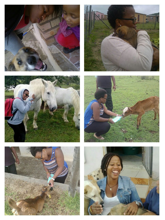
Despite it all, I vow to love all animals (ok, most animals) the best way I know how, till death do us part.

For me, it boils down to some important thoughts:

  • Some of the medication we use, how did its approval come about? Or should we stop taking medication for conditions like Alzheimer’s and other diseases that still require the use of live animals to test different cures?
  • The leaves and vegetation we eat; how do we know it’s not needed by some hungry animal, or that its harvesting didn’t cause hundreds of tiny deaths?
  • What if these plants also have feelings, as some people believe? Are we going to say they are crazy?
  • How do we think a cow feels when she loses her new-born calf in the freezing weather outside while we are locked inside our houses by the fire place?

Think about it…

The truth is:

No one is perfect, and somehow you are missing the point if you try forcing your beliefs onto other people. We all have a way, a system, and morals we were brought up by. The world has plenty of grey areas, and the more we learn about this beautiful planet, the more we realise that there are two sides (or 10!) to every issue. I think we are building a better world if we remember:

“Religion is like a pair of shoes…..Find one that fits for you, but don’t make me wear your shoes.” (George Carlin) (More quotes on tolerance)

The beginning of the end

By Yonela Z. Njisane

Rubbing shoulders with the big guns -- the new Dr Amanda Yucca Chulayo
Rubbing shoulders with the big guns — the new Dr Amanda Yucca Chulayo

Just the other day a senior colleague and a big sis, Dr Amanda Yucca Chulayo, graduated with her doctoral degree in Agriculture-Animal Science. It was a great achievement and the beginning of a new chapter for her. For me it was inspiring and motivating. The thing is, she is “one of us”- another girl from the small town of Cofimvaba, blossoming for the whole world to witness.

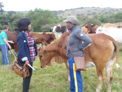
Myself and Amanda, some years ago. I would like to think the conversation was about our work on cattle, getting some tips from the sweetest breed - Boran.
Myself and Amanda, some years ago. I would like to think the conversation was about our work on cattle, getting some tips from the sweetest breed – Boran.

Seeing her make it out strong despite of all the ups and downs I have seen and heard from her about her academic journey made me reflect on my own share of troubles. See, the journey itself may be bitter at times but the fruits to bear at the end are certainly sweeter. I know it’s hard to think about the sugary side of it when you are busy climbing the mountain with its obstacles.
As Greg Child said “Somewhere between the bottom of the climb and the summit, is the answer to the mystery why we climb”


The last picture I took with the Boys just before they were transported.

It sure is a climb…
I am currently in the phase of my studies I would like to refer to as “The beginning of the end.” It has been a long and hectic five months of data collection and everything before and after that. The Boys are gone and I don’t really want to talk about it. They were loved dearly.
In short, we wrapped up all the behavioural observations and physiological sampling. I had to organize all the administrative issues around the slaughter processes. The observations and sampling was followed up during transportation and slaughter. And now, at the “almost” end, I am only left with some lab analyses.
Well, for obvious reasons, a part of me is glad it is all slowly coming to an end. But so far, I’ve learned more than I thought I could, and I think it’s not nearly the end of the learning process for me, even though I am edging closer and closer to that Dr title.
I think I am going to start writing a journal on “lessons of the day” just to make sure no day goes by without a dose of daily development. For instance, I have learnt a lot about myself, other people, different animal species and a long list of skills during this period of my studies:
• Selfie 101: I learnt that Yonela (Myself) is a strict, highly organized (Oh Yes I am!!!), straight forward and a professional person, period! She pays attention to details and she doesn’t really allow room for negotiations when it comes to that. Over time she can lose her cool when her patience is being tested. She gets frustrated when things are not going in order. She may be a sensitive person but she is very forgiving and has a big heart. She has learned to talk about herself in the third person 😉 and she might be doing better that she realizes…
• Society 101: I have learned that not everyone is as bad as I always perceived (personal experience). There are still good hearts out there, like those that tirelessly devoted their time and energy assisting me with my field work. As a good friend said in Shona “Yu werokamu” which means “we help each other,” and if it wasn’t for them, I don’t think I would have ever practically learned and seen the significance of that concept.
Of course you also have to learn the tough lessons about people. A friend made me realise that people will always talk. Whether you do “good or bad” there will always be those that are simply not satisfied with you. Sometimes you may know the reasons but sometimes you may not. But you can’t live trying to please other people. The lesson there is that you always strive to do the right thing, stick to your path without even trying to please anyone but God… in that way you will be safe.
• Animal 101: The time I spent at the farm was my favourite part of this PhD process. I always say that animals are the best creatures. I learned that it’s not just dogs and cats that are interesting, with that ability to amaze and make you smile. All animal species are fascinating and entertaining in their own way (but, sure, I may be biased a little bit…).

The Boys filling up in the afternoon for an evening snack -- it's their favourite time to graze.
The Boys filling up in the afternoon for an evening snack — it’s their favourite time to graze.

For instance, I didn’t know that donkeys were such anti-social creatures. We (with the Boys) were in the same paddock with them the other day and they would make sure to move further away whenever we got closer. But most of all, the animals I have studied all taught me to stay true to myself and always stick to the people that support and understand me.
• Time 101: Who would have thought that I (without being pushed) would make decisions to go to the field on weekends – even long ones and holidays? When I joined postgraduate studies I was told that there are no holidays at this level but I would always steal myself some time. I now have learnt the importance of each and every second. Time adds or subtracts towards the goal, depending on how it’s used.
Don’t they say you reap what you sow? I believe that! For every sacrifice there is a reward. One of the greatest examples is in the Bible, that of Jesus on the cross. One just needs to focus on the mission at hand and be disciplined, keeping the ultimate end in mind. What is a couple of holidays and weekends compared to the time of harvest? The ultimate goal…

All in all…

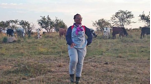
The last day of paddock behavioural observations -- my catwalk to the finish line.
The last day of paddock behaviour observations — my catwalk to the finish line.

One has to take a breath every now and again to reflect. As the Greek philosopher Socrates famously said, “The unexamined life is not worth living,” and that is true about the smaller parts of that life, including the PhD journey. Every journey is a teacher; either you take the lessons positively or negatively. What matters is the destination, which should inform your decisions. Whenever you feel discouraged, find inspiration from wherever you are. It could be from within or from other people or things. Just keep taking those steps towards the finish line.