Curating research: moving beyond the notebook

As a researcher, in and out of academia, curating your ideas and findings is important. A notebook and a pen were my tools of choice… until the day I accidentally put one of my notebooks in the washing machine. The notebook contained months of research notes for my doctorate as well as ideas for future research. That day, my love affair with notebooks somewhat dimmed — much like a long-term romantic relationship that has run its course. There is care, even a familial love, but the spark is forever snuffed out.

The soul-destroying experience of accidentally erasing/obliterating all of my work forced me to find other tools to curate my research and my ideas.
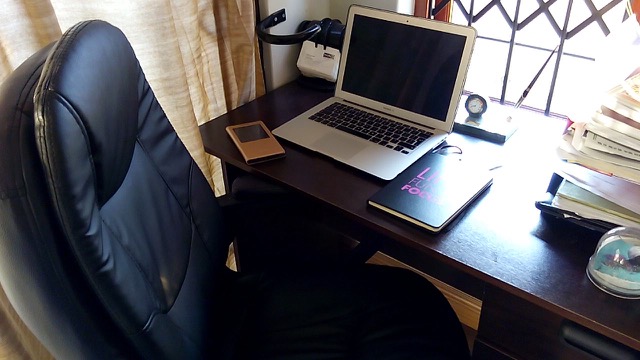
OdiDesk
Notice the important absence of any liquids and nearby washing machines

I get inspiration everywhere: social media, television shows and life in general. My caveat however is choosing what you allow to shape your imagination. Anything that catches my fancy gets clipped onto Evernote or written in my notebook.
These tools, incidentally, are the same tools I use when I conduct research.

I played around with a few options and my favourite tools are freely available: Evernote, Mendeley and Google Drive. All these applications are both on my smart phone and my laptop. This helps because even if I have had to take a long break thanks to a sick child or a prolonged period of load shedding, everything is readily available to me.

The first tool that I found was Evernote. In my opinion, this tool should be in every researcher’s arsenal. It is an application that works on your mobile devices as well as your computer. It allows you to write notes, clip web articles, project manage… it basically is my notebook on steroids. Julio Peironcely wrote a fun, but useful, article titled, 7 Smart Ways To Use Evernote For Research As A PhD. If you decided to give Evernote a try you should take a look at Elizabeth M Covart’s article on the uses of Evernote from a historian’s perspective. Personally, what I love about Evernote is that I could write a note on my mobile phone and when I get home all I have to do is press the sync button on the Evernote app on my laptop and voila! I can continue my work at home.

Mendeley is another tool that I have decided I cannot do without. The faculty  librarian at my university directed me to this application as well as few other similar apps. It is installed on all my mobile devices and computers and I love syncing. It allows for managing research papers and it also has a Word plug-in, so you can insert your citations and bibliography directly from Mendeley into your document. It also has a function that allows for collaboration with colleagues.

Google Drive is a storage application that puts all your information on the cloud. This is very important for me because I record all my interviews on the sound recorder on my mobile phone and save it to Google drive. Not only is this now saved for future reference but also it is synced to my laptop so I can get to work as soon as I have time.

I still travel with a notebook even though I don’t use it as much as before. It is still great to hold on to just because, at some point technology may fail you, and it is always good to have a back up – just don’t put it in the washing machine.

Life after data collection

So do you believe in life after death?

Awkward way to start a blog, right?  I know! If you do, then I’m sure you’ll paint me a portrait of how it’s better than your current life. Where there will be no guns, no wars and hopefully no sugar tax. I guess if you want to get out of this life alive, there’s always a need to believe in something bigger and better than rising petrol prices and the depreciation of the Rand. So why do I ask? Well, because that’s exactly how I felt about my research. If you’ve read my last blog entry, you’ll know that my Master’s journey has been nothing short of novel drama. To keep myself sane during that period, I just imagined a time after data collection where I would just analyse my data, start writing up and submit after a week. For the most part, that dream kept me going — but imagination and reality are two different things.

When things don’t go your way through the practical phase of your MSc or PhD, you imagine your last day of data collection. You daydream about how nice it will be and how you’ll virtually have your qualification in your hand.

It’s only when you actually get all that data when reality really hits you like a one ton truck. When you fill in the last digit on your diary, you breathe a sigh of relief. Happy, and reminiscing about all the days when you thought your experimental diets would run out, or when load shedding nearly killed your day old chicks; surely nothing can be worse than that. It is only when you open your Excel sheet that you realise that a new chapter in your Masters tale is about to start: your “life after data collection” chapter. Having to punch in data acquired over a seven week period is no child’s play, especially if the data that you have is for more than 10 dependent variables.

My data capturing was kind of fun, I mean I had been looking for this data for 2 years and finally I had found it. I felt like I owed it to the Almighty to push on with a smile on my face. The crazy part is that as each digit left my diary and into the excel sheet, so did my smile. By the time I finished entering my data I was tired, exhausted and so drained.

With all the data sorted, the next step was data analysis. I think this is the part most students dread. Having to sort your data is one thing, but knowing what it all mean is a challenge for most. At what level are you testing? What does the output mean? How do you express this data? I bet these questions make most postgrad students wish they had paid more attention to their Biometry lectures.

Fortunately, at University of Fort Hare, we are blessed with minds that eat data analysis for breakfast, lunch and supper. Who knew having to wake up early everyday to attend the experimental design and data analysis class would help? (Hahahaha I hope my supervisors won’t be reading this.) The thing about analysis programs, is that if you can’t speak their language then you are doomed, if you can’t tell it what you want It to do then you’re better off sleeping in your room. For me, the program was fine … the problem was with the user (me). I had an idea of what I wanted to do and how I wanted to express the data but the way I’d analysed my data didn’t allow me to. I was busy running up walls and pulling out my non-existent hair!

That was till I decide to speak to my varsity friends and mentor, Thuthuzelwa Stempa, Xola Nduku, Soji Zimkitha and Lizwel Mapfumo. Having to brainstorm my intended outcomes and data expression made an HUGE difference.

So here I am, sitting at the lab and finishing up my graphs and writing up, imagining myself walking up to collect my second degree and making my family proud. I hope that this time my imagination won’t be too far off.

So what did I learn? Life’s filled with challenges, and the very same sentiments echo through your research life. Be it admin, data collection, data analysis or writing up. Your life after data collection might be better than mine or worse, but the moral of the blog as always is about grinding it out, spin those numbers to letters and making sure you graduate in time.