Fishy science for a great cause

By Davide Gaglio

So, I am on Robben Island, it’s dark, I am alone, and in front of me… a dead African Penguin!
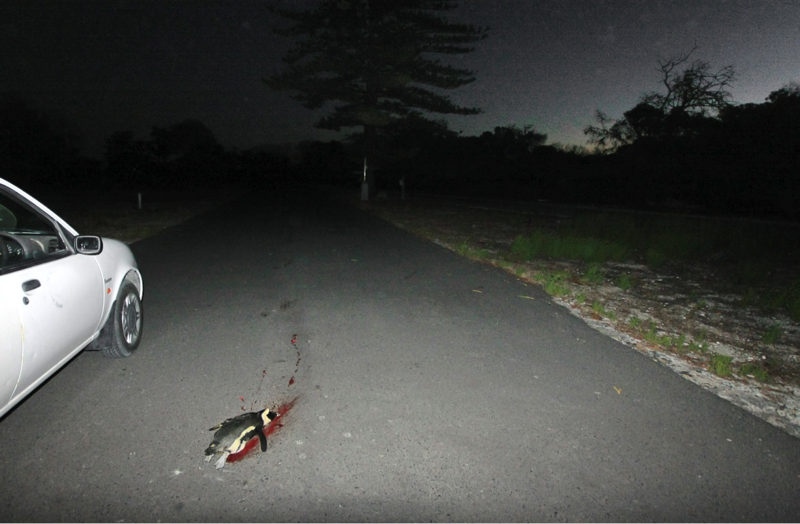
Penguin roadkill on Robben Island
My gruesome finding of penguin roadkill along one of Robben Island’s quiet roads

Let’s remain calm, I say to myself, thinking to get the best from this tragic experience. Well, you’d be surprised to see what happens to the penguin next! 🙂
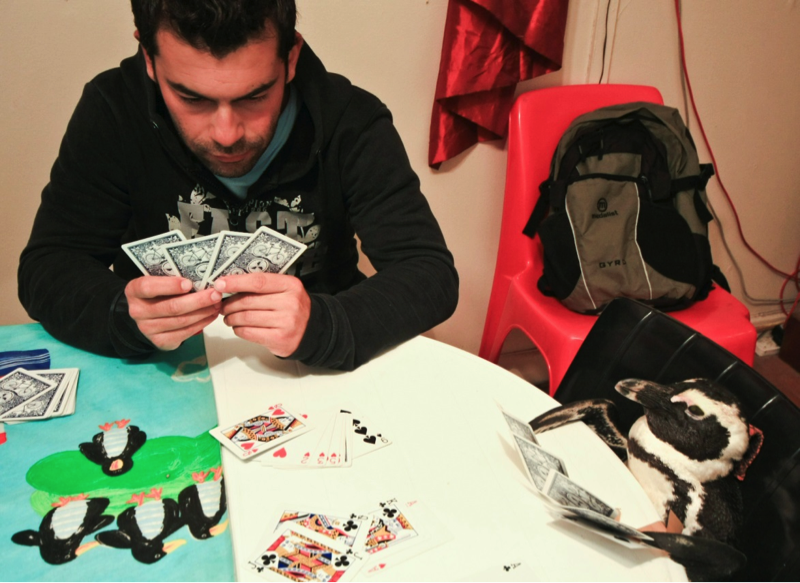
Playing poker with my newly stuffed penguin...

I believe a sense of humour is important even for serious matters and is extremely crucial for scientists! Anyway, the day after I stumbled across the penguin carcass I was still traumatised but feeling ready to start my research. Things like that must not happen again, I kept saying to myself… From that day I promised I would get on top of my research and do all my best to share knowledge and education to those people who do not know/care about the importance of the ocean and its inhabitants. Being on Robben Island, I thought about a quote that Nelson Mandela shared about education in South Africa, “Education is the most powerful weapon which you can use to change the world”… and I knew that there was no better place for me to fulfil my promise.

That day I started at 6 am… yes my dream had come true. I was taking photos for my research and at the same time, I knew that those images would help me to communicate love for the ocean and its need to be protected. I would never imagine that very soon two of my photos would be selected as one of the top 50 of the International Photographic competition run by South Africa Birdlife “Ocean of life” 2013 and another one in 2014!

http://oceansoflife.co.za/gallery

http://oceansoflife.co.za/gallery/2014

I have been amazed to discover how helpful my photographic skills have become in my scientific research! Did you know that in the last few years, between 6,000 and 10,000 Swift Tern pairs have bred on Robben Island every year? And understanding what’s going on is not always easy! I have been making full use of modern technology to help me out, especially DLSR cameras, camera-traps and
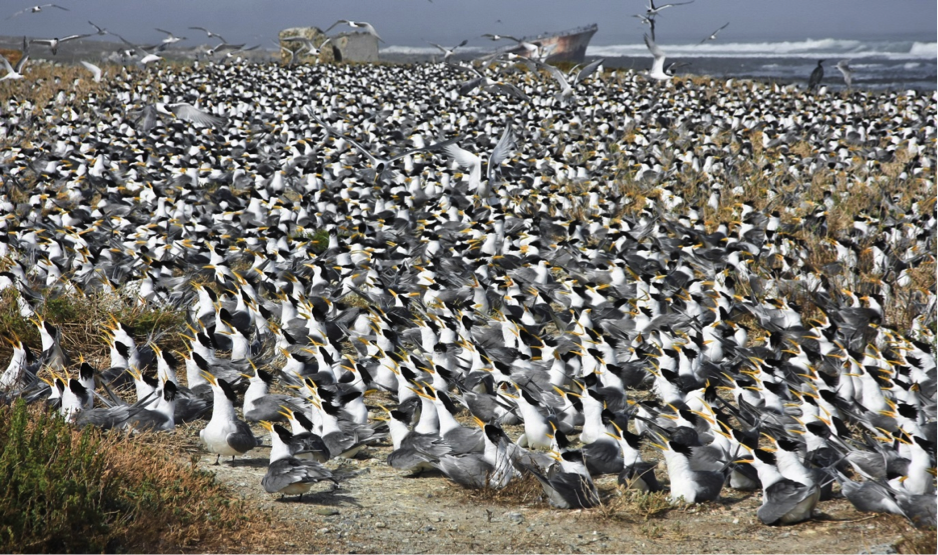
Try to remain sane in this chaotic crowd!

video cameras. Trust me, they are very useful tools in such noisy, smelly, crowded and chaotic colony such as this one.

So, let’s see if you could contribute to some fishy science… Let’s have a poll on this blog to see if you know your sharks from your sardines.

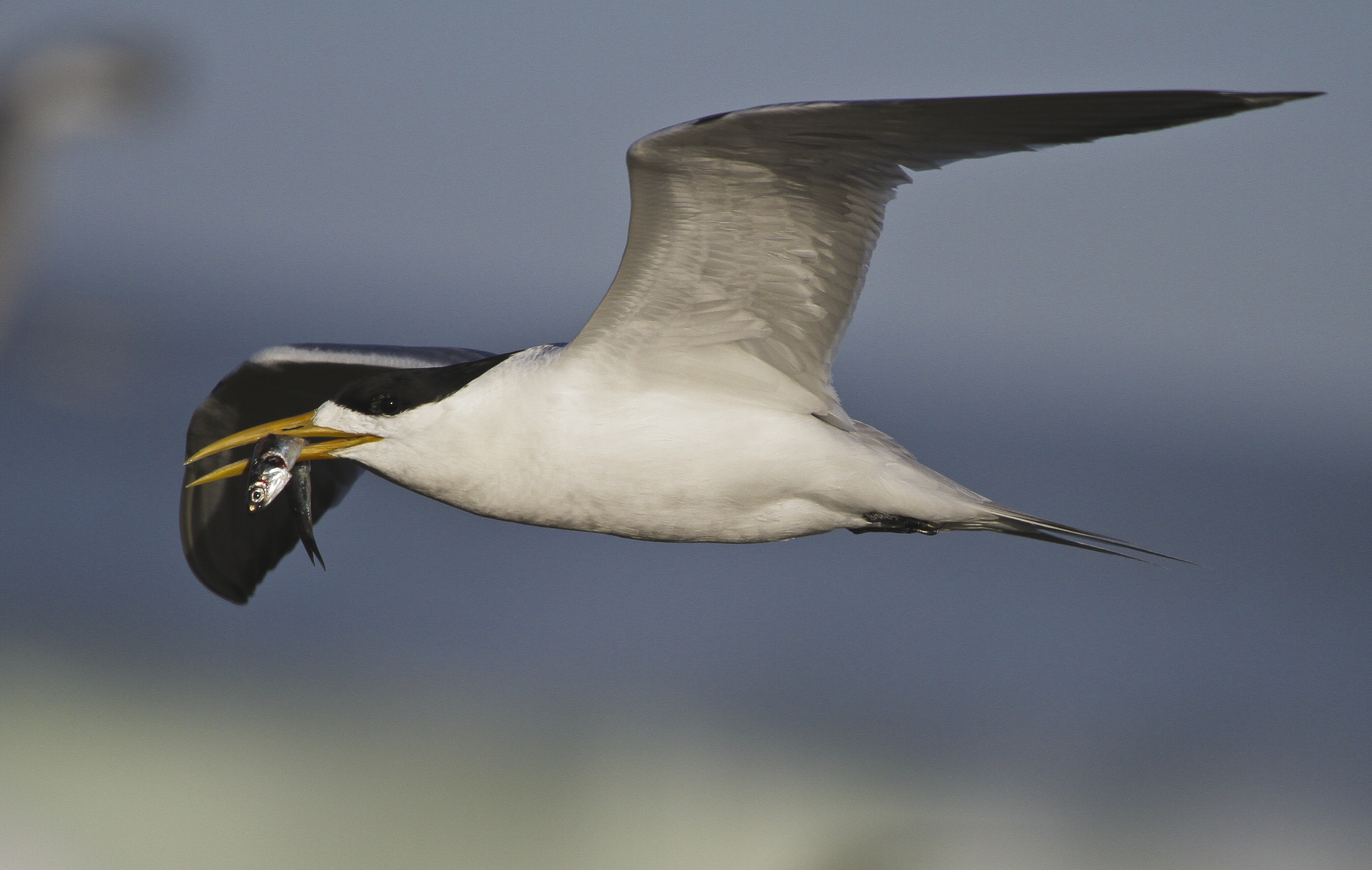
Early in the morning as the sun is coming up, my terns are already busy bringing food to their chicks. And I am busy there taking photos of them…the first photo is the most common species….do you know what species is this?
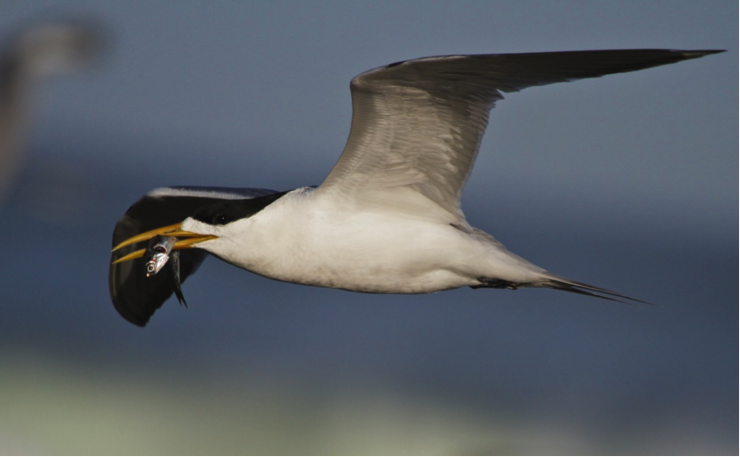
Fishy prey #1
Fishy prey #1

Right 🙂 , this is an anchovy….easy! What about this one?
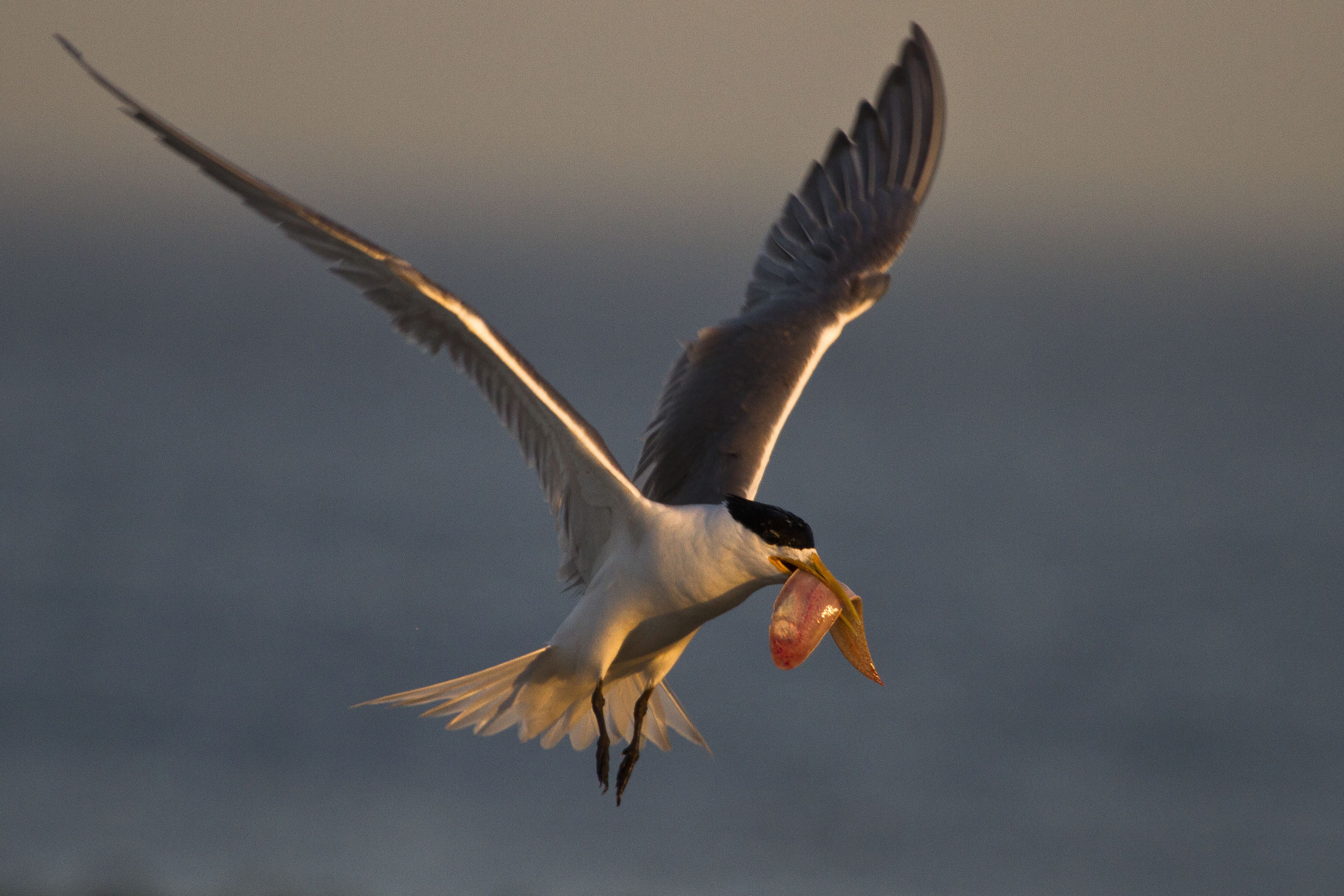
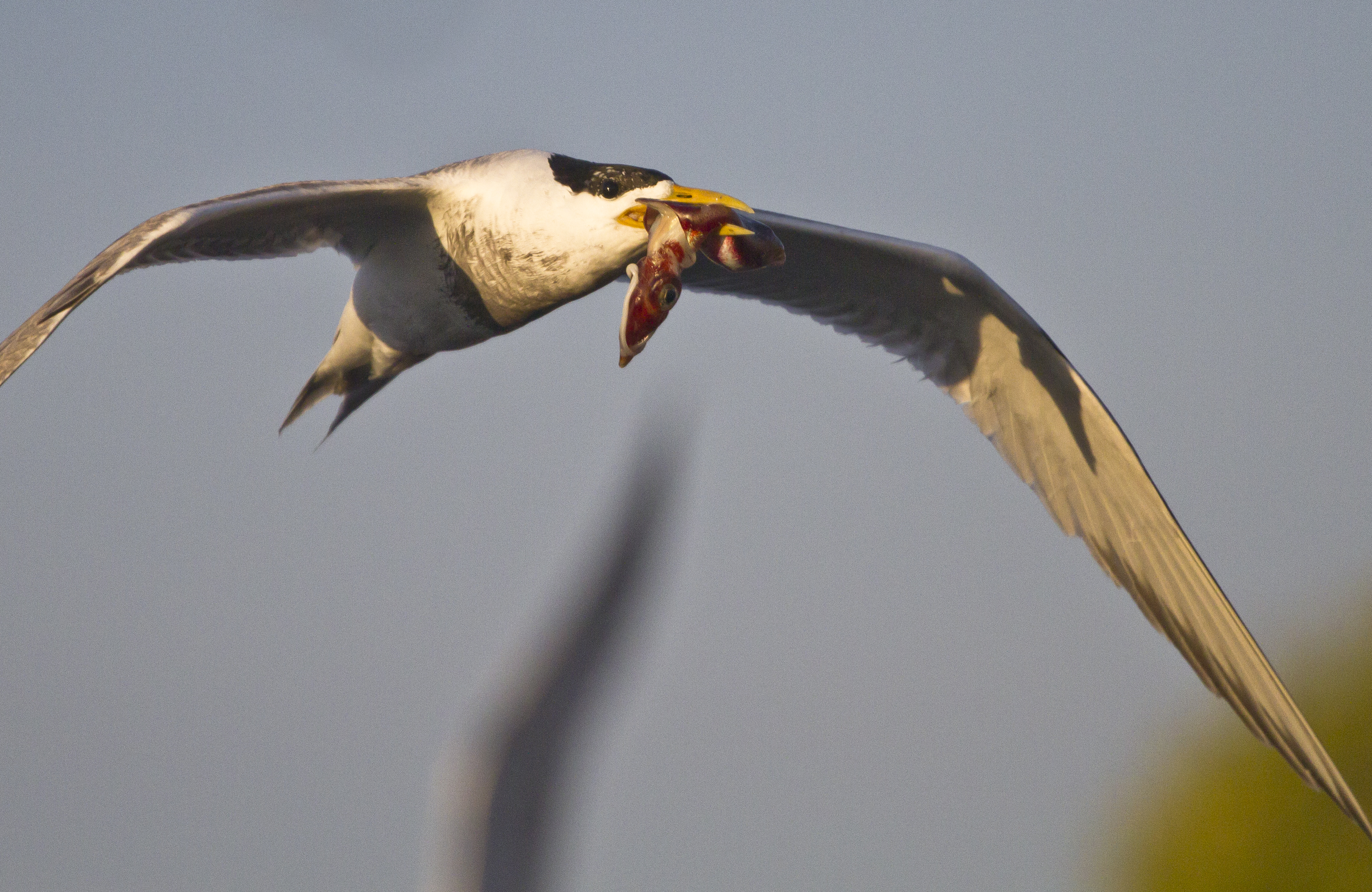
Fishy prey #2
Fishy prey #2 (Click on pic to enlarge)

…Ok I am not telling you 😉 Let’s see if you have the right answer in the comments and polls.

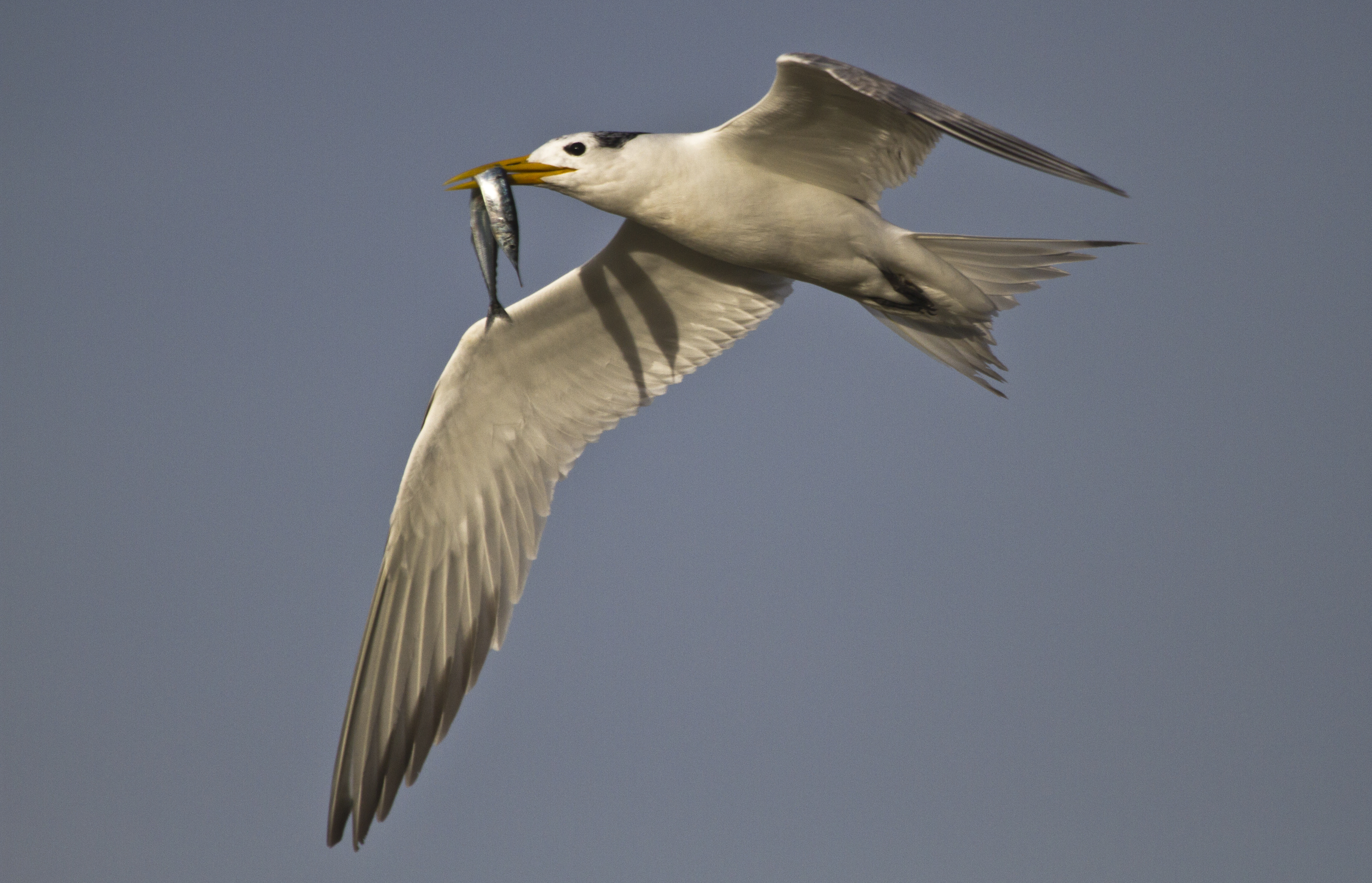
And some more for you…..

Fishy prey #3 (click pic to enlarge)


Fishy prey #4
Fishy prey #4


Fishy prey #5
Fishy prey #5


Fishy prey #6
Fishy prey #6


I promise to reveal the correct answers by next week Wednesday, in the comments section. At the moment, I am collecting many more photos and soon it will be time to identify new prey species, which I will publish on this blog. So, are you ready to join the challenge in trying to identify their prey and give me your comments? Whether you are a keen photographer, or knowledgeable on fish identification or you just like to know more about it, you are welcome to comment and vote, and let me know your thoughts.

I have found many prey species so far, and it’s exciting everyday, although sometimes it can be exhausting and challenging… but chicks must eat in the wind, rain, fog, well … anytime!

The ultimate goal of my research is to understand how Swift Terns cope with variable food availability and understand differences to other seabirds. I am investigating to what degree their behaviour flexibility underlies their success, in order to assess the impact of commercial fisheries on marine ecosystem dynamics. So there is a lot of stuff to learn, and I have many more adventures to tell you! Keep connected and don’t forget to complete the polls about the prey photos…. the more votes… the more photos 🙂 See you next time!

Science communication: awkard silences at the snack table

By Ruenda Loots

“I am a professional arm wrestler.”

Talking science is a tough business

This is my new answer to “So, what do you do for a living?”

Other options include: “Unfortunately, that information is classified” or “Nothing. I don’t believe in working.”

I’m sure all three will be met with awkward silences but it will be a nice change to the normal ritual of

“I’m doing a PhD in biochemistry”

“So, how’s about this weather?”

I know ‘PhD’ is a dirty, three-letter word but it shouldn’t shut conversation down. As a PhD student you are on the cusp of something ground-breaking – surely that should stimulate some interesting debate or at least trump small talk about weather events? (Unless your research is on cyclones, weather patterns or the adaptations of beetles to climate change, then weather-talk is fine).

After the most recent “PhD weather” incident at a braai, I tried to figure out what causes this pattern. The most common trend I identified was the “science is for smart people only” misconception. There are two sides to this coin: the school system is partly to blame, but scientists can be a snooty bunch and sometimes excluded others from their ‘smartness’. Side note: although I include all fields of research under the science umbrella, I know that my fellow natural scientists are mostly to blame for boring unsuspecting victims at snack tables.

At school, science is often reduced to a correct solution at the back of the text book and the kids who do well in science are seen as “separate” – NERD ALERT, right? I aced Science so I was labelled ‘smart’- but that’s not the only ‘smart’ there is. In fact, I score highest in naturalist, intrapersonal and linguistic intelligences and only 60% in the logical/mathematical category (what kind of smart are you?).

I’m only 60% science smart

And as a ‘smart’ kid, I did NOT enjoy science. It was boring! Far removed from how incredibly-awesomely-fascinating it really is. Science is all around us, waiting to be uncovered and understood. At its core science is creative and “although you can’t give someone a creativity injection”, it is possible to create an environment where creativity and curiosity are encouraged (credit to Sir Ken Robinson). A science classroom should be a laboratory where children are encouraged to engage all their senses. Want to learn about electrical currents and resistance? Build a robot or take an appliance apart (with your parents’ permission, of course). If a teacher can relate the curriculum-required content to real-world applications, science becomes less “something out there” and more “oh, that’s how it works!” Nature is a free, limitless source of science lessons; all you have to do is go outside, observe and ask “why?” – but more on nature’s genius in a future post.

And then there’s the snooty science crowd. Boy, we sure know how to stifle curiosity with our jargon-filled journals, graphs that go on for days and 44-slide presentations that contain only 3 pictures! Whether we mean to or not, we often create a space where people don’t feel safe to ask “what does that mean?” or “why is that important?” for fear of sounding stupid. The irony is that as scientists we all feel stupid at some point and it is a really good thing (read this brilliant one-pager on the importance of stupidity in scientific research). We should learn to communicate our ‘productive stupidity’ and our research in ways that are accessible and clear to the general public. Why? Because:

  • The people at the snack table are probably funding your bursary and/or research through their hard-earned tax contributions.
  • Your research must have some value aside from satisfying one person’s curiosity (why else do it?).
  • The best way to test whether you really understand your own research is to be able to explain it to your grandmother and eight-year old niece in ways they can understand.
  • You might even have a “eureka” moment when you look at your research through the eyes of an outsider.

So how do we change it to “PhdWow, tell me more”? We become science communicators: We share our research with enthusiasm, openness and in normal words. We invite questions. After all, we are just ordinary people doing unusual jobs. For example, one student in our research group studies the protein content of ostrich semen. Ordinary guy. Very unusual job. Let’s just say he draws some laughs when he talks about sample collections at a braai!

And we learn to laugh at ourselves by shedding our ‘smarty pants’ (or ‘smarty coats’) like this: https://www.youtube.com/watch?v=kdxBPUFOgGw

So when asked what I do, I vow to smile and say:

“I study the incredible microscopic cities of bacteria. They’re a lot like us, you know?”