I’m Sipho Patrick Mabusela, a Masters’ student in Poultry Nutrition at the University of Fort Hare in the Eastern Cape, South Africa. My research focuses on the use of unconventional plant protein sources as a partial crude protein supplement source in chicken diets. The goal is to reduce the cost of feeding, by partially reducing the inclusion levels of conventional expensive plant protein sources such as soybean in egg laying chicken diets without detrimentally affecting their performance and egg quality.  My research has some very practical implications, especially if you consider how much South Africans rely on eggs and chicken meat as an affordable source of protein!
As a young boy growing up in the Eastern Cape, pursuing a Master’s degree was never in any of my dreams. Actually, I was not even aware of anything related to a post-graduate degree. One thing I knew was that I wanted to work and help people in whatever career option I followed. Becoming a medical doctor was a clearer career path, because most people in my community and family could relate to my aspirations. Nevertheless, when I reached grade 12 my interest shifted from wanting to be a medical doctor to wanting to do a BSc in Animal Science.

Being a black child growing up in a family that had limited financial resources, I found myself thinking about attaining a junior degree that I could finish quickly, find employment and support my family. However, nearing the end of my junior degree, I was opening up to the idea that studying further wouldn’t be the worst decision in the world. The only limitation I had was funding. Fortunately, armed with good exam results, I applied for National Research Foundation funding and received it.
Everything changed for the better, even though after my first year as a Masters’ student, I realised that being a postgrad in a South African University with limited resources is a monumental obstacle. It not only affects your progress, but also impedes the quality of that progress. I was fortunate enough to have a supervisor (Dr Nkukwana) who always supported me and still continues to do so. She always ensured that I had the best facilities to conduct my Master’s research; and I think the rationale behind it was that she respects the integrity and quality of research. This is a principle that she has instilled in me and for that I am humbled and grateful.
When I sit and look at the past two years that I’ve spent as a Masters student, I realise that research is where I want to be. The irony is that as a black child living in rural South Africa you aren’t told about the possibilities that exist in research and development. As a result, I owe it to every black child out there to study further, attain my PhD and show them that it’s possible if you are willing to humble yourself and work hard. When I look at it now, I wouldn’t change a single thing even if I’d grown up in a family that had all the money in the world to support my original idea of becoming a medical doctor.
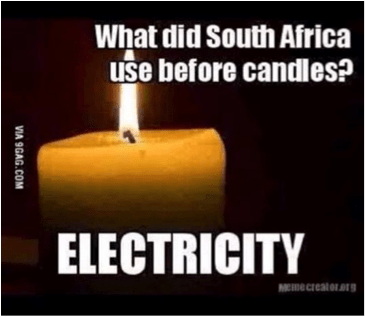 Irregular power supply, slow internet, limited equipment, expensive orders and looooong delivery delays – practicing science in South Africa has its challenges. But this makes us a more resilient breed of researcher. Appreciate the challenges as opportunities to think outside the box (especially over a beer with your colleagues in the dark).
 SAYAS BLOG
