Fishy science for a great cause

By Davide Gaglio

So, I am on Robben Island, it’s dark, I am alone, and in front of me… a dead African Penguin!
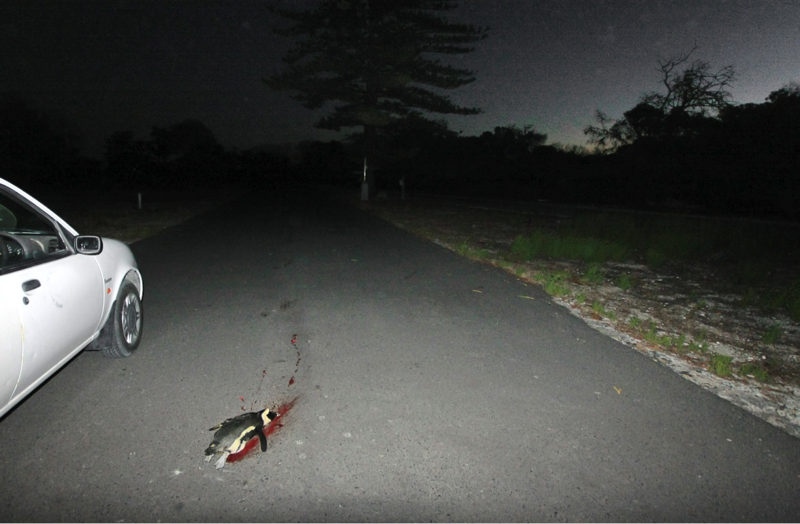
Penguin roadkill on Robben Island
My gruesome finding of penguin roadkill along one of Robben Island’s quiet roads

Let’s remain calm, I say to myself, thinking to get the best from this tragic experience. Well, you’d be surprised to see what happens to the penguin next! 🙂
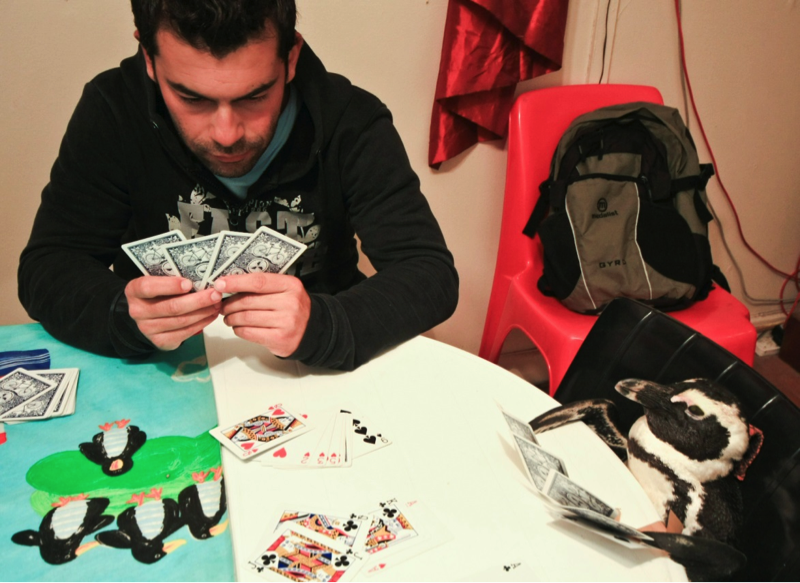
Playing poker with my newly stuffed penguin...

I believe a sense of humour is important even for serious matters and is extremely crucial for scientists! Anyway, the day after I stumbled across the penguin carcass I was still traumatised but feeling ready to start my research. Things like that must not happen again, I kept saying to myself… From that day I promised I would get on top of my research and do all my best to share knowledge and education to those people who do not know/care about the importance of the ocean and its inhabitants. Being on Robben Island, I thought about a quote that Nelson Mandela shared about education in South Africa, “Education is the most powerful weapon which you can use to change the world”… and I knew that there was no better place for me to fulfil my promise.

That day I started at 6 am… yes my dream had come true. I was taking photos for my research and at the same time, I knew that those images would help me to communicate love for the ocean and its need to be protected. I would never imagine that very soon two of my photos would be selected as one of the top 50 of the International Photographic competition run by South Africa Birdlife “Ocean of life” 2013 and another one in 2014!

http://oceansoflife.co.za/gallery

http://oceansoflife.co.za/gallery/2014

I have been amazed to discover how helpful my photographic skills have become in my scientific research! Did you know that in the last few years, between 6,000 and 10,000 Swift Tern pairs have bred on Robben Island every year? And understanding what’s going on is not always easy! I have been making full use of modern technology to help me out, especially DLSR cameras, camera-traps and
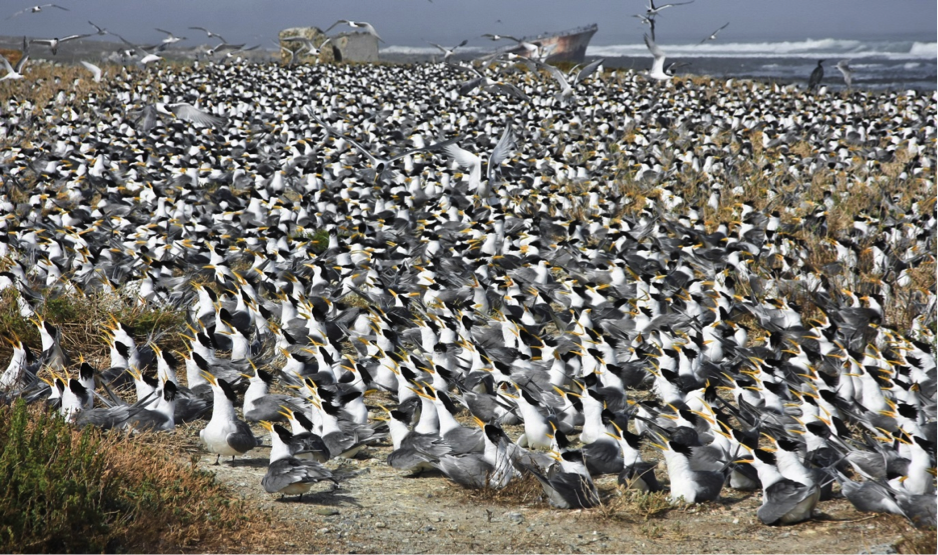
Try to remain sane in this chaotic crowd!

video cameras. Trust me, they are very useful tools in such noisy, smelly, crowded and chaotic colony such as this one.

So, let’s see if you could contribute to some fishy science… Let’s have a poll on this blog to see if you know your sharks from your sardines.

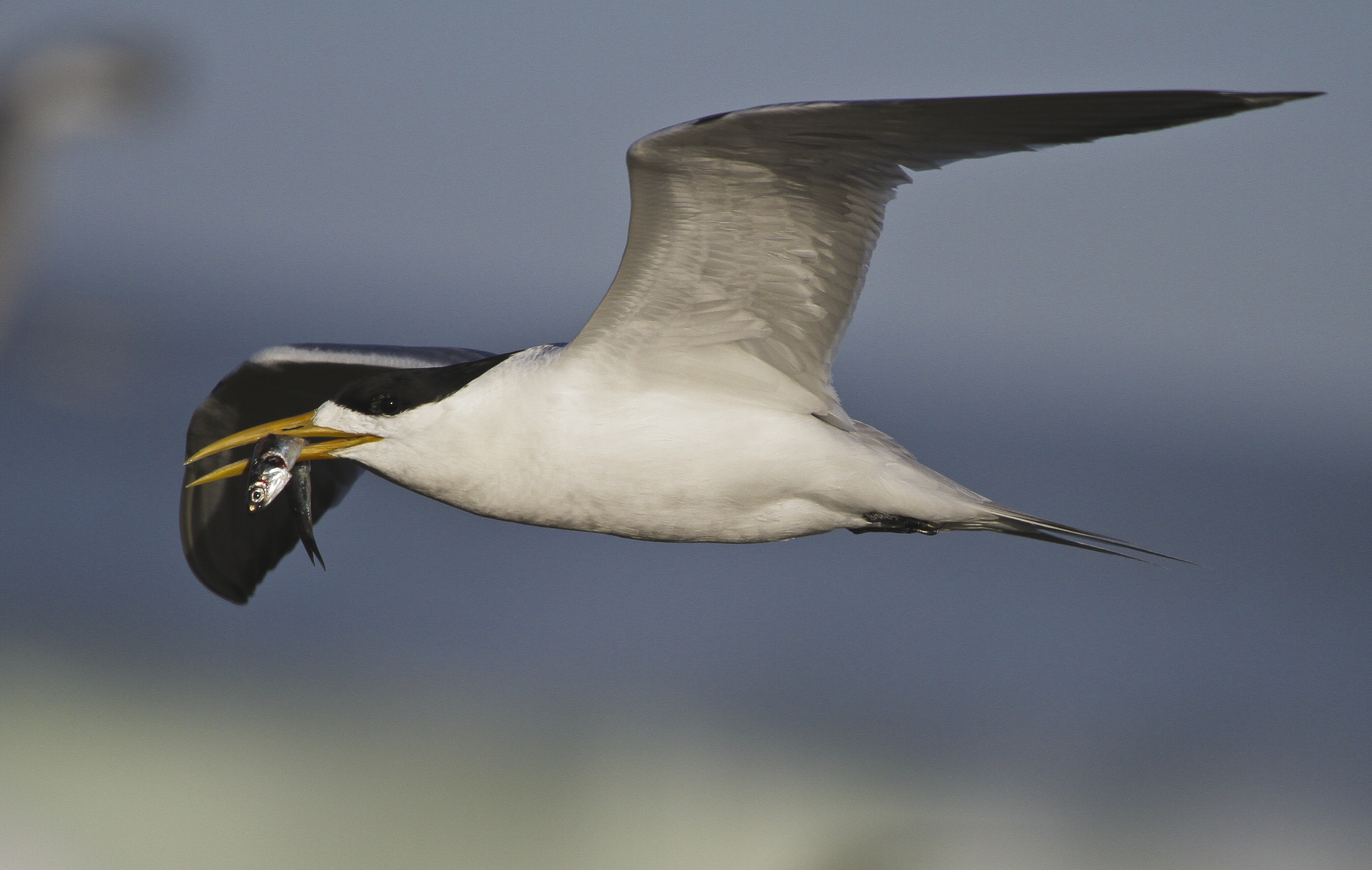
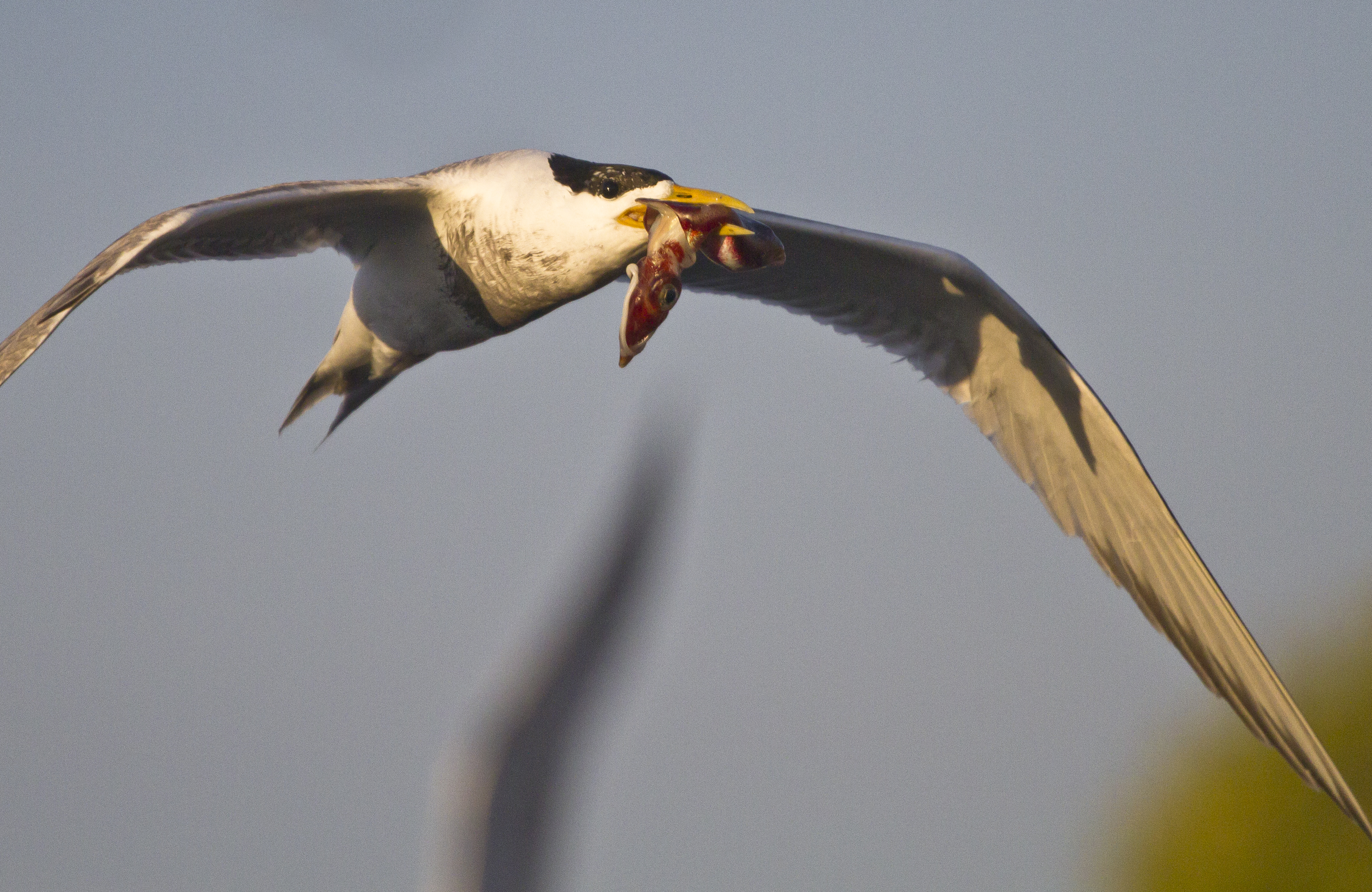
Early in the morning as the sun is coming up, my terns are already busy bringing food to their chicks. And I am busy there taking photos of them…the first photo is the most common species….do you know what species is this?
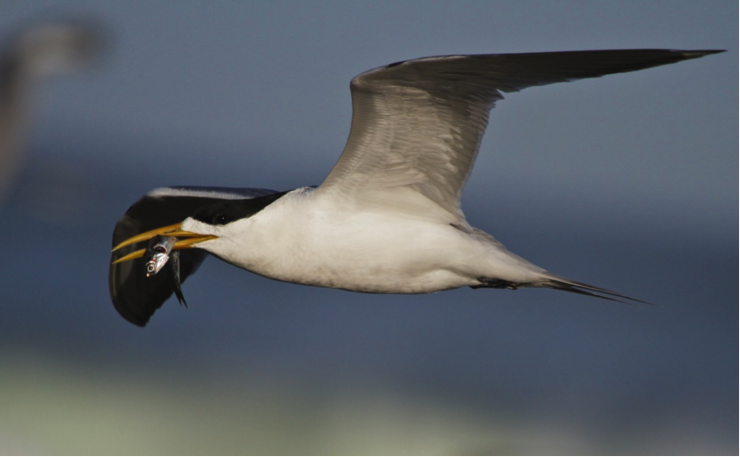
Fishy prey #1
Fishy prey #1

Right 🙂 , this is an anchovy….easy! What about this one?
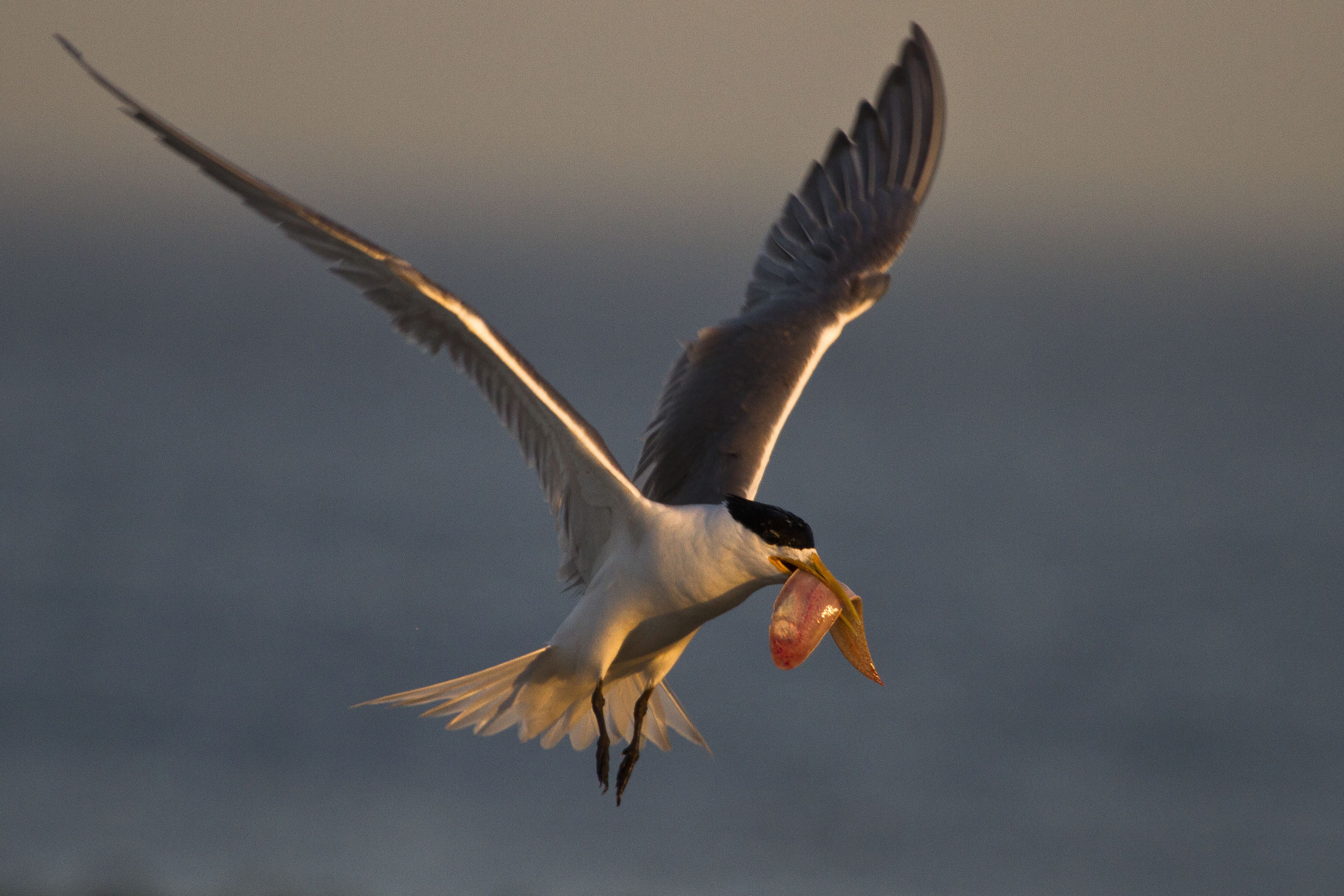
Fishy prey #2
Fishy prey #2 (Click on pic to enlarge)

…Ok I am not telling you 😉 Let’s see if you have the right answer in the comments and polls.

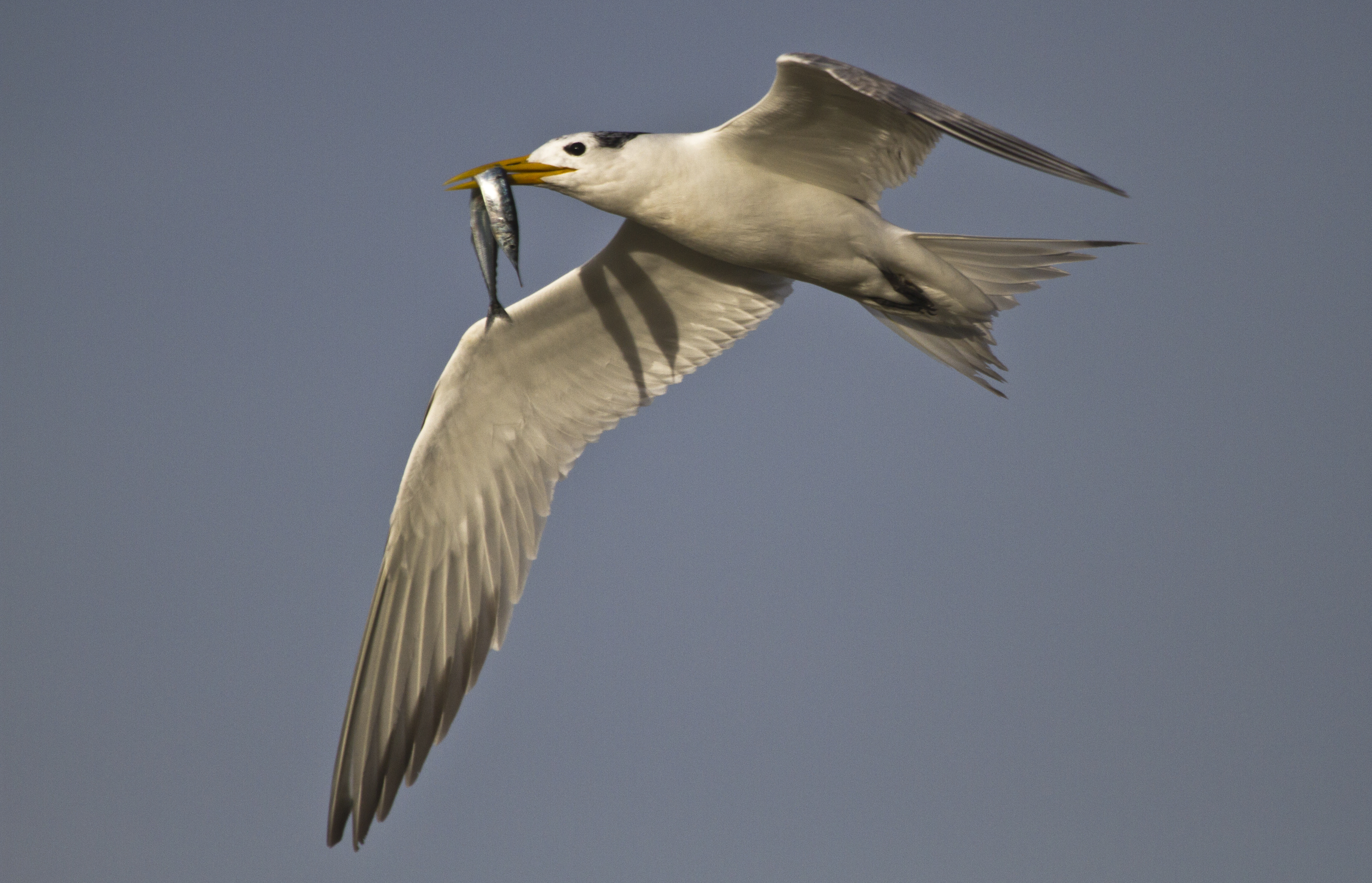
And some more for you…..

Fishy prey #3 (click pic to enlarge)


Fishy prey #4
Fishy prey #4


Fishy prey #5
Fishy prey #5


Fishy prey #6
Fishy prey #6


I promise to reveal the correct answers by next week Wednesday, in the comments section. At the moment, I am collecting many more photos and soon it will be time to identify new prey species, which I will publish on this blog. So, are you ready to join the challenge in trying to identify their prey and give me your comments? Whether you are a keen photographer, or knowledgeable on fish identification or you just like to know more about it, you are welcome to comment and vote, and let me know your thoughts.

I have found many prey species so far, and it’s exciting everyday, although sometimes it can be exhausting and challenging… but chicks must eat in the wind, rain, fog, well … anytime!

The ultimate goal of my research is to understand how Swift Terns cope with variable food availability and understand differences to other seabirds. I am investigating to what degree their behaviour flexibility underlies their success, in order to assess the impact of commercial fisheries on marine ecosystem dynamics. So there is a lot of stuff to learn, and I have many more adventures to tell you! Keep connected and don’t forget to complete the polls about the prey photos…. the more votes… the more photos 🙂 See you next time!
New beginnings — moving out East

By Keafon Jumbam

Seven hours into the journey from Cape Town to my new campus in the Free State, it dawned on my hired driver that he didn’t know where we were going! This was a long distance driver, highly recommended by friends; surely he should know his way around? “What is the name of the place again?” he asked, looking bewildered. “Phuthaditjhaba” I responded, alarmed at this sudden turn of events. “Heh!” his voice dropped to a notch, “I think I’ve driven past it before. It is very far — on the way to Durban,” he sounded tired. Silence enveloped us like a wet blanket, with only the faint grunts of the car’s engine protesting the sudden speed increase. The sun was beginning to set and we were in the middle of nowhere. I started to panic.

That day had begun on a bad note when both my alarms failed to go off in the morning. I woke up late and disoriented but managed to squeeze all my belongings into my car, thanks to the packing skills of my Zimbabwean flat mates. Then I hit Cape Town morning traffic, which slowed me down even more. By the time I met up with my driver, it was 10h00; hardly a great start to a trip estimated to last 10 hours!

I was heading back to school to start a PhD in Zoology after a six-year break from studies. My resignation from a cherished position I held at an outreach project was met by gasps from colleagues who exclaimed, “You didn’t tell us you were interested in foxes?!” and church folks who emphasized “It is flat country over there, very unlike Cape Town, hardly any mountains!” Sure enough, I was going to miss Cape Town and my job which had even brought me in contact with the former Minister of Education, Naledi Pandor.

Meeting minister Naledi Pandor (Credit: Iimbovane archives)

But I had become desperate for a new challenge, and this PhD was exactly the kind of mental stimulation I needed to grow and widen my horizons.


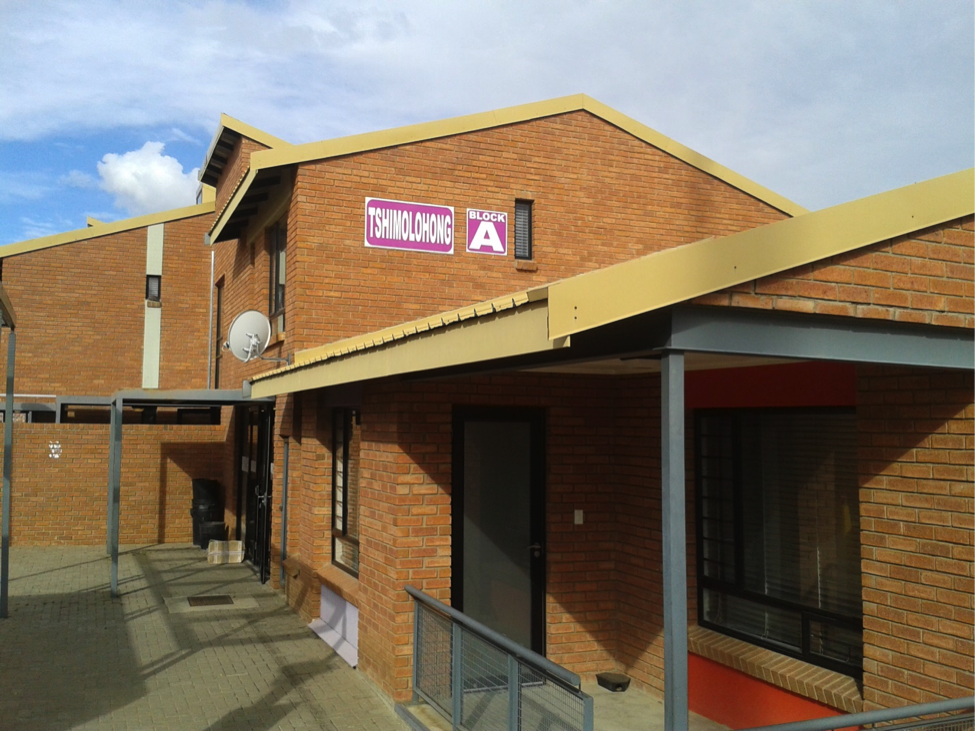
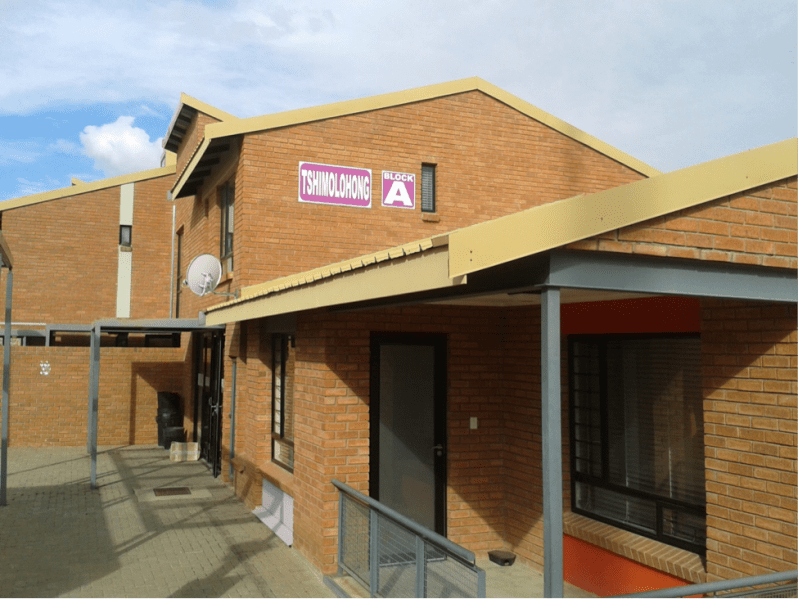
What I hadn’t anticipated was this bumpy start. By midnight we were still nowhere near arrival. Countless stops later, and with most petrol attendants clueless about our destination, we miraculously made it to the gated campus at 02h00. Sleep deprived but cheerful nonetheless, a residence head student ushered us in. “I think you will like it here,” my driver said, smiling for the first time and admiring as much as I did, the neat pavements and freshly manicured lawns. We were led to a newly built residence named Tshimolohong, or “New Beginnings,” — a befitting name for a freshman like me.


My new home and new beginning, Tshimolohong!

I wish I could say I lived happily ever after, but eish, the challenges had only just begun. I had arrived right in the middle of school break and campus was vacant. I didn’t know a single soul, supervisor included — talk about starting over on a clean slate. But the pressing issue was to get registered immediately since everything depended on it: funding release, access to online academic material and even access into residence. It didn’t help that my arrival also coincided with a litany of public holidays! To keep sane, I went on an adventure, exploring my new town and taking in the breathtaking Drakensberg Mountains surrounding my campus. Thanks to these mountains, I can boast of experiencing snow up close and personal.

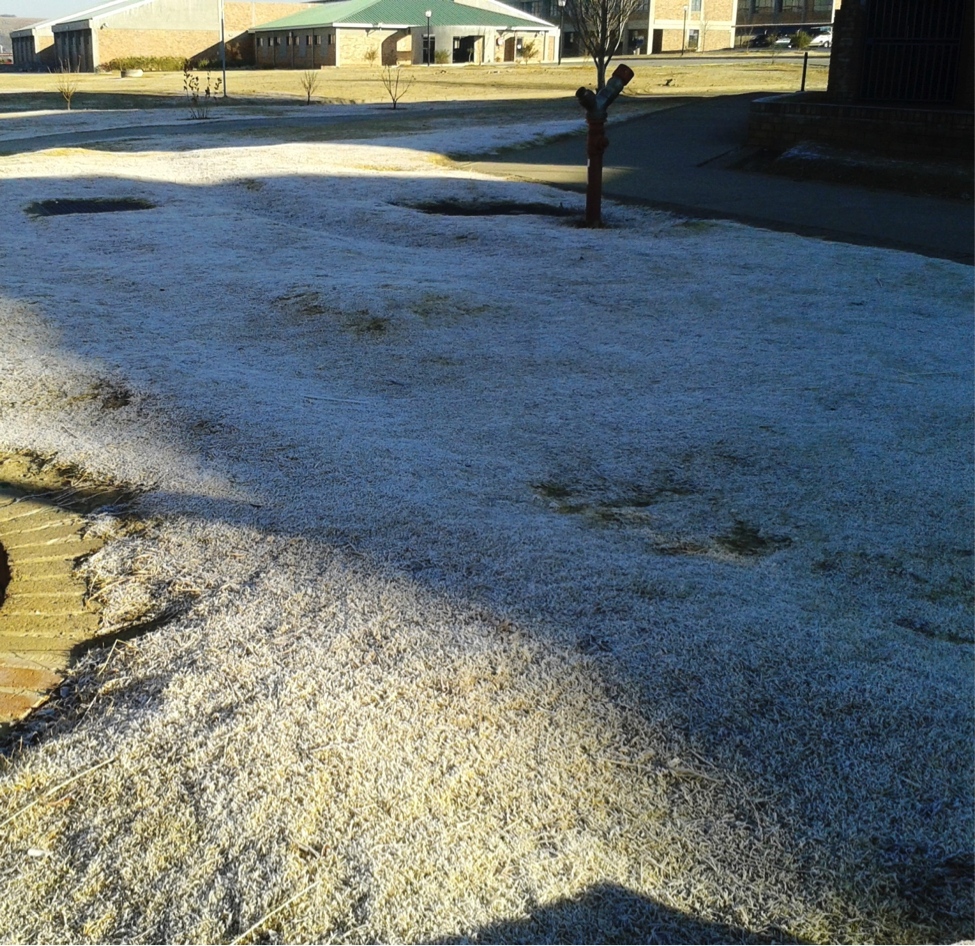
Qwaqwa campus has lovely frosty lawns in winter...
Qwaqwa campus has lovely frosty lawns in winter…


Fast forward to two months later and I’m voyaging yet again, only this time I’m venturing into the Kalahari Desert for fieldwork. I wasn’t prepared for what I was about to see; it felt like I had driven from a rural Sotho kingdom (i.e. campus) straight into Europe (i.e. Kalahari research community) without even attempting to cross a border, talk less of leaving the continent! I had never seen so many European researchers, most of them Brits, congregated in one place like this before. While on campus, I often repeated myself to be understood, despite being in a predominantly black community. Now, here in “Cambridge in the Desert,” don’t even get me started on the assortment of accents. And did I tell you I happen to be the only black researcher in the mix? Yep, life just got interesting…