One might ask, ‘is race-based hair discrimination a thing?’ Well, in her LinkedIn live on Bias Against Black Women with Natural Hair, Professor Ashleigh Rosette from Duke university’s Fuqua business school argues that hair discrimination is indeed a thing.
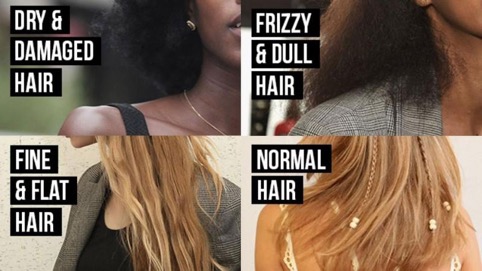
One might further ask whether this is not an isolated American or Western thing. In the University of Pretoria’s public lecture: At Crossroads: Reimaging Management Sciences and Inclusivity, Professor Stella Nkomo points out that with hair being a particular marker of a woman’s beauty, it is incredulous that race-based hair discrimination is a thing, particularly in Africa. The lecture was based on a 2020 Clicks advert for Tresemme haircare products which labelled black women’s hair as ‘dry and damaged’ and ‘frizzy and dull,While highlighting white women’s hair as ‘normal’ and ‘fine and flat.’ This certainly caused a nationwide outcry against the advert as this was not the first time that such disdain and classification was expressed towards black women’s hair in South Africa.
In 2016 black students at Pretoria girls high school recalled being told that their natural hair was ‘unladylike and ‘untidy’ among other things, which included writing exams if they did not ‘fix’ their hair. More recently, in 2021, black learners of Cornwall Hill College in Pretoria recalled a teacher saying, ‘your hair is unrepresentable, messy, and it is not the Cornwall way.’
I personally recall learning how to braid my hair in high school because a teacher told me to ‘make sure that your hair is neat when you come to school tomorrow’ all because I had gone with my small natural afro to school that day. I now don beautiful thick dreadlocks, but it took me some time to get confidence in how my hair naturally grows out of my scalp.
I imagine many others must negotiate between their ‘true self’ and what the mainstream deems ‘neat’, ‘tidy’, and even ‘professional’. Most of the scientific literature that examines race-based hair discrimination and hair bias against black women is conducted in the United States of America through empirical research, and increasingly in the United Kingdom through the lens of professional identity. Very few studies capture the lived experiences of black women to find out how this discrimination negatively impacts their perception of themselves and the strategies they use to overcome these deeply entrenched and persistent messages that their hair is not good enough. I wanted to fill this gap in my own research because when people share their experiences, they experience a sense of belonging which may lend a hand in what Dr Doyin Atewologun puts as ‘repairing and strengthening their stigmatized identities.’
Therefore, my PhD looks at black African women occupying professional positions in Corporate. The research examines their experiences of race-based hair discrimination, manifesting from the intersections of race, gender, and social class throughout their lives. The hair discrimination against them is attributed to the legacies of colonialism, apartheid, and patriarchy. The study uses a socio-political-historical lens to investigate Black African women’s professional and personal identities concerning their hair.
Similarly, my research in the U.S. builds on the CROWN Act. It explores hairstyle bias against Black women by looking at the connections between the societal forces which determine and sustain hair bias, work group dynamics which may act against black women and black women’s experiences of hairstyle bias on their identities.

This research lays the foundation for a path of study that responds to the negative impact on black women’s subjective view of their value in the world and the negative effect on how they navigate their schooling and, later, workplace systems and structures.
 SAYAS BLOG