Of networking and academic celebrities…

I am going to attend a meeting in a few days featuring all of the people I have ever cited in my proposals and papers. (Well, at least 99.9% of them!). Featuring.  Sounds like a concert or a show. But that’s how it feels. When I first heard that I would have the privilege I was excited, nervous and daunted. And I don’t even have to talk, present or anything!  I will just be in the same room with a lot of people that I admire and who do such important work. I know I will be star struck. This is where my dabbles in theatre will have to pull me through, I have to act cool 🙂

Anyway the show  meeting is about new developments in measurement of maternal, new-born, and child health interventions.  Public health researchers measure interventions so that governments and other stakeholders know if they are giving the right amount of coverage, to the right people, and if they are making a difference. So, this group of people is doing in the real world what I’m dreaming about in my thesis.
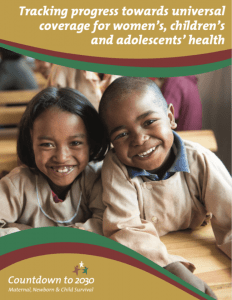
CD2030-Cover-232x300
The latest publication by the Countdown to 2030 team, who I consider my inspirations.

The meeting is truly an excellent opportunity for me to network with people who will be instrumental in me fulfilling some of my research objectives. And it’s a small meeting; so much nicer than those broader conference or networking forums where you are thrown into a room and told to “Go forth, find thee thy networks!” However, I can still mess it up…

There are many tips out there about academic networking for upcoming scholars and postgraduate students.  An example is here and here. And here. I even have a cheat sheet:

networking-article-image
Source: Make Networking Work for You


Tips are all well and good, but they are not tailored to you. They don’t hold your hand and tell you who to talk to, and what to say; or how to get the most out of your network within your own unique situation. So I am realizing that networking is easier when you actually have something concrete to gain from the interaction.  If, for instance, you are genuinely curious about someone’s work or have questions you think they can help you with — this works much better than attending a conference or meeting to “see how it goes” as far as networking is concerned (I have done this before).  So the plan for this meeting is to NOT just get on everybody’s radar through random conversation. I’m going to “stalk” the participants ahead of time (I have a participants’ list!) and aim for very specific people. I feel more ready just knowing the exact people I want to talk to, because I know WHY as well.

And I think this will work — it MUST work. It is incredibly difficult for people from the Global South to crack the networks and cliques of the Global North. Our work is not ignored because the work sucks, but partly because we haven’t struck a chord or made ourselves stand out while socializing…

So, for me, I hope that changes. And there are other platforms out there. I recently found out about the Emerging Voices for Global Health where young researchers can participate in global symposia and get the training they need to successfully do so.  It seems to be a mixture of self-driven effort (you have to get your symposium abstract accepted on your own) and just the right amount of support (with communication, networking, presentation training and coaching).

So I am looking forward to my meeting and many more similar opportunities.  Let’s rub shoulders with our celebrities until we become them, ha ha. 🙂
So, what brings you here?

When I meet another person pursuing their PhD, I am almost always tempted to ask them, “So, what brings you here?” This might actually interest me more than their research topic. I exaggerate, but it’s something I think about quite a lot.  This interest in other people’s motivations might stem from my own preoccupation with why I am pursuing a PhD. The answer to this depends on how my research is going 🙂

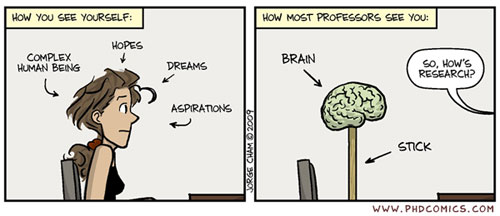
hows research
Not my advisers, of course… 🙂

I decided to do my PhD when I realized that I could not wait the indefinite number of years required to become an expert in Public Health. Building expertise through experience in Public Health is tricky because the field is so broad. In my short career, I had already worked as a community health researcher, a program assistant, and an analyst in two unrelated fields. The Masters in Public Health degree I held was multifaceted enough to allow this.  This was a blessing and a curse. On the one hand you need a job, and a generalist degree allows you to secure one much easier: on the other hand, you need deeper technical knowledge and a stable trajectory to build expertise in a field. And since we all need jobs, the market largely dictates where we end up.  In African public health, donor interests and political whims sway policy and dictate whether your sub-field is hot or not.

If you are like me and prefer to delve deep into your area of interest, jumping from one random job (however interesting it may be) to another can be seriously stressful. And, honestly, I’d already realized during my Masters that I am attracted to practice that had a heavy research component to it. The broad coursework was interesting but the most enjoyable part of my Masters in Public Health was the thesis year. I finally got to choose a topic I liked, and conducted research that contributed some knowledge to the world. I published and I was hooked. I knew that I loved research and wanted to do more of it. As my early career trajectory oscillated somewhat uncontrollably between unrelated public health fields, from infectious disease epidemiology to health market analysis, I knew that I needed to pause. I needed to go back to the basics, shut out the noise, and find my happy niche in the minefield that is Public Health. Something I wouldn’t mind dedicating years of training to, fighting for opportunities and innovating.

I’m not sure what works for others…


reasons
Definitely don’t do it to be called “Doctor!”

Apparently you shouldn’t do a PhD get out of a bad job or find one, simply to be called “Doctor”, or to impress your friends/colleagues/family. In South Africa, I would venture to say, you should also not do it simply because the government is eyeing your demographic group for some sweet, sweet funding.  All of these things are real motivations for people to pursue a PhD, however. Do you fall in any of them, and do you think it affects how you work at all? Because sometimes I wonder if the reasons for doing a PhD really matter, in the grand scheme of things. If you are putting in the work, do your motivations really make a difference?  A completed PhD dissertation, done for the right or wrong reasons, is a completed PhD dissertation. Right?

“A completed PhD dissertation, done for the right or wrong reasons, is a completed Phd dissertation”

A PhD is balanced with so many other demands in our lives. If you are me, these include young children, a rising cost of living, and the constant pull of exciting opportunities “out there”. And then I have to wonder if my personal motivation, the intrinsic pull towards knowledge, is going to be enough?