Is it really fiction? The Unimaginable Realities of Crime in South Africa

It is just after dusk. I hop off the Bus. The relief is exciting because the anxiety of being inside the bus with all windows shut constantly reminds me of the Covid-19 virus that is lurking. I walk down the street of Bok, Polokwane. A group of ladies standing by the road side with their skirts way above their knees, to a point I could almost see things I do not want to mention. Smoke comes out from both their mouths and nostrils. A fancy German car hoots and all of a sudden the skirts are almost off. They get to the car, and I hear them call the driver all sorts of names. And I think to myself, these must be the most romantic and melodious names I have ever heard.

Meanwhile a man emerges out of no-where behind me. Although fascinated by the ladies of the night, I am scared of the man behind me. I increase my pace, and start jogging. Thinking, haste is a solution. Unaware that the streets at night belongs to them. They own them. They run them, and they use all means necessary to get their way. We just call them “Nyaope boys”, but the truth is, they are part of the major crime problems which go unnoticed, perhaps ignored and even unaccounted for on the streets of capitals cities.

As I walk faster, more of them peel of the walls of the fortified houses along this street. I have always thought fortification is unnecessary but now I know better. Before I know it, both my hands are held up against a vicious barbed wire, and I can feel its ruthlessness on my back. A knife raised to my forehead. Knees in between my thighs. The ladies are just watching, and the men are going on about their business. My laptop, phone, wallet, keys to my apartment and lunch box are all gone by the time ‘I am set free’.

With fear and shame I walk, and then begin jogging, to my place. I had just experienced crime at first hand and I know my life will never be the same again.

Does it all feel and sound fictitious? From a literary perspective it sure does, but it is not. Often we academics remove ourselves from reality, building glass houses in the comforts of our labs, libraries and offices. This is where we debate what are ‘thought’ to be key issues of democracy and humanity, and forget the simple things such as human dignity and safety. These are compromised on a daily basis by the system that fails to detect criminals and keep our streets safe by putting these criminals behind bars.

My research interest is in crime fiction, and now I wonder why I study a fiction of something that is already a reality. My argument has always been that fiction offers some kind of solace to victims. Now, having experienced crime at first hand, I can tell you, it does not. Your belongings forcefully and violently taken away from you by men who have made crime a career is not only psychologically damaging but also makes you question your very own right to exist and to be free. Even though writers of crime fiction exploits the genre’s popular formulae to extend its critical boundaries so that these texts can engage with the many difficult, and conflicted moral concerns that shape contemporary South African society, the genre itself does little in helping us cope with the actual crime. Perhaps it is time to engage in ‘empirical research’ and not to imagine our everyday realities through fiction.

 All these makes me question my very own scholarship and realities of everyday.  

The realities of the COVID-19 pandemic in the Higher Education Sector

In early March 2020, the president put the entire country under hard lockdown. This resulted in limited movement and interaction of people outside the home environment. The lockdown disrupted academic calendars and activities of institutions of higher learning in the country, especially for rural-based universities. The decision to close institutions of higher learning was an attempt by the government to curb the spread of the virus and mortality in the country as it was done by other countries across the world.

Despite these continued COVID-19 disruptions and restrictions to normal lives and academic operations, we had to find ways to continue teaching and learning activities to complete the 2020 academic calendar. When this happened I was on the verge of completing my Master of Arts degree by research and I had just been allocated some groups of students to tutor. You can imagine the frustration and confusion. Tutoring has always been done face to face in most universities, especially full-time universities. So, it has never been a challenge to walk into a lecture theatre and present a tutorial on any selected topic.  If anything, it has always been quite an enjoyable process. It is a relaxing two hours outside the library while one is still engaged with academic activities.

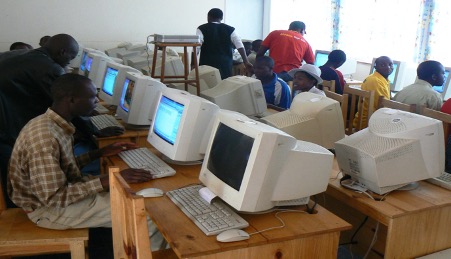
However, with the COVID-19 lockdown and restrictions, I had to go home, my students had to go home, and we had to learn how to teach and learn online. Most of these students, like me, are from the deep rural spaces of Limpopo and Mpumalanga. We share similar experiences of signal difficulties when trying to connect to the internet. I personally often have to travel some 20-25km away from my village almost into the town of Tzaneen just to read my email – that’s how bad it gets. However, because the University was making provisions for data as a means of facilitating an eased remote teaching and learning process, it was assumed that we will all connect to various ICT platforms to stay academically engaged. Of course, that was not the reality.

The miscalculation in this equation was that, even though my students had access to enough data, just like me, we did not have the network to connect via any of the online platforms. So it was a struggle. The reality is that being on campus bridges the gap between the have and the have nots because we have similar access to facilities and other resources. However, being home, especially during the lockdown in 2020, proved that there remains a huge gap between us as a society. The inability to connect with my students easily proved that South Africa remains a divided society and that rural spaces are exactly that – rural spaces. This proved ICT inequalities between the urban and the rural spaces, an injustice I deeply feel must be addressed.

My frustrations were not only with my inability to connect with my students but the fact that I also could not swiftly carry on with my research for the same reasons – network. Although I did talk to my research supervisor from time to time on the phone, it was difficult for me to achieve anything tangible because I could not access my chapter corrections in time, nor some of the material he would share with me to enrich my arguments.

Rural universities have a long way to go in their ICT learning integrations. And from what I have observed during the height of the pandemic in 2020, the problem cannot be solved by the Department of Higher Education only. The solutions require a collective approach by the Department of Science and Innovation in collaboration with relevant researchers on Information Communication Technology on rural communities and other key stakeholders.