I am almost a year into this very important phase of my life, my doctorate. Although I never underestimated the process, I also didn’t anticipate it to be quite as mentally taxing as it has been. A few weeks ago, I had an interesting conversation with my friend who is at the University of Johannesburg about her Ph.D. journey. Besides the usual struggles of lab experiments not going as planned and the piles of desk work, she expressed how pressured she has felt throughout the entire two years of her degree. I thought it was humorous because I’m going through the same situation. I feel a range of unspoken pressures among my colleagues: the pressure of excellence; the pressure of knowledge; the pressure of keeping it together; the pressure of the workload; the pressure of feeling like you know nothing but are expected to know a lot; the pressures from the feeling of imposter syndrome, and the exhaustion.
This is one of the things experienced by most Ph.D. candidates, if not all, and can lead to serious mental breakdowns, or even dropping out. During a chat with another friend in the Free State last year, I asked him casually ‘how work has been?’. I was taken aback by his answer as he told me he decided to take a break for a year. I was surprised because I knew him to be a resilient person. He told me that he could not cope anymore and that he had spoken to his supervisor who understood and let him have the break he asked for.
While we may all be facing different difficulties and are often told we have to fight through the journey, the truth is the ending is more fulfilling than the process. I would like to give just a few coping mechanisms to use when one goes through this, these are things that have helped me so far;
Try therapy
One of my colleagues here at UKZN spoke about therapy to me and I am pleased to say I have started my sessions. Most universities offer free counseling sessions to the students and we really should make use of it. The journey can be extremely stressful, and we all need help. Going to therapy does not mean that you are weak or less of who you are. It means you recognize that you need to speak to someone, and the person might even help you cope with your stress and any mental health problems you have. People studying in the UKZN in the faculty of science can use this link https://caes-ukzn.bookem.com/?lid=https://caes-ukzn.bookem.com/?lid=.
Plan your work
I have found planning my work to be very important in being productive. When I do not plan my work, I see no progress in anything that I do. Planning helps us narrow down the goal and give it a higher chance of being executed.

Understand that you may not know everything
We sometimes put ourselves under so much pressure of being a library of knowledge and not allowing ourselves not to know. Pause, slow down, and be teachable. You do not know everything, that is the reason you are doing research. There will always be some researcher somewhere through a paper that teaches you something new with your research. That is the beauty of research, if you know everything then, there is no need to research more because then what you are doing is exhausted.
Create networks and remain teachable
We have research groups and colleagues to speak to and help us navigate our research. Yes, we should not be spoon-fed but we should sometimes put our ego aside and just ask. What may seem difficult to you might be a hurdle someone crossed and conquered. Create a network of people, ranging from those you met at conferences to those found in the corridors of your institution for such and build relationships with these people. Some people even form collaborations through this network while others even find co-supervisors. We just have to be open and receptive to be teachable.
Have an outlet
A visiting professor from the USA recently gave a talk to postgraduates in our department and spoke about having an outlet for themselves. I found it profound especially coming from a professor. We all have different interests besides our academics. Maybe during the weekend pursue those, write if you can, paint, sing, start a podcast or even join a cooking class. Find something creative and who knows, it might help you become more creative in your research.
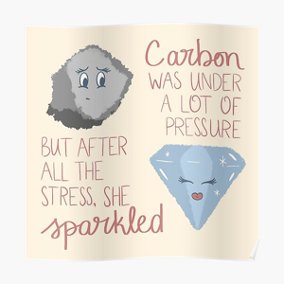
In the end, the diamond became a valuable stone after all the high temperature and pressure otherwise it would have been a ball of carbon atoms. The journey is worth it in the end, focus on the goal but treat the process with delicacy and respect.
 SAYAS BLOG