Thriller

By Keafon Jumbam

Introspection

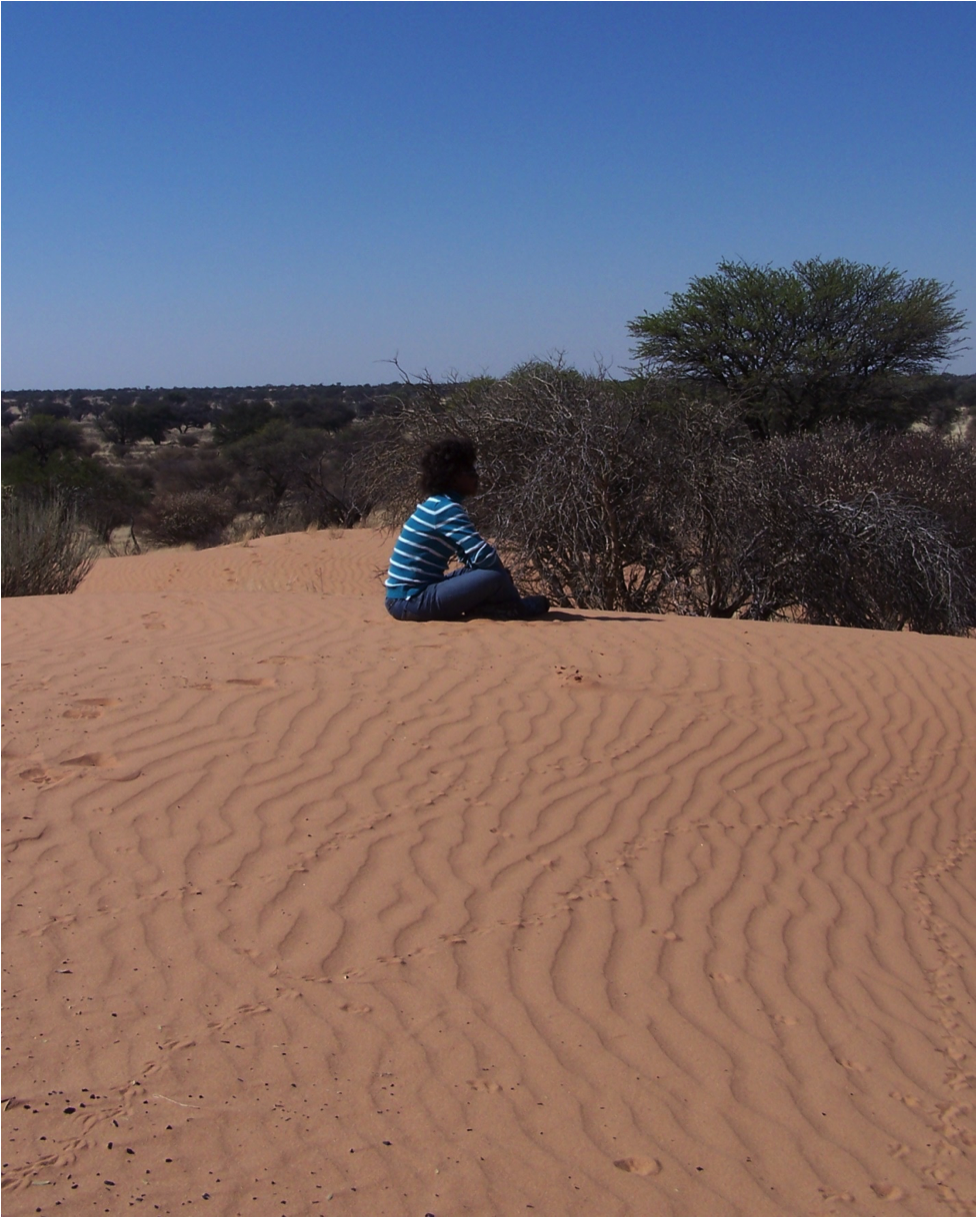
Serene, would be how I describe this desert atmosphere where I do research. We are far from the hustle and bustle of city life, surrounded only by a small and sparse community of farmers and workers. The nearest shop is almost 30km away and traffic is virtually non-existent. With no television and very little distraction, it can get so quiet that you hear a pin drop, and I revel in the many advantages that this peace brings. For starters, it’s a book lover’s paradise. There’s nothing like soaking up the Kalahari sunset with a good book in hand. And there’s more: this tranquility offers me room to reflect on my life’s journey, both academically and otherwise. Perhaps the best part of it all is that I’m exposed to a friendly, hardworking and accomplished research community that is very generous of their time and knowledge.

Kalahari sunsets to die for

So what does my fieldwork entail? To recap, I’m collecting data to shed light on why female batties (aka bat-eared foxes) neglect their maternal duties. There’s a healthy population of batties in the reserve where I live, coupled with plenty of other wild life. The first task is habituation. This means getting batties familiar enough to your presence for you to follow them around without influencing their normal behaviour. They are notoriously shy animals and it takes plenty of patience (think months!), raisins (they absolutely love it) and skills to approach without startling them. After habituation, data collection begins in the form of recording behaviour on a tablet and collecting faecal samples for laboratory hormonal analysis. As you’ve probably figured out by now, we work individually and mostly at night since batties are mainly nocturnal animals. But working at night can be good, just ask diurnal researchers how hot it gets in the Kalahari during summer!

The breeding season, which runs from October to December, is a critical period for my research as I eagerly await surprises of new brood. Last December, despite drought setbacks, our project had its very first litter of pups by a vixen named

Bertha and her pups (photo credit: Samantha Renda)

Bertha. Mother and pups took us on a roller coaster ride of frequent den changes, necessitating regular visits to keep track and onsite monitoring with the aid of cameras. These visits were also useful for pup habituation. On one such visit, things started out fine as I located all pups at a new den close to the previous one. I proceeded to habituate them, kneeling down for a close up view of their behaviour and interactions. Forty-five minutes into habituation, the hair on the back of my neck suddenly started to rise… I instinctively turned around and locked eyes with a lone wildebeest bull.

Frightened, I jumped up and the pups scurried down the den. The bull stood still and started snorting at me. I knew that was a bad sign. What to do?! In a panic, I picked up my backpack and started walking slowly backwards in a feeble attempt to escape. It snorted all the louder, shaking its head in the process. I mouthed a couple of expletives. The lack of tall trees within immediate vicinity didn’t help, nor did my bright orange T-shirt. Could this bright shirt be as provocative as those red flags used by Spanish matadors in bullfights?!! And then… of all the songs that could soothe me in this dire moment, Michael Jackson’s “Thriller” came to mind. Great! So “No one’s gonna save me from the beast about to strike, ‘cause this is …THRILLER!”  MJ lost a fan in that dark moment. Finally, the bull started to stir and turn away from me. Maybe I didn’t look appetizing enough?

Just then I heard a rustling noise behind me. Imagining the worst, I spun around, only to find Bertha’s new beau at the top of a dune watching me, ears propped up like two mini fans. He appeared a bit more wary of me than the gigantic beast wandering slowly away. Bertha was making her way up the top too. I breathed a deep sigh of relief at my lucky escape. Many researchers have not been that fortunate, and the dangers of field work are not limited to the natural sciences. Mind you, it’s not only large mammals one has to watch out for, venomous creepy crawlies thrive here too, such as black widow spiders that hide beneath toilet seats, scorpions with shoe-addiction and snakes that slither into shower blocks at night.
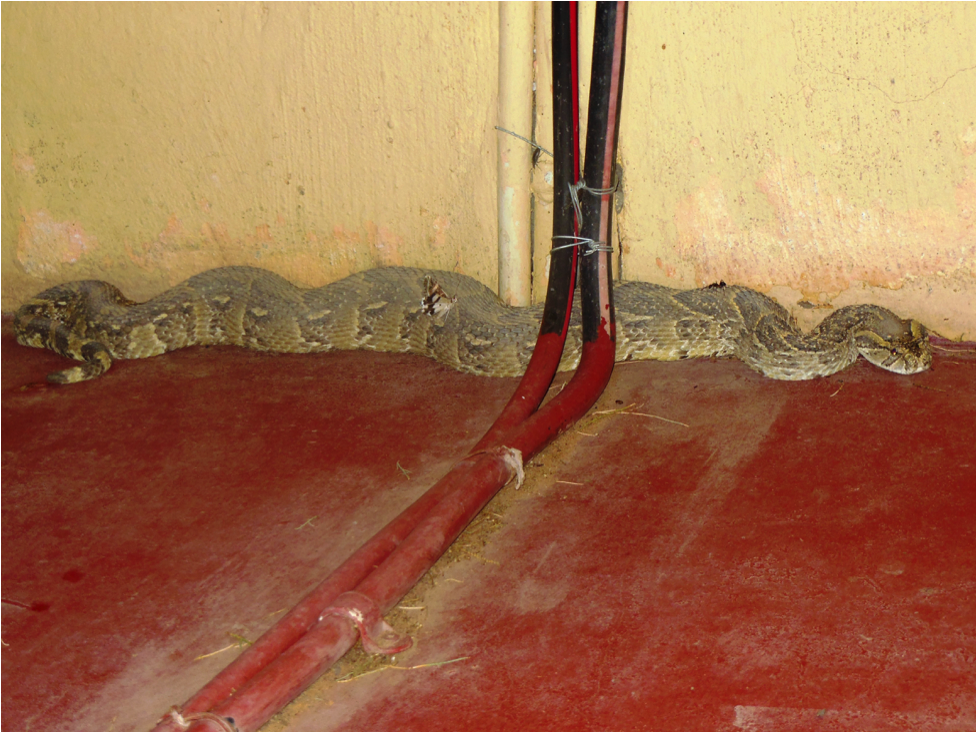
A puff-adder at our shower block

You bet I never go out without my walkie talkie for emergency calls and bandages for first-aid, especially after I nearly stepped on an adder…

Which doctor to be? What I could’ve been, and what I am now

By Yonela Z. Njisane

The question is “Should I have become a doctor or a Dr?” Growing up, I always knew I would be a doctor someday. Yup! I strongly believed I would be a great Veterinary doctor/surgeon. The thing is, where I come from, you see a lot of sick animals with no facilities to help and that pains my heart. I lost a couple of dogs growing up and I know how disheartening that is. I just wanted to make them all feel better and healthier.

I had it all planned out until I realised how long it takes to obtain that qualification; around 7 years if I am correct. To my surprise, I have now spent more years in school pursuing an academic doctorate instead- this is now my ninth year in tertiary. Even though the time factor initially worried me a lot, it’s probably just a lack of knowledge about how to get into the veterinary degree that stopped me from pursuing it. At first, I had plans to go back to vet science after my BSc Agric. (2011); then it shifted to returning after my MSc Agric. (2013). In my mind, I guess I never gave up on it, even though I didn’t go through with it.

The Boys basking in the morning sun

However, just recently I found confirmation that I am better off with the path I chose. A vet told me he had no other options but to put my puppy (Storm) to sleep. That, for me, would have been the greatest challenge in the job. I can never stand seeing an animal suffer in anyway, let alone dead, especially by my hand. I sometimes wonder how I am going to cope come the end of my PhD trial — which means slaughter, by the way — considering how I adore the Boys. At least I am not the one who is going to pull the trigger, that’s how I console myself. That part is not my job.

As fun as working with animals can be, challenges will always be there regardless of the path you are in, I guess. One of the Boys almost died the other day. Almost! Thank God we got to the scene in time, even though we were all sure that it was too late to redeem him. I was so close to breaking into tears until I heard him gasping for his breath, fighting for his life.

The Boys
The Boys “race squashing” in the stockade… every month… why can’t they be calm?

If only they knew that instead of all the stomping and squashing in the race every monthly managerial routine, they could just relax, allowing a smooth and a quick process. But hey, they’re just cattle. For me, it would have been a more emotional time than just a loss for the trial. But I learned that you just have to always look out where animals are involved, you have to always be there.

For instance, while some of you were on holiday during the Easter weekend, we were chilling at the farm, in the pastures, with a couple of moos, neighs and baas. It was the paddock behaviour observation week. Holiday or not, it had to be done. The weather was just plain cruel, it was freezing so much that the best way to keep warm was to do some aerobics (turned out someone was taking a video the whole time. Damn these phones).

Another survival trick in the field. A
Another survival trick in the field. A “Hakuna Matata” hat that my friend Coco brought me from Kenya. Turns out these non-floppy hats are useful in all weather conditions!

I must also say that, cattle behaviour does not change just because its holidays either. You can expect changes from external stimuli like an overly excited barking dog passing by looking for a challenge (thank God it hasn’t happen during observation times). Did you know that while our cattle in the villages respect dogs, even excusing themselves when barked at, my Boys just charge right back? In an innocent and inquisitive way, running towards the barking dog — so cute to watch! I’m so mad at myself for not capturing the scene in a video.

I was even more impressed by the braveness in my Boys when a “crazy” ox with huge horns was somehow “claiming his territory” on first discovery of the males that had been newly moved to their (ox) camp site. The ox had an attitude for days, making noises and even kicking the ground, blowing dust. That was just it though, some act. My Boys saw right through him, ignoring the whole show and carrying on with their business.

The only thing that got them on their toes (just a little bit) was the super-sized horses from the university traction centre.

The moos meet the neighs. Yes, that's the scientific term.
The moos meet the neighs. Yes, that’s the scientific term.

Had I known the huuuuuge horses were just big babies who demanded constant grooming, I might have kept my distance too. But hey, I am not complaining at all, everyone needs scratching every now and then.

So in all, I choose to look beyond what the end will or might be and just make the most of every single moment I get with my Boys (and any other animal I come across), ensuring that they are happy and healthy. I will cross the other bridges when I get to them.

Me and the giant baby,  Neigh.
Me and the giant baby, Neigh.