International Day of Women and Girls in Science: why not to like it!

By Roula Inglesi-Lotz

“I was never sure if I liked the idea of an international Woman’s Day and now #InternationalWomeninScienceday. I want to live in a world where the self-evident is not a reason for celebration. We ARE Science! Celebrate us at the workplace everyday”.

That was my twitter post last week- I felt alone in the downpour of celebratory messages, posts and stories for International Day of Women and Girls in Science.

My post might have been perceived as sour and bitter and to a certain extent, it was. To explain myself, I am not a big fan of International Days – we have too many and they’ve started to lose their real meaning. In addition, I have a feeling that International Days are established for the weak, the lesser known causes, the ones that do not attract attention the rest of the year. So, being the target of an International Day makes me feel weaker, rather than stronger.
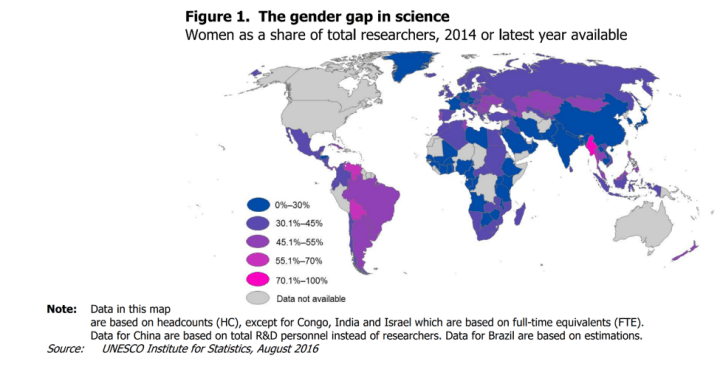
Roula1
Source: http://uis.unesco.org/sites/default/files/documents/fs43-women-in-science-2017-en.pdf


Yes, you guessed right! I am one of those people that are NOT counting the days to Valentine’s (although some roses, chocolate and a romantic dinner is always welcome). Which is exactly my point: Yes, let’s talk about women in science one day a year, but daily/regular “flowers, chocolates and romance” is what makes the celebration substantial, until there is no reason for acknowledgement of the issue. I mean, have you ever seen an international day of CEO’s?! It’s only for secretaries.

I would rather live in a world where:

  • women in science are not a minority – in 1987, 20% of STEM researchers worldwide were women, in 2018, still only 22% (thestar.com);
  • there are not special awards for women (how about all scientists competing — and evaluated without bias — against each other?);
  • when applying for jobs, women are not evaluated based on how many kids they have or want (paternity leave is still not = maternity leave);
  • people are not surprised (or shocked) when they hear a CEO or HOD is a woman;
  • young talented girls and great minds do not miss opportunities because they have to provide for their families or because they are disadvantaged compared to their male siblings;
  • infrastructure (both capital and emotional) is constructive and supportive of women and — let me also say — mothers in the work environment;
  • where a girl in Engineering or Programming doesn’t feel excluded;
  • women’s experiences and local knowledge are not ignored, especially in the developing world;
  • where women are full, active participants in the scientific community.

Roula2

In the world right now (unfortunately), an International Day might be a good tool to shape this “new” world I am dreaming of.

But it is certainly not enough. We need to celebrate women’s perspectives every day. We (women) need to support each other and advocate for each other. We need to provide role models, support motivation and inspiration for early career women academics and the girls of the future. We have to make sure we assist and reward young girl scientists from the very beginning and all the way up, also for those already deep in the biased system; but most importantly, we must support women in following their dreams.

Easier to say than done, I guess. It needs an ethical code and an inner drive by women to “show off” their strengths. At the same time, it needs support, programmes and practical assistance from policymakers and society as a whole.

I hope that I will live in that world one day where being a woman in science is not an exception, where there is no need to celebrate every single woman in science as we will be the norm –nothing special – just us!

Women in science are not competitors to men in science; they are the missing puzzle pieces. Only by working together and learning from each other, can the human race (and science!) progress.


P.S. (Here I am again…) Having said all that and raising two boys, I have to emphasise that we should not underestimate the importance of boys’ education (formal and family), as well as maintaining gender perceptions and biases. However, that’s a long discussion… for another time.

Alcoholism: The plight of our father figures

For as long as I can remember, I have been the type of person to dive in deep and struggle to come back from a bad habit. I spend so much time watching movies, I rarely have regular meals and I spend so much money that a savings account is non-existent in my life.  I did not list my drinking problem here, because the past month has been a continuous — and so far successful — mission to curb that thirst. Truth be told, thanks goes to the gruesome “JanuWorry” we are emerging from; the struggle has been real and helpful! Jokes aside though, I am proud of how I have handled myself this month, for the first time in a while. Change is imminent!

After a Saturday of heavy drinking towards the end of 2017, I decided, with a friend of mine, to challenge myself to quit drinking in this New Year. Well, maybe I should rather attempt to have an occasional beer here and there … just in case the whole quitting thing doesn’t work. In all honesty, this is definitely not the first time setting such a challenge for myself. In the previous years, I would set small challenges like not drinking for a month. In these times, I lost more often than I won. The difference between then and now is that I have now seen the bad side to my drinking – one I would not want to ever see again. Also, after almost being brutally beaten up in a fight while drunk, I have decided that this is a change I really need in my life. Thus I have devised an action plan to combat my drinking problem. The plan includes:

  1. Keeping super busy. Apart from blogging, I have started a mentoring program to interest first year students into research.
  2. Joining the gym and finding new hobbies.
  3. Avoiding things that can trigger heavy drinking. This includes staying away from places or activities that promote heavy drinking.
  4. Practice saying “No!” I will apply this concept in many areas of my life. I have been previously described as a “Yes man”, that man has to go!
  5. Find better ways to manage stress. Such as talking to friends and family more.

I realize that this change will come at a cost, but it is do-able nevertheless.

I have witnessed firsthand how alcohol can damage and control people’s lives. I grew up in an area where most father figures (including my own father) were serious alcoholics, even today some still are. Being the people’s person that I am, I was liked by all those fathers and the feeling was mutual, considering that their drunkenness loosened their pockets. I would always hang around where they drank, got a few coins, but never did I imagine that someday that person could be me. The thought of being addicted to alcohol after seeing what it has done to many of the men I grew up admiring — intelligent men with dreams and aspirations — terrifies me more now that I’m halfway through my PhD studies. I cannot afford to screw up now.

I have very few memories of my father being sober (he passed away when I was still young). The time he spent drunk took away all the happy thoughts I could have had of him, all the advice he could have given me about life and how to better handle myself as a man. I believe this is possibly the case with the average Kasi kid out there. Where I grew up, the typical child did not have someone to advise them through their life experiences, hence many of them have turned out to be the same alcoholics as their fathers were. As much as this is not reason enough for one to fail, it is clear that the cycle of alcoholism is one of the problems in the Kasi. However, I believe that there is never a good enough reason for you to stay in a situation that is not good for you.

Our fathers probably had a lot of time on their hands, they did not have work, leaving them with a lot of time. I believe drinking was a way of passing time — time they could have spent imparting wisdom to us, ensuring that we don’t end up like them. The same can happen when you are doing your masters or PhD studies. You find yourself with too much time on your hands (as you are the one in control of your time) and drinking becomes a way to pass time as well. Later, when things do not go right with research, we realise that we never had that much time to begin with. We start stressing and still use alcohol as a tool of stress alleviation (at least that’s the case with me).

I like to think I am not an alcoholic yet and that I have better control than otata endikhule phambi’kwabo (the fathers I grew up looking up to), and as such, I really want to quit drinking this year – while I still have control over it. I feel that it’s important for me to quit before it becomes a bad habit that disturbs those around me, before I hurt someone or develop an alcohol related disease. This is an addiction that can kill me someday. Most importantly, I want to quit drinking before it takes up my time, time that I could have spent chasing my dreams and being around the people I claim to love like most of the men I grew up looking up to.