“We need a break, it’s both of us (but more you than me)”

I have said this line to my degree. More than a few times.

I began my undergraduate degree at WITS University in 2011. I was a fresh-faced 18-year-old and had the world at my feet. Then reality set in and I went from being a top achiever at the high school to failing my chemistry block test (“Oh sweet girl, if you only knew you would fail a few more before finally passing”). That was the first time I thought, “We need a break”. BSc undergrad and I had hit a rough patch; my first-year spark was dying down; our love was dwindling. At the time though, as a first generation WITSIE, I knew I could not call it quits. My family had made sacrifices to get me here and BSc and I simply had to work it out. Eventually, we did, a few more downs, a couple of failures (so many) and at the end of it, my marks afforded me the opportunity to join an Honours program.

depression

Honours was a tough time, the course was intense and it was the first time I had undertaken a ‘big’ research project; a bit overwhelming. I had a great support system in some of my classmates but I was still exhausted, I would leave for campus at 5:45 AM, endure a 30-45 minute bus drive to campus, work all day, get home at 6pm and start working again before an uneasy sleep only to repeat the cycle again the following day. I was tired, I knew it, my family knew it but I justified it by saying “everyone goes through this”. I found myself getting sick frequently as stress was taking a toll on my health. I was unravelling but I did it with a smile on my face because I thought that this was normal and that I had to be grateful. ‘I’m fine’ is the default answer, when it is usually the waving red flag.

After I completed my honours I made an important decision and said: “I think we need a break”. I took time off before my MSc and went to work for a few months. Although there were many contributors to my decision, ultimately I needed time off from my academic path. My supervisors and I stayed in contact and a few months later, they offered me a place in an MSc project that I was really excited about, so I returned in August of 2016. I felt so energised that I decided I wanted to plan my project so that I could complete it within a year. My approach was different, I didn’t work from sunrise until sunset, instead I set myself weekly goals and how much time it took to reach them was completely up to me. I kept my supervisors updated frequently (maybe too frequently) and they were supportive of my approach. One of my advisors had recently relocated back home to America early on in my degree and we had a 10 hour time difference but still managed to make it work (and work well) this showed in my project. It was big, it was stressful but it was flowing, relatively smoothly because I had to supervisors who didn’t see me as a work mule but instead allowed me to thrive through gentle guidance and many open conversations. I am grateful for that support, it is rare in academia.


Academia and I broke up once more as I took a year off between my MSc and my PhD (which I am beginning this year) and I went to work full time. To some, it may seem that I am not as dedicated to my degree as students who choose to go through it all in one go but I am dedicated, to myself first and foremost. It is another mechanism to protect myself from breaking; a stop to gain momentum again and make important decisions such as the choice of institution, supervisors and potential projects.

The Guardian published a great article early in 2018 on mental health in universities, more specifically the experience of PhD students. This article also highlighted the ripple effect, stressed senior academics (who are often the product of a flawed system themselves) can often take frustrations out on their students leading to anxiety-ridden postgrads. There are numerous other examples of articles highlighting mental health problems in academia, from different perspectives, in different fields and the fact that it is so common means we can’t write it off as the experience of a few ‘weak’ students because it is clearly a systemic and deeply engrained problem.

A recent study that looked at over 3,500 PhD students in Belgium found that one in two PhD students experienced psychological distress during their PhD. The South African Depression and Anxiety Group (SADAG) released statistics in October stating that 1 in 4 university students had been diagnosed with depression. Although I think that number is higher because, within our communities, we are taught that mental health and mental illness is not legitimate, it is embarrassing and we do not discuss it. We are yet to examine these statistics in a South African context especially amongst first generation people of colour entering the university space. This demographic often has compounding stresses as we try to survive in a world our families often do not understand but one that we want to thrive in because we feel we owe it to the people we love to do so. I was fortunate to have my family and support system within reach, not many first-generation students do and this is possibly one of the toughest journeys to walk alone.

Academics can’t afford to adopt a ‘well I went through this and I survived’ or a ‘they just were not cut out for it’ mentality when students are dropping out of programs, leaving the field or most saddening of all, taking their own lives. That approach leads to a ‘lost generation’, students who had the potential to succeed but were derailed by unsupportive and negative mentors. As an academic community, we need to address the stigma surrounding mental health problems and work toward an environment and a people that are conscious of their mental wellbeing.
Why do now something you can do a day after tomorrow?

“Procrastination is opportunity’s assassin.” – Victor Kaim

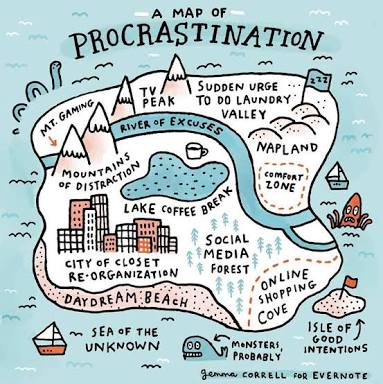
With this year being the year of “do”, I thought it would be great to discuss the one thing that always stands in the way of getting things done. After the email announcing I was selected as one of the SAYAS bloggers for 2019, my excitement fuelled my creativity and inspiration; so many ideas and thoughts. I even immediately started writing this piece in December even if it was due after the beginning of the year. This was unlike me because I, like many fellow postgraduate students, suffer from the procrastination “bug”, almost like a flu bug. What better way to start the year than discussing the one thing that stands between deadlines and us, throughout our postgraduate careers?

images

Procrastination, as defined in the dictionary, is: “the action of delaying or postponing something”. However, the reasons (or shall I say excuses?) of why we procrastinate vary among individuals. My favourite so far has to be: “I work best under pressure”. I even go as far as to justify that diamonds are created under pressure and look how beautiful crystals they are. With that said all the work done under pressure should result in something great, right? We all know we just don’t want to do the work until the deadline is 48 hours away, even then I still take my chances. I am a serious victim of my own procrastination tactics; but luckily for me, if I procrastinate enough tasks, I get to a point where I do older tasks to avoid doing the new ones.

On the aftermath of procrastination though, consequences exist, even if deadlines are met eventually. I lost my uncle two years ago, and sometimes I cannot help but feel like if I did not procrastinate so much during my first year of MSc then maybe he would have gotten the chance to see all of my hard work and possibly make it to my graduation. I remember how he would regularly call to check up on me and see how my research was going. He had no idea what it is that I was doing but it is the thought that really counted most of the time.

Being from Limpopo, I decided to take my work home with me hoping I would get something done. The four weeks I spent at home I did no work whatsoever, the family was so excited to have me back home that they kept me busy all the time. A part of me felt refreshed to not be doing any physics so I did not complain much. I decided to come back early this year to get an early head start and catch up with all the work not done in December. Truth be told, I am still trying to get back to the work mode. I keep postponing the day I will sit down and start working again.

I have always wanted to start a “procrastinators anonymous” group but true to its nature, it never materialised. Guess why? It could have been done later. First, it was during the week so we had to wait until Monday to start it properly. When Monday came, it would not work because it was the middle of the month. A new month started and I realised that it would be better to start the group properly at the beginning of the year. Now that we are finally in the New Year, do you want to guess if the group has started?! Well to answer the question, I started this blog mid-December but here I am today, a day before the deadline, finishing it.

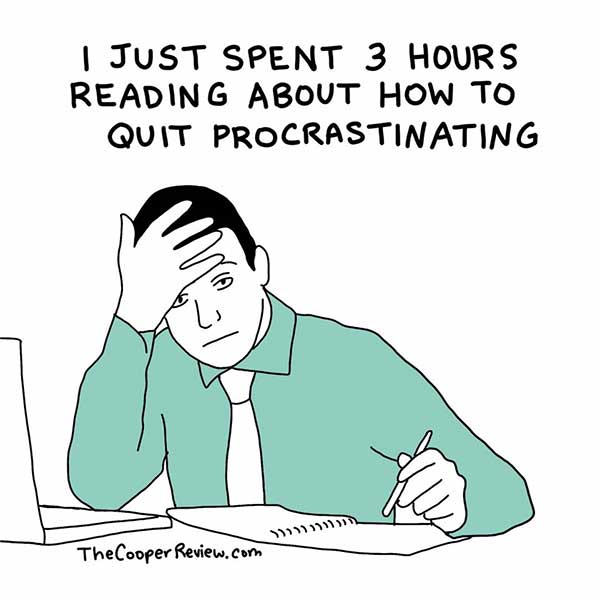
Being the research student that I am, I decided I would procrastinate some more and Google tips on how to deal with procrastination, I found a nice blog written by Regan Collins . I personally do not agree with all of them, (I shared my thoughts on each tip below it) but I hope they will help you.

  • Get Organized

I completely agree with this tip. In order for you to get anything done, you should know what needs to be done. The best way to go about this would be to make a list of everything that needs to be done with the deadline date next to it. Place it somewhere you can see it every day so it can haunt you until you get everything done. Crossing things off a list is the best feeling ever.

  • Set Simple Achievable Goals

A simple achievable goal is something as small as choosing to wake up every day at 6 am, doing yoga every evening or jogging for the fit and active ones. If you can get the little things done, this is enough motivation to move on to the next task.

  • Create a Timeline/Schedule & Get Rid of Distractions

The only problem I have with this tip is that when you busy making a timeline, your plan does not include all the distractions who show up out of nowhere and disturb your plans – colleagues, classmates, family, social media, Netflix. I normally get frustrated and just give up on the day completely.

  • Set a Deadline

Since I work best under pressure, I have found that setting deadlines before the actual deadline helps me get things done quicker. Internal deadlines are not always met, but they can work as cushions to the final ones.

  • Time Yourself

While this is good advice, I use the motto “continue working until you get drained”. I take advantage of every opportunity I get that I find myself working.

  • Take a Break

Breaks are very important but they can also ruin everything. The ABC of working is: “Apply Butt to Chair”, standing up from your chair to take a break is you breaking that simple rule.

  • Use Incentives

Now, this I completely agree with. The best way to motivate me to work is through a nice bottle of wine. The idea is to drink the wine when I am done with the work but unfortunately, for me, I believe I’m more creative while sipping on a glass of wine. However, I completely agree with the incentives idea. There is no right or wrong incentive – find what makes you happy.

  • Get the Hard Stuff Done First

I completely disagree with this tip. I feel like if I start with all the easy stuff, I will be motivated to continue working because I have done so much already. I believe that I am more motivated after completing the easy stuff then I can move on.

  • Tell Someone About Your Goals

This is a great tip as well but I already disappoint myself enough when I do not get things done. I cannot have another person disappointed in me.

procrastinating

Hope the tips above were helpful and will be useful. For 2019, let’s vaccinate against the procrastination “bug”. Let’s use our time wisely and get those proposals submitted before the due date, those progress reports submitted a week early and if you are in the same situation as me, now would be a good time to start writing that thesis. I am always shocked at how much work I can get done when I wake up with the willpower to work.