Find what fuels your passion

Are you brave enough to reach for the stars?

My full name is Sinenhlanhla Precious Sikhosana, born in Harding south coast of KwaZulu-Natal. My family consists of my grandmother, mother, three siblings, and many cousins. My inquisitive mind and passion for problem-solving led me to the science field at a very young age. However, it was only in my matric year (when I attended the Astrophysics and Cosmology Research Unit (ACRU) career week at UKZN) that I was exposed to career opportunities in astrophysics. Postgraduate students passionately shared their research and how they go about solving the mysteries of the universe; I was instantly sold.
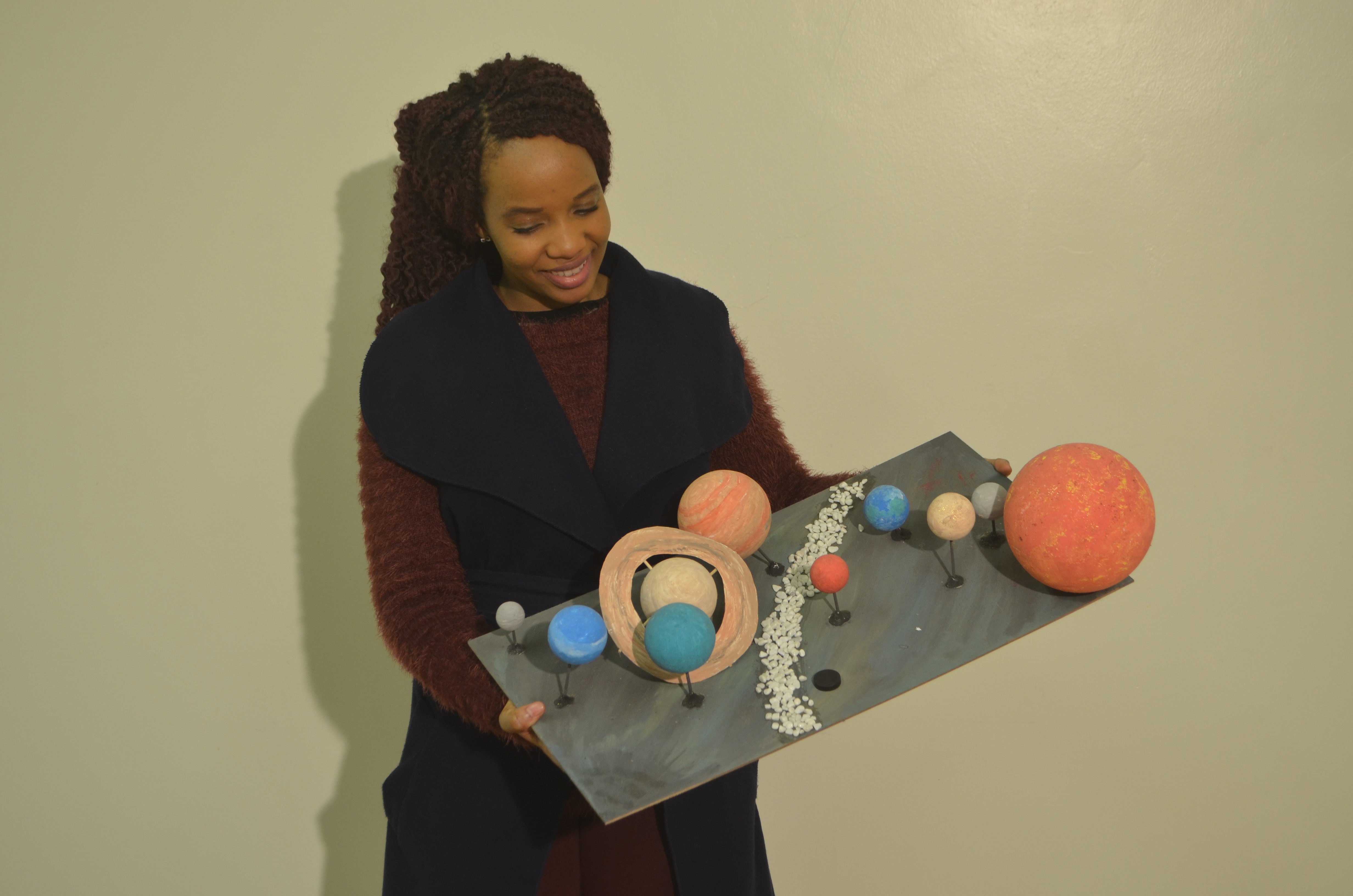
Astro-Lady
Astro-lady

I am currently studying towards a PhD in Applied Mathematics with a research focus in Astrophysics at the University of KwaZulu-Natal. My research involves understanding high-energy particle physics on the largest gravitationally bound objects in the universe (galaxy clusters).

My academic journey, like any other, has been filled with a lot of obstacles but also equally numerous triumphs. In my undergraduate years, I obtained the SKA Africa (South African Radio Astronomy Observatory) scholarship and the top 10 African females award at the college for 3 years. I have also received numerous awards in my postgrad, with the 2019 highlights being; receiving the L’Oreal-UNESCO For Women In Science research grant and attending the 69th Nobel Laureate Meeting at Lindau.

With all these achievements one would think I would be very confident in my abilities, but that was not the case. Due to the unfamiliar surroundings and lack of representations, I suffered from the ‘imposter syndrome’, the feeling of not belonging. I had to fight hard mentally to convince myself that yes, I am intelligent enough and I belong. The advantage is that now I get to pave the way for younger aspiring female scientist, to make their journey less uphill than mine was.

Now that the formalities are out of the way, let me let you in on what fuels my passion. I believe that without educational knowledge one can never experience true liberation. It is because of this belief that I spend most of my time outside of academia participating in educational outreach programmes. I mainly give talks at high schools and career exhibitions. I do this to encourage students to pursue tertiary studies and to also make them aware that science no longer has the face it used to have centuries ago. One does not need to be a male with crazy hair and a lab coat to do science. When I do get the opportunity to speak to young girls, I make it a point to be as feminine and bubbly as I can be (be myself basically), because I want to show them that science is for them and that science is fun and trendy too!
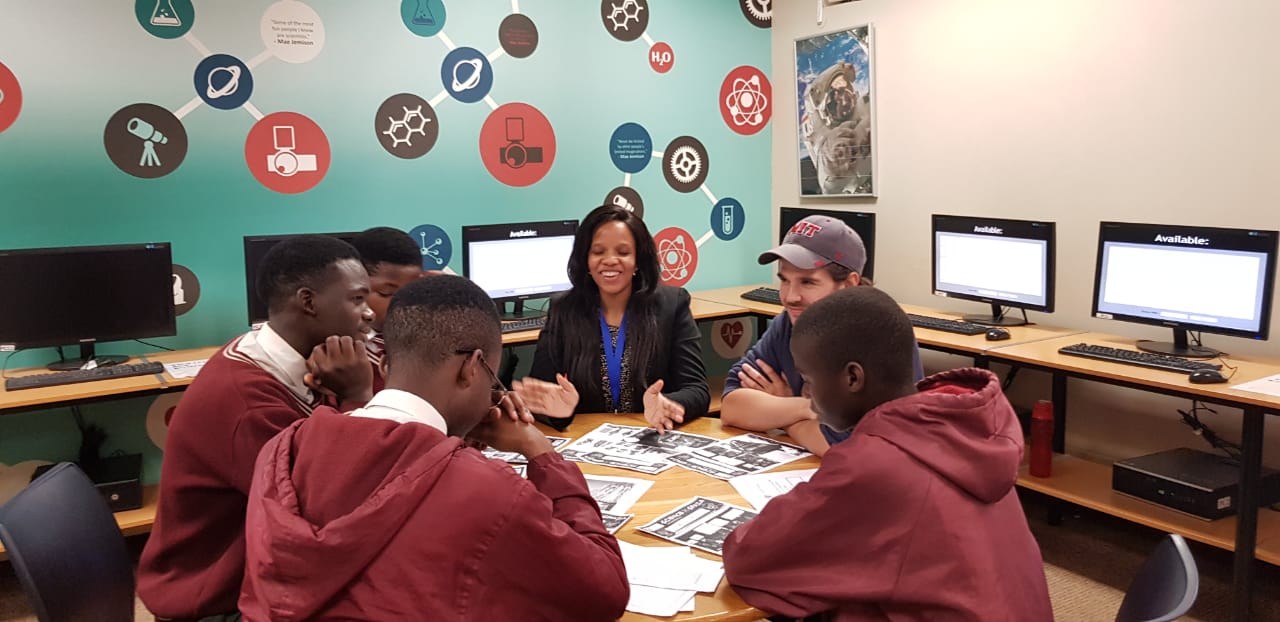
OutreachWhen I finally attain that ‘Dr’ tittle, I would like to establish a mentorship programme that guides young girls that are science enthusiasts. I have also personally encountered that no matter how brilliant your science is unless communicated effectively, it will never make a great impact. This led me to the idea of technical science writing retreats for postgrad students; it is a dream I intend to fulfil in the near future.

The Magic of Museums


Museums are some of my favourite spaces, I find myself drawn to them, wherever I go, whether I am on holiday or on a trip for work, I always end up wondering into one. A year ago, the world watched in horror as the Museu Nacional, the largest and oldest museum in Brazil, went down in a blaze, fire consuming the building and the 20 million or so artefacts it housed. The museum was 200 years old and this tragedy prompted discussions in museum circles regarding issues such as repatriation and digitisation of collections. The loss was immense, and the global outcry highlighted just how important museums are, they serve as spaces for research as well as for learning, bringing communities together and curating heritage. To me, museums transport me back in time and renew my child-like wonder at the world around us, they make me proud to be South African, they restore a sense of appreciation in our natural world, in our history and in the possibilities of our future.

In September this year, I worked closely with fellow postgraduate students at the School of Anatomical Sciences at WITS on a temporary exhibit that celebrated our school’s centenary. The exhibit was hosted at Maropeng and I can tell you, it is no small feat organising one so kudos to museum staff members and curators who undertake this important job! Our exhibit ran for two weeks but took months to plan, we asked a lot of our postgrad students who had tutoring commitments, deadlines and research projects to work on, but they gave their time, energy and ideas to make it a success. At the end of the exhibit I thought that they would be put off public engagement and organizing temporary displays and exhibits for the rest of their lives but to my surprise, it ignited a fire in all of us. We were interacting daily with scholars, families, children of all ages and they were curious and showed a real interest in anatomical sciences. The exhibit was hands-on, we had microscopes, archaeological excavations, facial identification activities, there were activities on embryonic development and extracting information from skeletons that can be used to identify people and all of these activities were met with a level of excitement I can recall having as a child! In truth, I don’t think I have ever lost that excitement.

Museums are not just important because of what is housed within their walls, they are important because of how they make us feel. There have been studies and many articles on the positive effects of museum visits on our mental health. Some studies report that museums help reduce anxiety and stress and feelings of loneliness, simply put, museums make us happy. They also allow family bonding, I witnessed this first hand as I saw proud parents encourage their children’s enthusiasm, standing outside in the hot sun so that their children could have an opportunity to excavate a skeleton from a sand pit, waiting patiently while they placed bones in the correct positions and celebrating with them when they completed the task. I met a family who had come to our exhibit and whilst their daughters excavated, I spoke to the parents, both of whom are engineers by training. The father explained to me that the youngest daughter has been fascinated with archaeology and palaeontology for a few years (she was probably 9 years old when we met), so they’ve taken her to see the home of dinosaurs in Clarens and on this holiday they brought her to the Cradle of Humankind. Her dad asked me about career options, what she would need to study at school and how she can enter the field. I was blown away that they expressed such support for her interests so early in her life, it’s parents like hers that give me hope for more women to join my field! As we’ve discussed many times here at SAYAS, strong support systems are crucial.

As I mentioned earlier, I LOVE museums and have been fortunate enough to visit museums in Africa, North America and Europe. My favourite museum has to be the National Museums of Kenya where I attended a conference in 2016, it is massive and constantly buzzing with life. There are many schools and hundreds of students who pass through the gates every day, I think that made it even more amazing, the atmosphere was filled with excitement constantly.

lisbon museums

In 2017, I ventured to the USA to attend the American Association of Physical Anthropologists (AAPA) meeting which took place in New Orleans (a complete dream come true) and true to my love for museums, I boarded a boat called the Creole Queen and went on a one-woman trip to a former plantation which now serves as a museum, this was an incredible experience although very solemn and humbling.


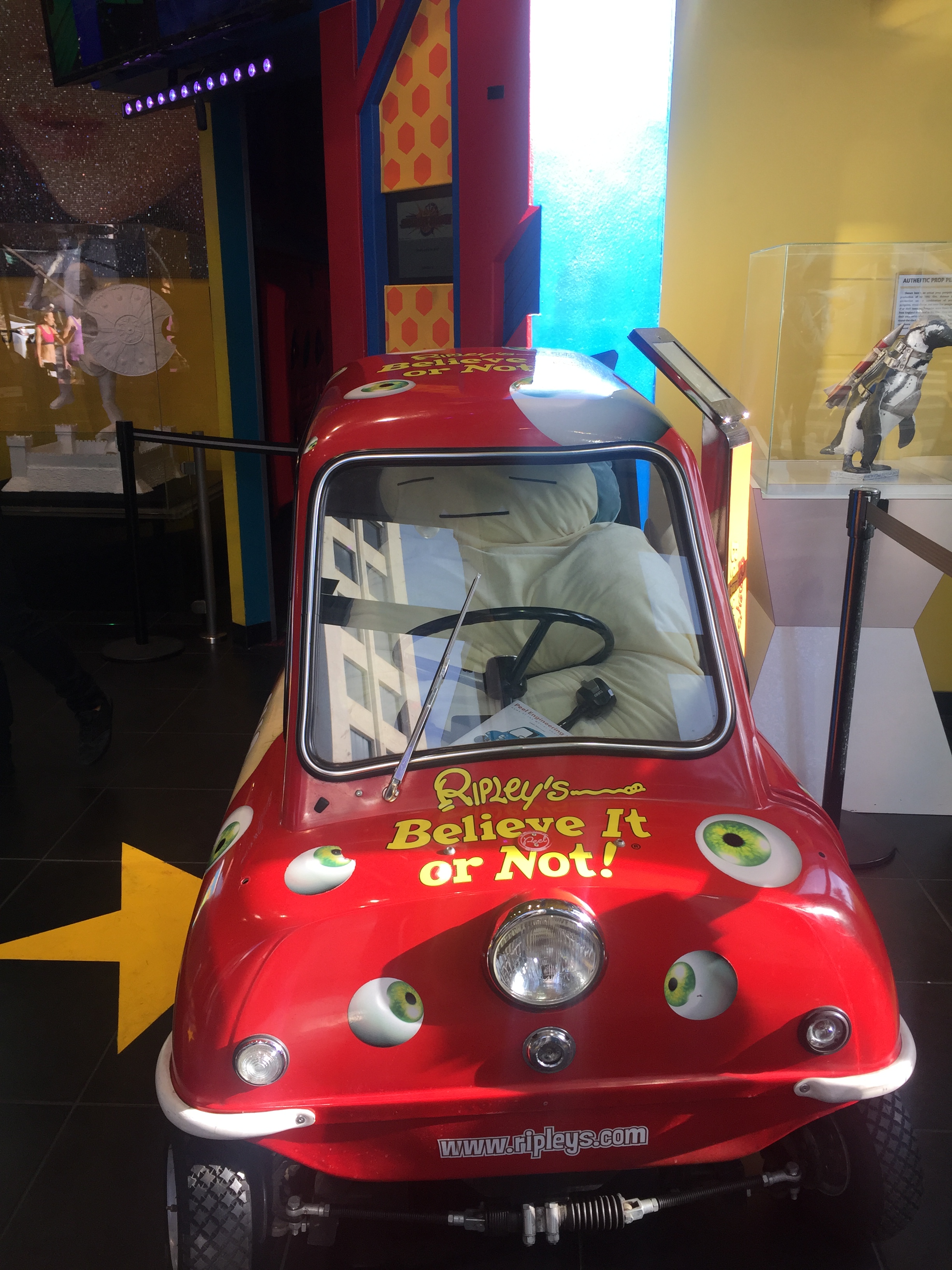
ripleysWhen I left for Los Angeles to work with my supervisor who is based there, I visited the Ripley’s Believe It Or Not Museum, I may be giving away my age here but I loved that show growing up! In 2018, I attended the European Society for the study of Human Evolution (ESHE) meeting with a group of researchers from South Africa. We spent a few days in the city of Lisbon where we visited many museums but my favourite was the Lisboa Story Centre, I enjoyed the simplicity of the exhibits and how modern the set up was, definitely something to do if ever you find yourself in the city!

International museums are a fun time but learning about your own country is equally entertaining and important. I have been able to see many of the natural history museums here because of my field of study, my personal favourites are: Iziko Museums (because you can literally walk under the skeleton of a whale), Ditsong Museums (because it is home to one of my favourite fossils Mrs Ples and one of my favourite curators Dr. Mirriam Tawane) as well as the Origins Centre (it is down the road from my house and they host many fun activity days as well as the most interesting public talks). There are many, many other museums throughout the country, a list can be found here and you can see what local museums appeal to you. Remember, museums need foot traffic in order to keep their doors open so your visit helps ensure that it stays open and inspires the next generation of researchers, teachers, historians and explorers.