How to Study like a Genius and Ensure You’ll Get Full Marks on Every Test You Take

Exam season is almost upon us, and the campus air is filled with tension and panic. Students cower in libraries and empty lecture rooms, attempting to prepare themselves for the end of block, and the harrowing start of the June exams. The weather grows cold, the people grow fearful, and, as always, I show up to save the day! As someone who hasn’t written a test in two years – and who hasn’t written an ­in-person test in four years – I am clearly the perfect candidate to prepare you for these trying times, and to equip you with some great studying tips, dear reader! I am the greatest student to ever live, after all…

Stress is a great motivator, but it can also be a great hindrance. I want you to walk into your exam confident and calm, and the most important skill you will need to achieve this is good time management­. I know how overwhelming it can feel considering how much content you need to cover before an exam. Just thinking about it can freak you out and send you into a spiral, making it difficult to even start working. That’s why good time management is everything. Assess how much work you need to get through, how much time you have to get through it all, and then create a study timetable that will allow you to work through everything while allowing yourself ample time to rest and recover. I am a huge advocate for sleeping, and I refuse to let anything encroach on my beauty sleep – that’s why I look so young and vibrant despite being well into my early twenties.

It is critical not to overwork yourself, because that will only make it harder to study and to retain the information you study. Don’t work hard, work consistently. Creating a study timetable – and sticking to it – will ensure that you’re not up the night before an exam, desperately hoping you can skip an entire section of work that probably won’t be in the exam anyway*. There is no shortage of great apps designed specifically to help you create a detailed study timetable, so there’s really no excuse not to do it!

* Cramming is a wonderful way to increase your stress levels, and decrease your ability to retain information. I highly recommend cramming if you love procrastinating and hate passing your exams. Check with a trusted medical professional before trying cramming. Side effects may include mental exhaustion, poor marks, and a deep sense of regret.

Once you’ve created a comprehensive study timetable, you need to create a good study environment. Clear your cluttered desk, throw your phone into the nearest body of water you can find, and grab some good old-fashioned pens and paper, because we’re about to get knee-deep in note-taking! I prefer to work without music – especially music with lyrics – but if you find yourself in a noisy environment that you can’t escape, I recommend listening to the work of Ludovico Einuadi. His instrumentals are mostly piano based, and I find it very calming and easy to tune out while working. Except for the times when he shreds on the piano – avoid the songs where he goes absolutely wild on the keys, because while it’s exhilarating, it’s not conducive to working. With regards to how I work, my studying involves writing a lot of notes. I like to ease into the work by simply going through lecture slides, readings, and textbooks, reading aloud and highlighting key points, ensuring that I have a good understanding of the content. If there’s anything that confuses me, I’ll dig deeper into that topic and ensure it makes sense to me before I move on. After this, I begin taking notes, creating mind maps, and actively engaging with the content. I have developed my own personal shorthand which makes my notes incomprehensible to anyone who isn’t me, but it saves me so much time when writing and revising my work. It’s good to start off by writing comprehensive notes, and then having the notes become less detailed as you revise them and rewrite them. Flashcards with key terms are a great way to keep information fresh in your mind and to quiz yourself on the work you’ve covered.

Finally, I want to let you know about a friend you should never neglect. That friend, of course, is past papers. Ignore the questionable grammar in that sentence, and focus on the sentiment. It’s not enough to just remember study content – you need to know how to apply your knowledge to answer a question. Past papers give you an idea of how you’ll need to utilise the content you’ve studied, how questions will be phrased, and how answers should be structured. Working through past papers is a great way to not only revise your work, but to refine your exam taking abilities. They’re also a window into the twisted minds of the people who create your exams. Know your enemy, dear reader!

Now, go find the nearest body of water to throw your phone into, and get studying, dear reader! I know you’re going to do great!

Goodbye America. Hi South Africa!

As I scroll through my camera roll, I find it crazy to believe that nine months ago this week, I spent time with my parents in the Eastern Cape before heading to Johannesburg for the last week in South Africa. My siblings and nephew joined us in Johannesburg before I departed for the U.S.A. Those final days were spent bonding with my family, running errands such as picking up my passport at the U.S. Embassy, stocking up on medication, going to the bank, visiting the dentist, and ensuring all the necessary documents were organised. I wouldn’t describe how I felt as excitement, but rather as a strange sense of wondering who I would return to South Africa as. This question has now been answered, although it will probably take years to unpack and understand the new vs old me entirely.

Following a very emotional goodbye at the airport, I went on my way, embarking on an almost sixteen-hour flight from Johannesburg to Atlanta, shortly followed by a one-hour flight to Nashville. Immediately after entering that long, drawn-out flight, it sunk in that I was moving abroad. The Delta air hostesses’ accents quickly made me realise I would be in the U.S. in about sixteen hours and would only be returning to South Africa nine months later. I knew then, and still know now, that this research visit to the U.S. through the Fulbright was a valid rite of passage and that I was to seize the moment; though I didn’t know what awaited me, I needed to trust the process.

All the same, from the moment I set foot in the U.S., the entire experience was much more than what I had bargained for. Long-term travel is tricky, and the heightened ebb and flow of your emotions is something you are confronted with throughout the period, perhaps that’s where a significant amount of the growth lies. The culture shock was immediate, and the inception of mine was when I saw people taking their shoes off at the airport; ‘wow!’ I thought. Homesickness was another hurdle I faced, one which I never fully reconciled. Loneliness would also creep up at times, though one might argue that pursuing a doctorate and loneliness are inseparable. So, while a life of travel sounds tempting and pleasurable, it isn’t for everyone!

Be that as it may, and in the spirit of carpe diem, I had many memorable experiences which I would implore you to consciously seek out during an opportunity abroad.

Travel

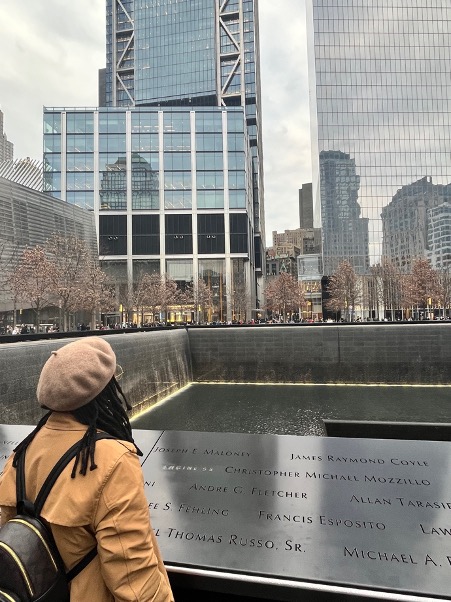
I had the opportunity to travel around America in a culturally enriching way, but did not compromise any of my research time. Noteworthy moments were my visit to New York, where I climbed 162 steps up to the Crown of the Statue of Liberty, a very sombre yet eye-opening visit to the 9/11 memorial, a long walk across Brooklyn Bridge, and an immersive experience at the summit one Vanderbilt, to name a few. Another one for the books was my visit to Chicago, where I spent precious time thrifting with friends, visited ‘the Bean’, went on a private tour of the archives at the Art Institute of Chicago, and went up to the observation deck of John Hancock Centre.

Host Family

This might have been my favourite part. The genuine connections made. I had an exceptional, lifelong host family that began this journey with me when I was picked up from the airport. Because of them, my apartment was beautifully ready for me when I arrived, I got to experience an American Thanksgiving and Easter, I had a family to watch my choir concert, and most meaningfully, I had people I could rely on during the more challenging moments of living abroad.

Thanksgiving with my Host Family

Meaningful Friendships

I’ve never quite been one for many friends but deciding to step outside my comfort zone has left me with a diverse group of friends worldwide. I’ve experienced many cultures, eaten various delicious cuisines, and learned much from the connections. The international students and scholars, particularly those from Africa, made me feel immensely understood in my experiences.

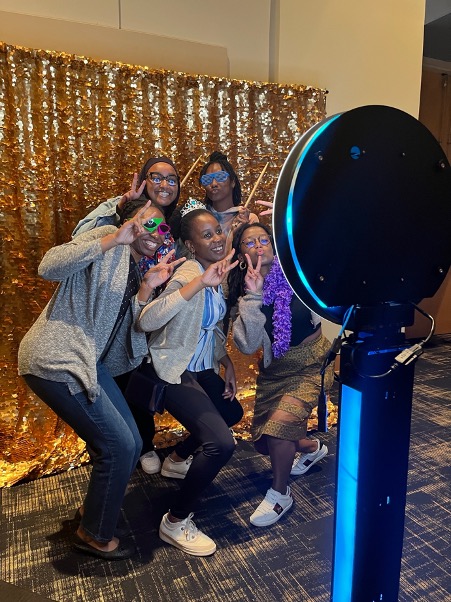
Friends

Entertainment

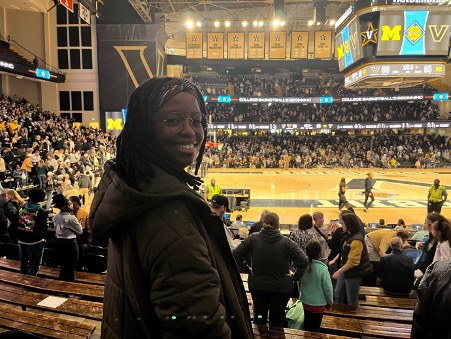
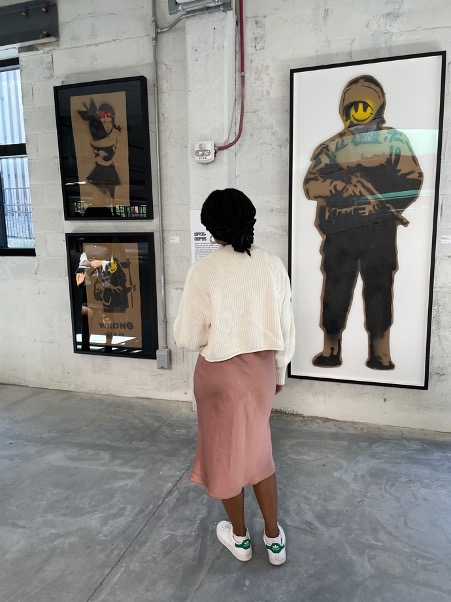
Shortly after I settled in, I created a reward system for myself, whereby every time I reached a particular milestone with my research, I would indulge and get a ticket to some or other show. These could be music or sport; I was in Nashville after all. To name a few, I went to Kevin Hart, Lil Nas X, Pentatonix, Ice hockey, Basketball, Banksy Art Exhibition, the county fair, and multiple socials on campus. All these experiences were unlike anything I have ever experienced before.

Education

I had a phenomenal academic advisor that guided my writing process and exposed me to scholars whom I never imagined I would be working alongside today. I got to observe several classes my mentor and other faculty members conducted. I had a regular spot in the library next to the fireplace where I would work and romanticize my life as a researcher.

Self-reflection

As I reflect on the past nine months, leaving behind a comfortable environment where I had the support of my family and moving into an unfamiliar territory where I faced daunting situations. I sometimes felt I would be much better off at home, mainly when homesickness gradually started sinking in. However, the more you overcome, the more you realise you can take on. You begin to learn more about yourself and the resilience you hold within, your perspective on many things begins to shift and expand, and at the end of it, all the amount you now know about yourself, life, and the world makes it all worth it.

Ultimately, studying abroad afforded me opportunities I had never imagined for myself. Veni, vidi, vici. With that, I say Hello, South Africa!