Allen Matabane
Have you ever stopped to think that something as ordinary as a cow’s burp could be linked to global warming? It sounds humorous at first, but it is a serious climate reality. Hidden behind everyday livestock farming is methane (CH4), a greenhouse gas far more potent than carbon dioxide in the short term. As a PhD student in Animal Science at the University of Pretoria, I spend my days thinking about this invisible connection between what livestock eat and what enters the atmosphere. Consequently, I now view livestock as living systems that subtly interact with the atmosphere rather than just as a component of food production. My research explores a simple but powerful question: Can we change what cows are fed in ways that reduce the methane they produce, without compromising their health, productivity, or the livelihoods of farmers? This is a question that has led me deep into the science of animal nutrition and environmental stewardship.
Why Cow Burps Matter: Understanding Enteric Methane
I entered livestock research expecting lab work and controlled environments. However, I was intrigued by the depth of knowledge I gained from observing cows. This helped me understand their behaviour and interaction with the environment. These observations revealed a hidden biological process called enteric fermentation, where microbes break down fibrous feed in the rumen. Natural by-products of this process are volatile fatty acids, microbial protein and gases (Carbon dioxide and Hydrogen). Then specialised microbes called methanogens use these gases to produce methane through a process called hydrogenotrophic methanogenesis. This greenhouse gas is then released by the animal mainly through belching (burps).
From Farm to Atmosphere: What Happens After Methane is Released
Once released into the atmosphere, methane mixes quickly with the air and begins interacting with atmospheric chemistry, where it is gradually broken down mainly through reactions with hydroxyl radicals. Methane has an average atmospheric lifetime of about 12 years. During this period, methane is highly potent and contributes strongly to warming, making its impact intense while it persists. This creates an important climate dynamic that methane’s effect is not driven by isolated emissions, but by continuous replenishment. Consequently, continuous methane production from livestock means that the atmosphere is repeatedly supplied with this heat-trapping gas. Ultimately, this results in a sustained warming effect driven by ongoing biological activity rather than once-off events. Thus, this is where research and accurate measurement become essential.
My Research Focus: Feeding Cows for Lower Emissions
One of the most fascinating areas I am exploring in my research is the use of anti-methanogenic feed additives (AMFA). These are dietary supplements designed to reduce methane production by altering rumen fermentation pathways. These additives range from plant-based compounds such as tannins and essential oils to synthetic products that specifically target methanogens.
Through this project, I’ve realised how my research connects science, curiosity and daily lived experience. I also discovered that climate action might not only be about what we burn, but also about what we feed. However, I am unable to share my results as this is an ongoing project, and the data is reserved for peer-reviewed publications.
The figure below represents a light-hearted reflection on how livestock science has shaped my daily thoughts as a researcher working on cattle and methane emissions.
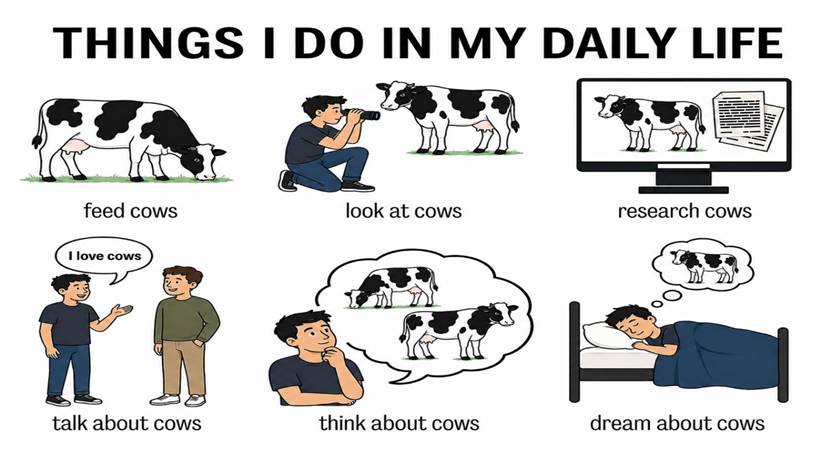
Figure 1. My life through a cow lens. Adapted from https://highbarcattlecompany.com/
(Image recreated with the use of ChatGPT Open AI)
Beyond One-Size-Fits-All: The Reality of Climate Solutions in Practice
Climate-smart solutions must be more than scientifically effective. In South Africa’s diverse livestock sector, effective mitigation strategies must be economically practical, affordable and applicable to different production systems. Reducing emissions is important, but lasting impact comes from approaches that support both animal productivity and environmental sustainability. Nonetheless, applying this science in practice is far more complex. One important lesson I have learned is that scientific solutions do not exist in isolation. While research can identify promising ways to reduce methane emissions from livestock, farmers must balance these innovations against real-world constraints such as cost, access to resources, climate variability, and infrastructure. This is because animals respond differently, feed quality varies, and solutions that work in one farming system may not work in another.
Toward Sustainable Livestock Systems
Cows produce methane because of their unique digestive system. However, the amount produced can be reduced through better feeding strategies and improved farm management. Therefore, the real issue is how committed we are to improving the systems we already rely on. This shift could enable real opportunities to build more efficient and sustainable livestock systems. Future research should focus on practical on-farm solutions by integrating smart technology, better farm practices, and informed policy decisions as key tools to reducing livestock emissions.
Note. Featured image: Methane emissions from dairy cattle. Adapted from https: lactanet.ca/en/introducing-methane-efficiency/

