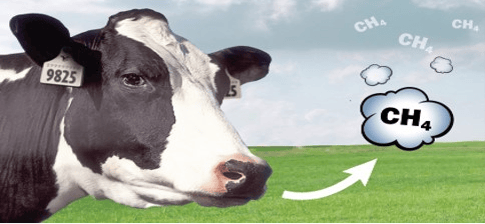
When Cows Burp, the Climate Reacts: Lessons from My Research on Enteric Methane

Have you ever stopped to think that something as ordinary as a cow’s burp could be linked to global warming? It sounds humorous at first, but it is a serious climate reality. Hidden behind everyday livestock farming is methane (CH4), a greenhouse gas far more potent than carbon dioxide in the short term. As a PhD student in Animal Science at the University of Pretoria, I spend my days thinking about this invisible connection between what livestock eat and what enters the atmosphere. Consequently, I now view livestock as living systems that subtly interact with the atmosphere rather than just as a component of food production. My research explores a simple but powerful question: Can we change what cows are fed in ways that reduce the methane they produce, without compromising their health, productivity, or the livelihoods of farmers? This is a question that has led me deep into the science of animal nutrition and environmental stewardship.

Why Cow Burps Matter: Understanding Enteric Methane

I entered livestock research expecting lab work and controlled environments. However, I was intrigued by the depth of knowledge I gained from observing cows. This helped me understand their behaviour and interaction with the environment. These observations revealed a hidden biological process called enteric fermentation, where microbes break down fibrous feed in the rumen. Natural by-products of this process are volatile fatty acids, microbial protein and gases (Carbon dioxide and Hydrogen). Then specialised microbes called methanogens use these gases to produce methane through a process called hydrogenotrophic methanogenesis. This greenhouse gas is then released by the animal mainly through belching (burps).

From Farm to Atmosphere: What Happens After Methane is Released

Once released into the atmosphere, methane mixes quickly with the air and begins interacting with atmospheric chemistry, where it is gradually broken down mainly through reactions with hydroxyl radicals. Methane has an average atmospheric lifetime of about 12 years. During this period, methane is highly potent and contributes strongly to warming, making its impact intense while it persists. This creates an important climate dynamic that methane’s effect is not driven by isolated emissions, but by continuous replenishment. Consequently, continuous methane production from livestock means that the atmosphere is repeatedly supplied with this heat-trapping gas. Ultimately, this results in a sustained warming effect driven by ongoing biological activity rather than once-off events. Thus, this is where research and accurate measurement become essential.

My Research Focus: Feeding Cows for Lower Emissions

One of the most fascinating areas I am exploring in my research is the use of anti-methanogenic feed additives (AMFA). These are dietary supplements designed to reduce methane production by altering rumen fermentation pathways. These additives range from plant-based compounds such as tannins and essential oils to synthetic products that specifically target methanogens.

Through this project, I’ve realised how my research connects science, curiosity and daily lived experience. I also discovered that climate action might not only be about what we burn, but also about what we feed. However, I am unable to share my results as this is an ongoing project, and the data is reserved for peer-reviewed publications.

The figure below represents a light-hearted reflection on how livestock science has shaped my daily thoughts as a researcher working on cattle and methane emissions.
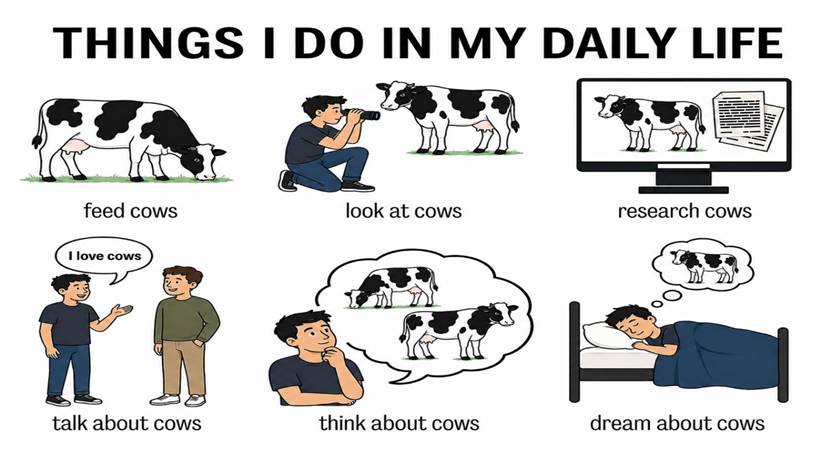
Figure 1. My life through a cow lens. Adapted from https://highbarcattlecompany.com/

(Image recreated with the use of ChatGPT Open AI)

Beyond One-Size-Fits-All: The Reality of Climate Solutions in Practice

Climate-smart solutions must be more than scientifically effective. In South Africa’s diverse livestock sector, effective mitigation strategies must be economically practical, affordable and applicable to different production systems. Reducing emissions is important, but lasting impact comes from approaches that support both animal productivity and environmental sustainability. Nonetheless, applying this science in practice is far more complex. One important lesson I have learned is that scientific solutions do not exist in isolation. While research can identify promising ways to reduce methane emissions from livestock, farmers must balance these innovations against real-world constraints such as cost, access to resources, climate variability, and infrastructure. This is because animals respond differently, feed quality varies, and solutions that work in one farming system may not work in another.

Toward Sustainable Livestock Systems

Cows produce methane because of their unique digestive system. However, the amount produced can be reduced through better feeding strategies and improved farm management. Therefore, the real issue is how committed we are to improving the systems we already rely on. This shift could enable real opportunities to build more efficient and sustainable livestock systems. Future research should focus on practical on-farm solutions by integrating smart technology, better farm practices, and informed policy decisions as key tools to reducing livestock emissions.

Note. Featured image: Methane emissions from dairy cattle. Adapted from https: lactanet.ca/en/introducing-methane-efficiency/

Moisture Transport in the Atmosphere

In many social contexts, I often notice that we ask each other questions like: “What do you do?”, “What is your research about?”, or “Which department are you in?”. These are such common icebreakers. More often than not, when I describe what I do, the response is: “That sounds so cool!”.

For context, I am a Master’s student in the Ocean and Atmosphere Sciences discipline at the University of Cape Town, within the Oceanography Department. Our department is small and not very popular, as often it is assumed that we only study marine animals, which is not the case. In fact, oceanography is the study of the oceans and the ways in which their different components interact, including but not limited to the movement and composition of water, the plants and animals, the air above, and the geology below. This naturally branches into various themes such as climate sciences, physical oceanography, marine and atmospheric biogeochemistry, polar research, numerical modelling, and ocean statistics and machine learning. Our department is incredibly diverse in the research that we do, but what we all have in common is that we either focus on the ocean, the atmosphere, or their intersection. As for myself, my research focuses solely on the atmosphere.

For as long as I can remember, I’ve been fascinated by weather presenters. How do they know what the weather will be like tomorrow or for the next 10 days? How are they able to inform us that this year we will experience a dry season; that floods are coming; or that there is a cold front on its way? What is this cold front that they are talking about? I had so many questions, and I had no idea which field would bring about clarity. It is miraculous how I applied to major in Ocean and Atmosphere Science for my undergraduate degree, not really sure what it was, or how it would actually be the path to getting answers. I just wanted to learn about the ocean as it felt unique and the possibility of going on a research vessel one day sounded surreal (which I was lucky enough to experience in my Honours year). My journey in the Ocean and Atmosphere Sciences has been deeply rewarding, from answering questions that sparked my curiosity as a child, to empowering me to contribute meaningful research.

In a nutshell, my study is about tracing and quantifying the transport of moisture towards the Berg-Olifants and Breede-Gouritz Catchments in the southwestern South Africa (Fig. 1). Put simply, winds are the main driver of water vapor air masses (hereafter referred to as  “water parcels”) as they circulate and travel in the atmosphere in different phases of the water cycle. Water parcels are influenced by the warming of water bodies, which increase evaporation adding more water parcels in the atmosphere. Conversely, as air cools with decreasing temperature, the amount of water vapor also decreases. The rising of warm air and descending of cool air happens on a large scale in the atmosphere due to the presence of warm and cold sections of the ocean called currents. The warm currents and inland regions are the major contributors to water parcels that can potentially aid in cloud formation, enhancing weather systems, and fuelling the continuous water circulation in the atmosphere.

How exactly did we trace water parcels in the atmosphere? By utilising the numerical Hybrid Single-Particle Lagrangian Integrated Trajectory (HYSPLIT) model executed with the high resolution ERA5 reanalysis dataset. The HYSPLIT model can track backward (or forward) in time estimating the water parcels pathways and help determine their origin before arriving at the study region. Part of the results revealed that moisture tracked back from the southwestern South Africa originates as distant as the south Australian region; the western, central, and eastern South Pacific and South Atlantic Oceans; the Agulhas Current region; and from the southern African continental region (Namibia, Botswana, southern Zimbabwe, and southern Mozambique). Although the Berg-Olifants Catchment is a winter rainfall region and the Breede-Gouritz Catchment is an all-year round rainfall region, they illustrated similar moisture source routes.

With focus on a historical long term, as carried out in this study, prolonged deficiency (excess) in moisture in the atmosphere can potentially lead to persistent droughts (floods). Moisture can be influenced by wind patterns, differences in temperature, and earth’s landscape (mountains and valleys), among other things. Resultantly, not all moisture parcels traced back from their source regions arrive at the study domain. Understanding where moisture is coming from and where it is propelled to can help forecasters better understand current climate conditions, consequently helping the society to be better informed and prepared when regions become drier or more humid than usual.

While I am not a weather presenter (which still seems like an incredibly cool career!), I take pride in knowing that the work I am involved in contributes to a better understanding of the atmosphere. This journey continues to inspire me every day, as my knowledge grows, my list of questions becomes endless. Who would’ve imagined that diving into something so unfamiliar could be so deeply fulfilling?!

Figure 1: Map of the southwestern South Africa highlighting the positions of the Berg-Olifants Catchment (black outline) and the Breede-Gouritz Catchment (grey outline). The shading illustrates the difference in height above ground in meters.