Every Cloud Has A Silver Lining

I have suffered from anxiety and depression for over 10 years, and I knew the potential threat a PhD might pose to my mental health before I had even started. It’s no secret that the culture of overworking in academia, alongside experiences of bullying and discrimination, contributes to 86% of PhD students reporting marked levels of anxiety. Some students may also face the question: will I ever finish my thesis at all? In my experience, it turns out the answer was a big fat NO.

I got through the first and second years of my PhD well enough.  By the third year, however, I was barely getting out of bed unless I had to go to the laboratory — and sometimes not even then. I hardly engaged with my colleagues, and I cried in front of them more than once. I started skipping important meetings and presentations I had to deliver, and I was constantly making mistakes when it came to my work.  

In June 2021 I was admitted to Denmar, a psychiatric hospital in Pretoria, for a duration of two weeks after a mental breakdown. Admission into a hospital brought me into a therapeutic community where every aspect was designed to have a beneficial effect on me. I was protected from the outside world and the environments that have caused me so much unhappiness. Every day I was offered psychotherapy, individually and in groups, occupational therapy, recreational therapy, work therapy and therapeutic attention from various trained specialists. I was encouraged to express myself, to cry for my mental hardships, and to acknowledge that I needed help to heal. Although I was in a protected setting, I exerted myself to the limits of my ability…and so I became stronger.

Did my situation improve after I went back to the laboratory? Unfortunately, no. Even though I received the best treatment and rehabilitation, I still wasn’t strong enough to deal with the academic environment. A few months later, in April 2022, I made the final decision to deregister from my degree. I have never felt as relieved and happy as I did that day. I gave myself a chance to breathe and be free.

Now some might ask, didn’t you waste 3 years of your life? No, I don’t think I have. As academics we may forget that even though you do not have a paper calling you a graduated Doctor of Philosophy, it is very likely that you learned a few useful techniques during the journey. This is my silver lining. However incomplete my thesis was when I deregistered, I had learned how to read scientific papers, write scientifically, (nervously) present my work to others, work under stressful conditions, improve my critical thinking ,and publish my work in journals. Even outside of academia these are useful skills that will allow me to have a better chance of succeeding in my future career. I am glad that I had the chance to learn these.

I left the university with mixed feelings, however thinking back there were many achievements. I was able to generate a lot of promising results that will lead to many publications for the research group that I have left. I attended multiple online conferences, and was accepted to attend international workshops which I was unfortunately unable to attend due to the COVID-19 pandemic. This year I was accepted to attend a conference at the Centre for Disease Control and Prevention (CDC) in Atlanta, USA, to share my findings regarding the discovery of a new virus. I worked very hard to get to that point, and even though I did not get the chance to present there, I count this as a big achievement.

Letting go of my PhD made me realize how important other things were in my life. I used to be completely preoccupied with academic commitments like writing grant proposals and submitting my work to conferences, and most of all pleasing my supervisor. I had no idea what other things I could be doing professionally if I could not be an academic. If I had any time to spend with my family and friends, it had to be planned around my schedule, availability and the mental and emotional state I was in at that current time. PhD took precedence over everything else.

Who you are as a person is more than your research interests and the hard work you have done. This is not meant to reduce the significance of what you have accomplished while getting a PhD, or the degree certificate that some will be able to receive at the end of this road. It is meant to help you realize that there are many other great things ahead of you. You might feel lost at first, but this is usually a sign that you’re embarking on a new adventure, entering an unfamiliar situation. This means more learning, growth, and self-discovery.
Cheers to the memories that will never fade

What defines the worst or best day? Is it based on whether or not you cried, or whether you made money or lost money? Maybe its based on how much work you have been given, or how stressed that made you feel. Well, for me its based on how I feel when I lay my head on my pillow at night. So, here’s my story on a very interesting day in academia but this isn’t an abstract, you’ll have to read the whole story to work out if it was the best day, or the worst…

In my old lab, a lot of the machinery was communal, meaning that we all had access to them, and it needed to be booked beforehand. Being valuable, you needed to be trained on these machines before using them by yourself. So let me introduce you to my favourite machine, it has multiple SEPARATE parts, extremely FRAGILE syringes, glass and THOROUGH cleaning processes, I present to you…the ITC machine! Or, in full, the isothermal titration calorimeter. This machine is important in understanding the nature of biochemical reactions.

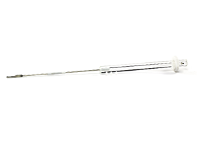
The ITC machine is old, it’s got its own issues too. For instance, its handle is attached to a part that holds its fragile syringe. Let me draw a picture for you. Its silver, and thin. Think of a lollipop stick, but much thinner. So, its handle is always getting stuck and being gentle is the only way to get around it. That means, no twisting, pushing or pulling. Seriously, this machine should come with its own warning book.

Picture: The syringe, gets inserted into handle.

After being trained on this wonderful machine, which I might add, is the ONLY machine that everyone used for this specific experiment, I started running my own reactions by myself.

Do you think you know where this is going?

On one particular morning, I decide to run an experiment and as usual, the machine and I were on the same page…UNTIL…it was time to insert the handle (which holds the “world’s thinnest syringe”). Now, I had been warned that if I feel like the handle is stuck, I should just pull it out and try and again. And what did I do? Exactly that. You thought I broke the handle, didn’t you?

So as suggested, I brought the handle back up and tried once again, but as soon as I felt an “obstruction” I brought it up again, my impatience growing as I attempted to go for my third time, but I stopped. I just stopped and froze, and my eyes widened.

When I looked at the syringe before trying again, it had bent! And it definitely was not bent when I inserted it into the handle. This is what I said, word for word in this moment, “Oh my god, oh my god, oh my god, oh my god, oh my god”. It was like when you win a public competition, or you got an award, my heart started to beat faster, my cheeks started getting warm and my mouth, dry. Except, the feeling was the complete opposite. As I continued saying, “Oh my god” in a panicky voice, I lowered the handle and removed the syringe. It was bent. So, I should probably “unbend” it right? So, I did… And to my relief, I fixed it!

Yeah right, I wish that’s what’s happened.

No, I didn’t fix it. Instead, the “world’s thinnest syringe” which was bent, was now split into two pieces because I tried to UNBEND it!

And there it was, the worst moment of my academic career. I stood there, with these two tiny pieces in my gloved hands and stared at it until my vision got blurry and the tears started coming out. After a two-minute cry, I wiped my face and took the slowest walk to my supervisor’s office. Just my luck, the head of the unit was in the office too. I slowly approached, discussed the situation and apologised profusely. I like to think that they admired my honesty because they didn’t reprimand me, in fact they said it was okay and mistakes happen.

I used my puppy eyes filled with tears to tell the rest of my lab the sin that was committed, and again, was so appreciative for their support, they hugged me and said it was okay, BUT I’m pretty sure they were all annoyed (I would be too). Although I had butchered the poor syringe, I was lucky in 3 ways:

  1. My supervisor was supportive
  2. My lab co-workers were supportive
  3. There was an older, extra syringe 😊 (but I did not know this until after I broke the syringe). Seriously, thank God, because it costs approx. R50 000!

And that, was my worst day in the lab. When my head the pillow that night, so did my tears. I have learnt from this experience, even when you feel at your lowest, you remember the lesson (that is, pretend all machinery in the lab are like flowers, BE GENTLE) and know that life has to move on, that’s the only thing that makes it better.

I can laugh about this day now, but I guess that’s the beauty of life, right? You’ve got to have bad days in order to appreciate the good ones. Of course, I had “best days” too, but we’ll leave that for another time, spoiler alert, it involves a Masters degree and a distinction.