When settling on a name for SAYAS was nearly as difficult as writing its constitution!

By Caradee Y Wright

…well, not quite, but in October 2011, when the young academy was launched with its first 20 members, plenty of decisions still had to be made. 

This despite the fact that the hard work had begun months before in 2010. Professor Bernard Slippers wrote a letter, dated 25 May 2010, to the Academy of Science of South Africa (ASSAf) saying, 

“an exciting global movement is gaining momentum to establish forums for the engagement and promotion of young scientists in the form of young scientist academies” and “I believe South African science and society can also benefit greatly from the establishment of a national Young Academy of Sciences….”

With support from the Inter-Academy Panel, the Global Young Academy (GYA) had just been launched as an umbrella body to young academies such as the oldest at the time, the Junge Akademie in Germany. The GYA was supporting the development of national academies and their support included a type of blueprint for how to go about it.

ASSAf agreed and convened a small founding committee of academics / researchers from different institutions, including ASSAf staff member at the time, Dorothy Ngila, to plan the establishment of a Young Academy of Sciences in South Africa. I was fortunate to sit on this planning committee and then go on to be nominated as a member of SAYAS. I then served two terms as Co-Chair from 2011 to 2013 and assisted SAYAS with the application to the Oppenheimer Foundation for funding support.

Aldo Stroebel, Dorothy Ngila, Caradee Wright, Bernard Slippers and Voster Muchenje at a SAYAS new member induction ceremony.

Beside trying to answer the critical question of what purpose would the Young Academy serve in South Africa, much deliberation was given to its name:

  • YASSAf – Young Academy of Science of South Africa – nope, too similar to ASSAf and we wanted our own identity. Plus it did not sound very good!
  • YASSA – without the ‘f’. Hmm……..
  • SAYA…..
  • SAYAS – South African Young Academy of Science!

[Later, once we were established it took 29 iterations of a logo to decide on the one…..]

With amazing support from ASSAf, SAYAS was founded on the 10 October 2011 and twenty excellent young scientists, nominated by their institutions and selected by a special panel including one of the founding committee members, united to be the first cohort of SAYAS members.

The early days’ activities included introducing SAYAS to the then Department of Science and Technology headed by Minister Naledi Pandor and beginning the search for funding to sustain SAYAS’s future.

The nitty-gritty stuff we all gruelled over were edits to the constitution (thank you to the lawyers for their endless support with these amendments) and putting together a strategic plan of exactly what SAYAS should be doing, why to do certain things and how to mobilise members, resources, funding etc. to do so. 

Not even a year into our formation, we won a bid to host the General Assembly of the GYA. In 2012, young scientists from all around the world convened in Johannesburg and together with SAYAS members, showcased their science as well as the activities of the Young Academies. Three highlights for me were having Minister Pandor declare the General Assembly open; the tour of the Cradle of Human Kind; and the Declaration of Sandton written by the GYA and SAYAS members (parts of the writing were done on the bus to and from the fieldtrip). The Declaration was published twenty years after the 1992 Rio Conference on Environment and Development and urged for an even greater push for sustainability.

Personally, my first five years as a member of SAYAS were extraordinary. I worked with some top academics who also happened to be amazing people and became good friends. The Executive Committees of SAYAS that I served on taught me a new meaning for work ethos and we got stuff done! Yet at the same time, we laughed, we shared stories and managed to make it all fun. One of my favourite photos of all times captures this magic element of SAYAS – a photo in honour of SAYAS member and esteemed meat scientist who worked at the University of Fort Hare, Professor Voster Muchenje. 

I helped start a science club in Ga-Rankuwa and watched youngsters leave school and later go on to graduate – they always stayed in contact. I led the healthcare judges panel for the regional and national science expos several times and encouraged learners as young as thirteen to follow their STEM[i] and social science dreams. In my academic career, through SAYAS I grew a network of scientists, both in South Africa and around the world, on which I still rely today. And I connected with the world of Academies globally – producing a five Academies[ii] report on Air Pollution and Health which we handed over to the United Nations in New York in June 2019. And most recently as an author of a NASAC[iii] report on human health climate change in Africa. I believe that if you are willing to work for SAYAS, SAYAS will work for you.


[i] Science, Engineering, Technology, Mathematics

[ii] U.S. National Academy of Science, U.S. National Academy of Medicine, Brazilian Academy of Sciences, German National Academy of Science Leopoldina, Academy of Science of South Africa

[iii] The Network of African Science Academies
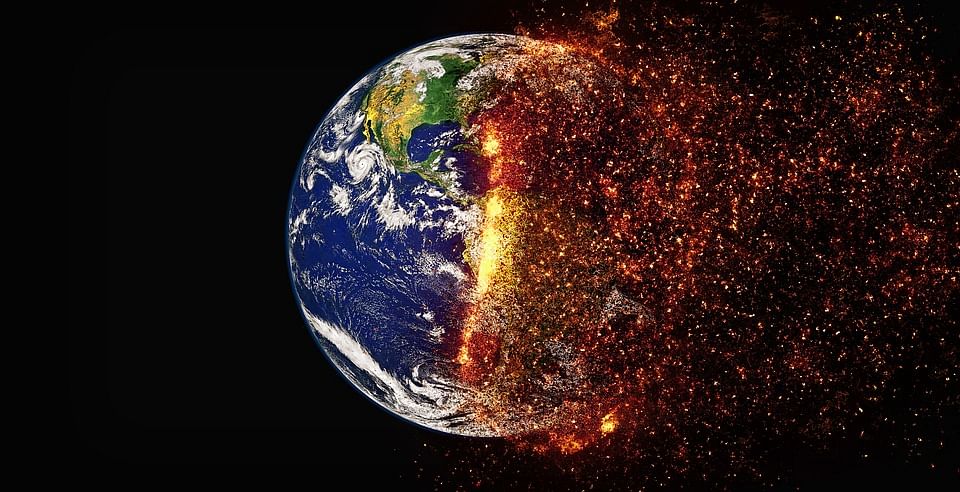
Is it just me, or is it hot in here?

In the coming decades, ecological degradation, rising temperatures, and extreme weather events could intensify the threats to human health posed by viruses. The world’s healthcare systems are not ready to face what’s behind the curtain.

As the temperatures are rising, long-term changes in climate and wildlife habitat could have a significant effect on human health and escalate the risk of infectious diseases like the COVID-19 outbreak. Ah yes, COVID-19 is that guest that overstays their welcome after the party has ended 4 hours ago. After the world has largely failed the stress test of COVID-19, decades of progress to control century-old diseases such as dengue fever, malaria and cholera are under immense threat unless the world leaders commit to more ambitious climate solutions.

As a virologist, I think it is very important to identify the factors that play a big role in spreading infectious diseases…and with planet earth starting to boil rapidly I have concluded that there are numerous factors that I could mention to you that increases viral transmission…but we all have lives to live, so let me keep it short and sweet!

Have you noticed how humans have adapted to rising temperatures? Swimming pools! Air conditioners! Pouring cold water all over yourself! (most affordable solution for a student like myself). Just like humans, viruses also adapt to rising temperatures to ensure population survival. Diseases traditionally associated with tropical and subtropical regions are reaching new areas of the world. Rising temperatures and precipitation are making temperate, northern or mountainous countries more susceptible to outbreaks of “southern” or “low land” diseases like malaria. Another example is how for all of reported history Nepal was always been too cold for the dengue fever virus yet suffered its first outbreak in 2006 with 32 cases. There are many more examples I can mention, but there are also more factors that I would like to talk about!

Now the next question to ponder: how are the habitats of wildlife a factor in an increase in infectious diseases? Well, the quick answer is that many of the viruses are zoonotic, meaning that they are transmitted from a vector, such as an insect, to animals and humans. A loss in wildlife is linked both to climate change and to disease outbreaks. Experts believe these diseases may be associated with increased human-to-animal contact as people encroach on animal habitats. Deforestation and mass forest fires are also responsible for habitat loss, and they both contribute to climate change and are exacerbated by it, creating a feedback loop.

Johannesburg is not an aesthetic tourist attraction at all. Smog and air pollution can be seen from kilometers away. Fine particulate pollution such as black carbon, sulphates and nitrates penetrate deep into the bloodstream and lungs, creating serious health impacts leading to weakened immune systems of animals and humans. Scientists have suggested that air pollution particles may also act as vehicles for viral transmission. An increase in fine particulate pollution of just 1 mg/m3 corresponded to a 15% increase in COVID-19 deaths. Sources of air pollution in cities such as traffic, waste, energy and industry all play a role in the increase of greenhouse gas emissions. So, how can we make our immune systems stronger to fight off disease? Easy – improve air quality and reduce emissions, especially in cities. Easier said than done though.   

Multiple movies these days focus on zombie viruses and ancient viruses resurfacing and killing 90% of Earth’s population. Okay, maybe these ideas are a bit far-fetched. However, scientists have uncovered a variety of bacteria, viruses and fungi due to ice and permafrost melting in Antarctica. I can explain this by giving an example of the working environment I experience at the Centre for Viral Zoonoses. Viruses from many species and pathogenicity are stored in -8°C freezers, and once thawed the viruses are infectious. As ice melts due to global warming, there are concerns that pathogens could be released and cause havoc which our immune systems won’t be able to fight off.

Lastly, viruses absolutely love to mutate.  A changing climate could lead to pathogens mutating and evolving to adapt to warmer temperatures. Researchers from John Hopkins University in the USA raised concerns about climate change that will cause new-heat tolerant diseases to evolve and jeopardize one of the most important fighting forces of the immune system in mammals – fever, which is the ability to maintain high temperatures to fight infections.

What is the takeaway message of my blog post that my readers, and all of humankind, need to remember? Fighting global health risks and diseases, including outbreaks with pandemic potential, is also, fundamentally, about fighting climate change. We need to treat the health of humans, animals, the economy and the planet as one.

Please follow the following links for more information:

https://www.ncbi.nlm.nih.gov/pmc/articles/PMC8047528/

https://www.ncbi.nlm.nih.gov/pmc/articles/PMC2974686/?report=reader