
Climate Change and Covid-19: Has the momentum been lost?
In a presentation to the World Economic Forum in 2016, historian Professor Ian Morris posited that civilizations died due to one or more of the following reasons: uncontrollable population movements; epidemic diseases; failing states leading to increased warfare; collapse of trade routes and climate change. In the midst of the COVID_19 pandemic, much focus has been placed on not only containment and minimizing loss of lives but also what socioeconomic and political transformation can occur over the short-term to create a more equitable world going forward.
In terms of Morris’s theory, 2020 has brought to the earth’s doorstep, at the very least, a serious engagement that humans are not infallible and modern existence isn’t guaranteed. In terms of the uncontrollable movement, the United Nations High Commission for Refugees (UNHCR) in its Global Trend Report stated that 79.5 million people, 1% of the world’s population, are currently forcibly displaced, with 40% of them being youth. The World Health Organization (WHO) lists a number of ongoing epidemics, many under resourced to combat, such as Ebola, including the coronavirus pandemic. With the pandemic highlighting social divides, despite calls by the United Nations (UN), as states across the wealth spectrum struggle to balance the economic and health fallout of COVID_19, conflicts in over 30 countries, which is more than WWII, has exacerbated migration and will continue if states are unable to capably and developmentally respond to the current crisis. Economists remind that the impact on the global economy is unprecedent since the Great Depression and 2008 economic recession. Trade routes in the modern sense are not only impacted, but politically compounded by the dynamics between China, European Union (EU), Russia, United Kingdom (UK) and the United States of America (USA). This, the left and right wing political war coupled to questions of socioeconomic justice, institutionalized racism and globalism versus domestication have taken the forefront of current public discourse.

Against this background, the World Wide Fund for Nature in South Africa (WWF) ran a Youth Month campaign in June 2020 linked to the idea of a New Deal for Nature and People. The campaign, which had a strong focus on climate change, kicked off with a webinar on 5 June 2020, hosted by WWF’s Theressa Frantz and Laurent Some, asking youth to ‘add their voice to the planet’. Their presentations warned that rapid global warming is putting the planet’s ecosystems under pressure with the potential to accelerate a sixth mass extinction.
The New Deal for Nature and People addresses the UN Sustainable Development Goals (SDGs) to revitalize them through mobilizing youth activism to enable target achievement by 2030. SDG 13 developed five tangible targets and eight indicators. The targets are to better prepare for human impact and mitigate climate-induced disasters; integrate various policies into a consolidated national plan per country; increase knowledge and capacity to address climate change; overarch a coordinated UN strategy into national plans and promote mechanisms for better management.
Leah Rodriguez links the youth aspects of climate change to that of the most impacted by it, the poor, particularly the urban Black poor in the USA. She reports that the highest risk group experiencing climate related complications during birth are Black and Indigenous women. Underscoring this, gynecologist, Dr Nathaniel DeNicola, adds that there’s a next generation currently being born ‘pre-polluted’. Using the studies indicating that smog and pollution particles are increasing by 42%, the chances of still, premature and underweight births cause significant risks in this demographic group, especially in the last trimester.
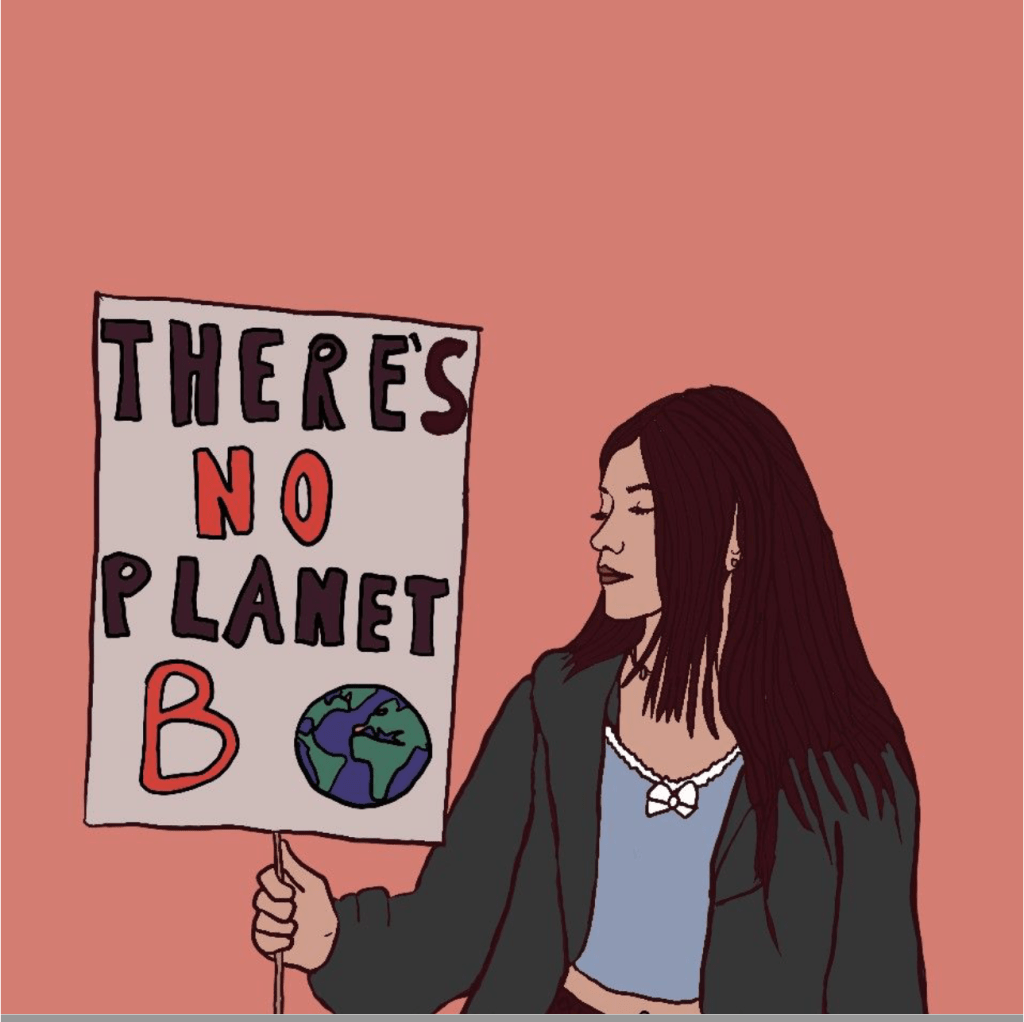
Clearly climate change cannot be divorced from #BlackLivesMatter, matters of poverty and the youth, especially not in the midst of a pandemic and not as we look forward to a world that seeks to create a better earth for the next generation, not already set it back at birth. For this reason, the New Deal for Nature and People is summed up by the WWF Director General, ‘Science has never been clearer, awareness has never been greater. It’s time for decisive action’. The call to youth is simple: act now to reverse the speeding up of harm to the planet, its habitat and people. The proposal is estimated to create food and water for nine billion people, improving quality of life, whilst alleviating the climate damage and preventing the sixth mass extinction.
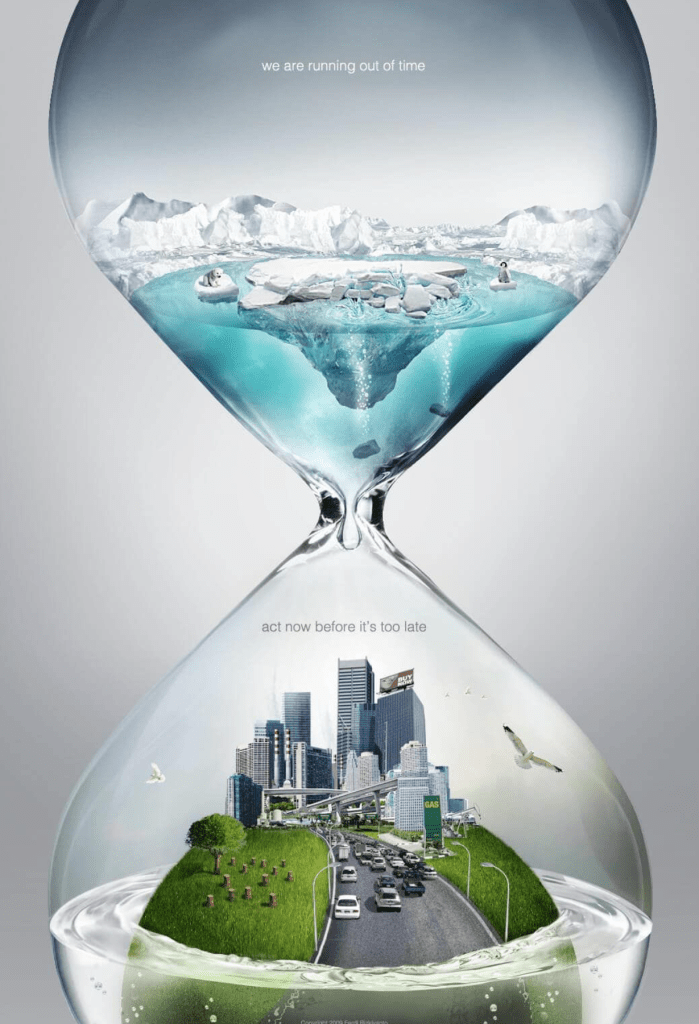
The momentum is waning in the wake of pressing life and death faced imminently be it through hunger, unemployment, insufficient access to healthcare to treat COVID_19 effectively and rampant spread including second and third waves of infection that is pushing up the death toll beyond models and in absence of viable vaccine or cure. Within this possible political momentum, there is a gap to link climate change better to current socioeconomic justice movements, thereby leveraging points of power and influence to drive meaningful change within the new social impact being envisioned post-pandemic. The efficiency and effectiveness does indeed lie with our youth, but not disparately as currently the case. WWF needs to create multisectoral partnerships that meet in the middle between grassroot activism and high-level public and private policy reform. Youth needs to be more than rhetoric. Linkages with existing youth organizations are critical to mainstream and incorporate climate change in civic education, advocacy and policy governance.
In this, the best chance of success lies in “think local, act local” to bring the challenge home to South Africa in a way youth leaders can propagate change through existing economic, political and social channels that understands the here and now for the future and a public good beyond the individual to a broader society, at least for the next generation. To conclude with popular culture, 30 Seconds to Mars, wrote ‘A Beautiful Lie’ whilst in Cape Town, about climate change. The musical video illustrates the challenge that has faced us for years. Let it motivate us to urgently take up the call as youth to unite, to find the centre and work together to mainstream climate change in from nursery to primary and secondary school as well as tertiary education and workplaces.


 SAYAS BLOG