Knee-high in snow and clinging to memories of how the African sun warmed my skin and heart, I reflect on my journey from the rainbow nation to francophone Canada. This is a tale like no other; it is neither “rags to riches” nor “tragedy”, but a simple quest for scientific excellence mixed with adventures of a travelling South African.
My undergraduate studies were rather uneventful. If I’m honest, like many of my peers, it was time of experimentation and self-discovery. Throughout my journey of self-discovery it became clearer to me what I wanted to do for a job and career. Similar to many of my peers, I was being thrust forward into an Honours degree, and when I was a young 20-something graduate, it dawned on me that the dream I had had was not bold enough.
Post-graduate realisation[1] hit me hard and I did what most graduates would not dream of – I took a gap year. It was during this self-imposed ‘sabbatical’ that my yearning for traveling the globe grew even out of hand. I remember thinking, “ a BSc in Ecology and Zoology is not what it used to be…” Of course, I wasn’t sure what a BSc in Ecology and Zoology should be, but I knew it wasn’t It anymore. Nonetheless, I was determined to make something of myself and pursue my dream of becoming a world-renowned ecologist.
Then I got the chance to visit a friend who was teaching English in Seoul, South Korea, and the food, the people, the culture all conspired to draw me to east Asia. But I wasn’t just playing around, there is a certain bravado and courage that we South African posses that sets us apart from the rest of the world. And, I had the guts to approach the leading professor in soil ecology at Korea’s top university (Seoul National University). I boasted about South Africa’s gorgeous, unique Fynbos. Immediately, I was the new shiny toy in the box. The beauty and complexity of the Fynbos is the envy of many ecologists, and I managed to start a project with one foot in Asia and one still in Africa. That was just the beginning of my postgraduate adventures, almost all of it built on the back of people skills and love of Fynbos. Who knew ecologists had to be such good psychologists?
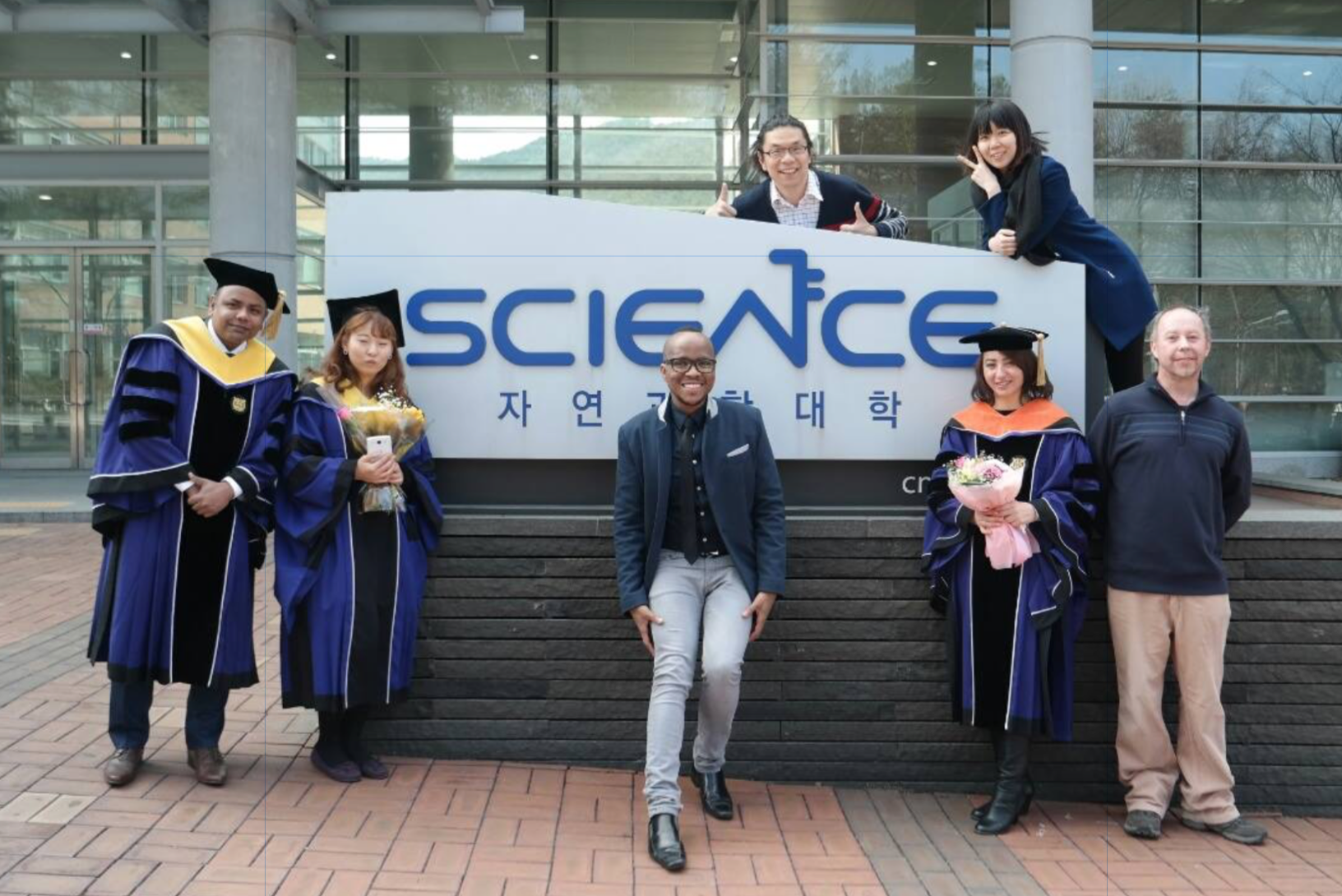
Upon graduation, I began to pack up my life once more and prepare to move to Canada where I would start my Ph.D. I must admit, I love everything about travelling: the airport, new cultures to explore, and — most important — the chance to make new friends. But, I have always said, “I came here with 1 bag and will leave here with 1 bag”. In principle, this rule would serve you well, but when you have lived in a new country for 2 years, you will accumulate stuff. Packing up your life into a 20kg bag arouses feelings of catharsis and reinforces the feeling of excitement about moving to a new place (out with the old, in with the new kinda feeling). Little did I know that moving to a ‘western’ country after being immersed in Asian culture would come with its own challenges, but that’s a story for another blog.
[1] The realisation that a bachelors degree will not suffice and guarantee the kind of job or future that you were day dreaming about during first-year.
 SAYAS BLOG