In 2016, I found myself in the beautiful country of Kenya alongside a team of researchers, curators and technicians from South Africa. We were in Kenya to attend a workshop titled: Developing a collaborative pan- African approach between partner institutions in support of palaeoscientific research training and public outreach. This was the very first time I was exposed to the ‘behind the scenes’ work of palaeosciences and just how much it impacted the research I so loved.
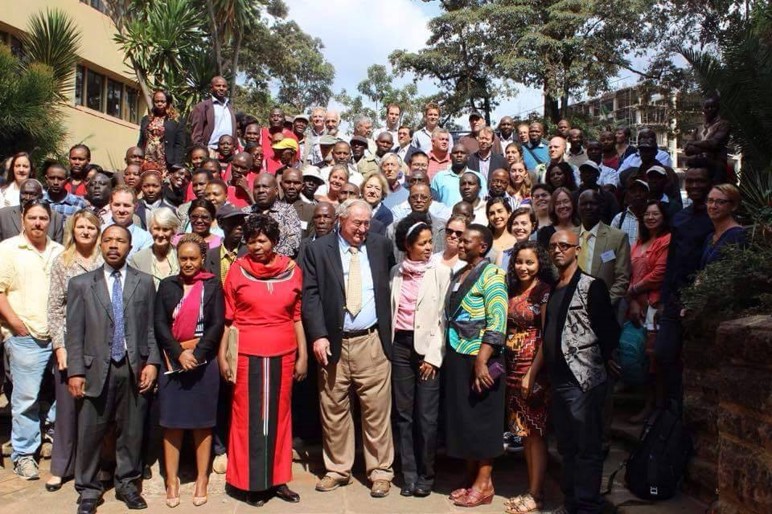
During our time in Kenya, we attended the Unsung Heroes of Palaeontology awards ceremony, hosted at the National Museums of Kenya. I was so overwhelmed with pride when I found out that two members of our travel party were being honoured at this event, Mr Lazarus Kgasi (Senior Curatorial Assistant at Ditsong Museums) and Ms Zandile Ndaba (whom I affectionately call ‘Mama’, Technician/caster/ excavator and explorer at University of the Witwatersrand). These two incredible individuals were being celebrated for their contributions to our science, for their role in uncovering pieces of our history that help us understand who we are today, where we came from and how we fit into the puzzle of life on earth. Many other prominent fossil finders, technicians and curators were celebrated from East Africa, an evening dedicated to their contributions, but I could not help but wonder when I left, what happens now?
Often, when we discuss ‘equality’, ‘transformation’ and ‘diversity’ in academic spaces, we are usually only referring to academics and not other members of our team and community which includes technicians. When we fight for fair pay, fair treatment and recognition, I hope that we always remember that not all our colleagues are scientists in the traditional sense, but that their contributions to the science are by no means any less. Technicians perform a wide variety of roles in palaeosciences, I list a few below:
- They are often fossil finders at the forefront of excavations (they are so talented that they can spot a fossil before any researchers do usually).
- They are the first to see a fossil after hours and sometimes years of preparation using fine tools such as air scribes (in my eyes, they are the ones who breathe life into rock so that the scientist can tell the story). Check out this cool fossil preparation time-lapse video!
- They assist in the education of future generations of researchers through their incredible artistry when casting fossils (we have some of the most talented casting technicians in the world and their casts are used globally in schools and museums to teach the history and importance of fossil finds in Africa)
- They are teachers. During my time in Kenya I was exposed to the chemistry behind cast making, the big data management behind curating and the project management behind excavations. These individuals are not only technical staff, but they are also highly trained, highly specialised individuals with a vast amount of knowledge that I personally think most researchers take for granted.
 In the past, technicians were often exploited, coming from a disadvantaged socio-economic background, with not many options for further education. This led to their contributions being largely ignored, while researchers accepted the glory that came along with significant finds. This is an especially sensitive reality in South Africa, where the technical workforce consisted of mostly Black Africans (and still does today). Is one prize giving in their lifetime enough? Is one moment to recognise all they have done really going to make a difference?
While I completely agree that it is important to celebrate these moments, I do believe that a greater impact, a greater change and a more meaningful exchange would be to invest in the present and future of technical work in the palaeosciences and the role of these individuals in our ongoing research. This includes skills development and certification and proper compensation. Funding is often tight in the field of palaeosciences but that can no longer be used as an excuse to exploit the hard work of individuals who deserve more, more support from us as academics, students and colleagues.
This change is on the way as more people acknowledge the contributions of technicians in their research papers, sometimes (but not often enough) they are included as co-authors. However, this is not the norm and it should be, their contributions often lay the foundation for research work. As a young woman of colour in science, I firmly believe that I cannot thrive in a research space until we all do. 
Last year, in celebration of Heritage Day, I was fortunate to give a talk at the First South African Fossil Hunters public symposium alongside my dear friend (and super incredible palaeobotanist and science communicator) Ms Aviwe Matiwane, a PhD Candidate at Rhodes University and Albany Museum. Aviwe and I had been in discussions for a while on what we would present, we had both agreed that we wanted to take this opportunity to highlight members of our community that are often forgotten. Before ending off this blog post I would like to thank the technicians and curators who have made an impact on my life. Our science is so much better for having you in it. Thank you for inspiring me, encouraging me, supporting me and motivating me. You are deeply appreciated and valued, and I promise that when we fight for a better future, we include you in it.
 SAYAS BLOG